Genetic Scorecard Indicator - European Ash
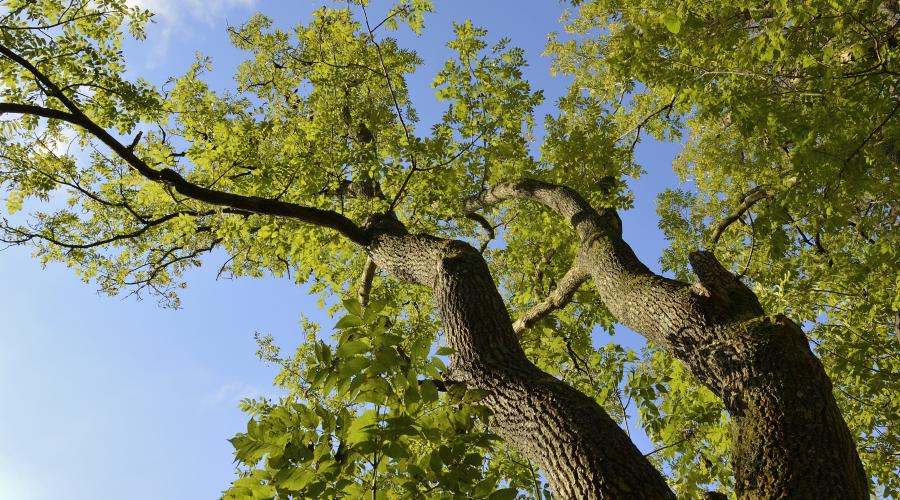
European Ash (Fraxinus excelsior)

IUCN Category:
- Great Britain: Least Concern (indicated above)
- Europe: Near Threatened
- Global: Near Threatened

Genetic Health Status:
- Scottish Risk: Serious (indicated above)
- UK Risk: Serious
- Scottish Mitigation status: Not effective
- UK Mitigation status: Not effective
Background
Subdieocious, wind-pollinated, wind-dispersed, widely distributed woodland and wayside tree. Predominantly European distribution extending into southwestern Asia. In the UK abundant locally, especially as younger trees due to recent woodland expansion (Maskell et al., 2013) and it is currently one of the commonest broadleaf tree species in Great Britain (Anon, 2025). Soil feedbacks from high-nutrient litterfall make this a keystone species where it dominates stands. Prolific reproduction via seed and with ability to coppice, but severe risk from introduced fungal and potentially insect pests, with losses as high as 95% predicted (Thomas, 2016). Over 1000 other species are associated – with 44 restricted to ash alone in the UK – suggesting that losses of ash will result in knock-on effects for ecosystems (Mitchell et al., 2014). Rangewide neutral genetic data indicate patterns of postglacial northward expansion and declining diversity as seen in other temperate tree species (Tollefsrud et al., 2016), and organelle markers indicate the predominant source was the Iberian refuge (Heuertz et al., 2004). Within the UK, populations showed little to no genetic structure, although a clinal pattern of allelic richness suggests potentially biased gene dispersal (Sutherland et al., 2010). Some distinctive local patterns were observed using organelle markers (Sutherland et al., 2010). Genetic variation for phenology, growth and form suggests local adaptation across a latitudinal cline (Rosique-Esplugas et al., 2022).
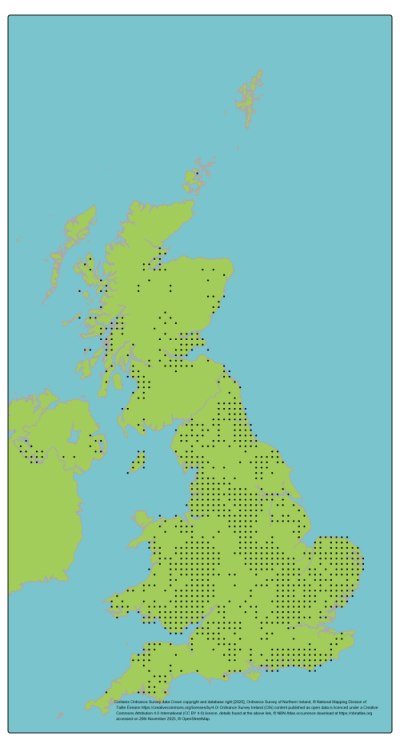
View a larger version of the distribution map for the European Ash.
Current Threats
Severely threatened throughout the UK by the introduced ash dieback plant pathogen Hymenoscyphus fraxineus (first reported in the UK in 2012, now ubiquitous with a trend of arrival from southeast to north: Forestry Commission - Chalara (Hymenoscyphus fraxineus). Major losses of the ash population are expected, although genetic variation in tolerance of the disease has been reported (Lobo et al., 2014; McKinney et al., 2014), which appears to be associated with differential reproductive success (Semizer-Cuming et al., 2019). This suggests an evolutionary escape may ultimately be possible for the species, but substantial mortality seems inevitable.
Another potential threat is from the emerald ash borer Agrilus planipennis, which is currently causing damage on European ash in Russia where the American green ash Fraxinus pennsylvanica has been introduced. Both of these risks can be aggravated by other environmental stressors (moisture, drought) or opportunistic pathogens (e.g. Armillaria) and in combination may be hard for the species to overcome.
Contribution of Scottish/UK population to total species diversity
Scotland and the UK are part of a western European genetic lineage that colonised from an Iberian refugium (Sutherland et al., 2010). UK populations show clinal local adaptation in terms of morphology and phenology and retain high levels of genetic variation as a consequence of high pollen and seed flow, even when fragmented (Heuertz et al., 2004; Bacles et al., 2005, 2006; Whittet et al., 2019; Rosique-Esplugas et al., 2022).
Genetic risks
Diversity loss: population declines
High likelihood of diversity loss. The general persistence of the species across its range is threatened by huge predicted losses from wherever ash dieback has established, with mortality ranging from ~70-85% depending on stand-type (DEFRA, 2019). Highest population losses from ash dieback are predicted for young trees, those in very moist soils and in woodlands which are ash-dominated. Impact is correlated with time since first arrival, but populations across the UK are now experiencing losses; ash dieback is now widespread in Scotland, with confirmed infections in over 30% of hectads (Anon, 2024).
Global Biodiversity Framework Indicators
Population definitions:
Populations are defined based on management units. This species is widely and continuously distributed across UK in large numbers (Stroh et al., 2023; NBN, 2025). The four Great British Regions of Provenance (Herbert et al., 1999) were selected here to represent the major population groupings / management units (treating Northern Ireland as an additional region) as they broadly reflect the environmental variation across which the species is distributed and are likely to capture major patterns of genetic structure.
Ne500: The proportion of populations that have an effective population size of more than 500 (Demographic - using the ratio Nc 5000 = Ne 500)
- Proportion of populations with Ne > 500 in Scotland = 2/2
- Proportion of populations with Ne > 500 in UK = 5/5
PM: Proportion of populations that existed in 2000 that still exist in 2025.
- Proportion of populations maintained in Scotland = 2/2
- Proportion of populations maintained in UK = 5/5 , estimated 2025
Substantial populations remain, but the estimated loss since the start of the Ash dieback epidemic is around one third of the population.
Diversity loss: functional variation
Functional variation
High likelihood of loss of functional variation, as locally adapted populations may encounter catastrophic losses. In all studied stands, only 1-5% of trees are suggested to be tolerant to ash dieback, but with a measurable genetic component, suggesting the potential for increasing tolerance by breeding and through natural selection in situ (Cavers & Cottrell, 2015; DEFRA, 2019). As the impact is massive and acts especially severely against early life stages, selection pressure will be high and the rate of adaptation could be rapid - it may already be underway (Metheringham et al., 2025).
Divergent lineages
Limited divergence from European populations precludes loss of major divergent lineages, but there is potential for loss of locally adapted populations.
Hybridisation/Introgression
No major hybridisation issue threatening genetic diversity. In some parts of Europe where ranges overlap, F. excelsior can hybridize with F. angustifolia and other congeners.
Low turnover - constraints on adaptive opportunities
High mortality and severe pressures are predicted to limit regeneration and adaptive change. Risks due to combined stresses from soil conditions, pest and pathogen pressures, and competition from faster-growing species all result in higher susceptibility to tree- and stand-scale losses, which limit healthy population turnover and adaptive evolution. Deer browsing may also limit natural regeneration.
Cumulative Risk Summary
Overall Genetic Health Status
Scotland
- Risk: Serious
- Mitigation: Not effective
Great Britain/UK
- Risk: Serious
- Mitigation: Not effective
Overall Genetic Health status explanation
Despite widespread distribution and abundance, population losses are predicted to be catastrophic. Intensive management strategies, such as resistance breeding, require huge investment and benefits to wild populations will only be realised with persistent and long-term intervention. Ex situ collections are very strong, with good representation of contemporary diversity, but do not secure a long-term future for ash genetic diversity and presence of viable and evolving ash populations. Managing populations to promote natural regeneration is the most effective way of promoting long term adaptation to ash dieback through natural selection.
In situ genetic threat level
In situ genetic threat level
- In situ Risk for Scotland: Serious
- In situ Risk for UK: Serious
In the face of emerging pathogen threats, major population losses and limitations to regeneration present a high risk of genetic variation loss.
Confidence in in situ threat level
- Confidence score for Scotland: High
- Confidence score for UK: High
Assessment based on good demographic data from Europe, where the longer-term effects of ash dieback can be more easily assessed; direct data on genetic variation, population differentiation and biology.
Ex situ representation
Two archives, including hundreds of genotypes selected for lower susceptibility to ash dieback, have been established, one located in England and the other in Scotland; the genotypes encompass material selected from seed zones across the UK (Clark et al., 2024).
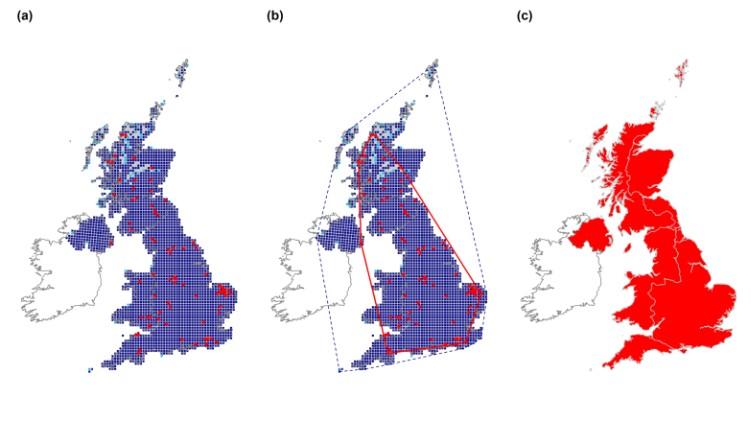
Seed collections in the Millenium Seed Bank (MSB) cover
Click for a full description
Dark blue = species distribution, red = represented in ex situ collection, light blue= pre 2000 records.
- (a) 74 of 2714 occupied 10-km squares (3%)
- (b) an EOO of 236,519 km² out of 546,851 km² occupied (43%)
- (c) 5 out of 5 Regions of Provenance (100%). It is estimated these collections capture >90% of genetic diversity (Hoban et al., 2018)
Current conservation actions
Current actions are:
- projects to understand and map stresses on ash stands, understand the genetic basis for tolerance (including resistance, avoidance, tolerance),
- breeding programs to promote tolerance,
- control movement of nursery stocks and timber to prevent arrival of emerald ash borer into the UK,
- maintain any tree that appears healthy and promote recruitment to maximise the opportunity for continued natural selection,
- designation of Gene Conservation Units.
| Ex situ | Translocation | Habitat management | Legal protection of habitat or species | Regulation of exploitation | Control of INNS/pests/pathogens |
|---|---|---|---|---|---|
| X | X | X | X | X | X |
Population assessment/monitoring
Population
Demographic
N pops assessed/monitored in Scotland = 2/2
N pops assessed/monitored in UK = 5/5
Genetic
N pops assessed/monitored in Scotland = 2/2
N pops assessed/monitored in UK = 5/5
Further Research
Deliberate interventions to support change in the genetic composition of the UK ash population seem essential. Work to establish the rate at which natural selection might deliver adaptive escape for the species would be valuable, along with assessment of the efficacy of different interventions to promote regeneration. Tree improvement and breeding may deliver varieties with elevated tolerance to the disease and efforts to pursue this are recommended.
References
Anon. (2025). Forestry Statistics 2025. Forest Research.
Clark, J. (2024). The living ash project - ten years on. 2024. Quarterly Journal of Foresty, 118, 246-251.
Clark, J., Whittet, R., Bailey-Horne, V., Tarbin, J., Gorton, C., Chapman, T., & Negri, I. (2024). The Living Ash Project Phase 2 – Securing tolerant material for seed production purposes. Unpublished Report.
Herbert, R., Samuel, S., & Patterson, G. (1999). Using Local Stock for Planting Native Trees and Shrubs. Forestry Commission Practice Note.
Heuertz M, Hausman JF, Tsvetkov I, Frascaria-Lacoste N, Vekemans X (2001) Assessment of genetic structure within and among Bulgarian populations of the common ash (Fraxinus excelsior L.). Molecular Ecology, 10, 1615–1623.
Lobo, A., Hansen, J. K., McKinney, L. V., Nielsen, L. R., & Kjær, E. D. (2014). Genetic variation in dieback resistance: growth and survival of Fraxinus excelsior under the influence of Hymenoscyphus pseudoalbidus. Scandinavian Journal of Forest Research, 29(6), 519–526
Metheringham, C.L., Plumb, W.J., Flynn, W.R., Stocks, J.J., Kelly, L.J., Nemesio Gorriz, M., Grieve, S.W., Moat, J., Lines, E.R., Buggs, R.J. and Nichols, R.A. (2025) Rapid polygenic adaptation in a wild population of ash trees under a novel fungal epidemic. Science. 388 (6754): 1422-1425
McKinney, L.V., Nielsen, L.R., Collinge, D.B., Thomsen, I.M., Hansen, J.K. and Kjær, E.D. (2014). The ash dieback crisis: genetic variation in resistance can prove a long-term solution. Plant Pathology
Rosique-Esplugas, C., Cottrell, J.E., Cavers, S., Whittet, R. and Ennos, R.A. (2022) Clinal genetic variation and phenotypic plasticity in leaf phenology, growth and stem form in common ash (Fraxinus excelsior L.) Forestry, 95(1): 83–94
Semizer-Cuming, D., Finkeldey, R., Nielsen, L. R., & Kjær, E. D. (2019). Negative correlation between ash dieback susceptibility and reproductive success: good news for European ash forests. Annals of Forest Science, 76(1), 16.
Stroh, P.A., Walker, K.J., Humphrey, T.A., Pescott, O.L. and Burkmar, R.J. (2023). Plant atlas 2020: mapping changes in the distribution of the British and Irish Flora. Princeton University Press.
Sutherland, B.G., Belaj, A., Nier, S., Cottrell, J.E., P Vaughan, S., Hubert, J. and Russell, K. (2010) Molecular biodiversity and population structure in common ash (Fraxinus excelsior L.) in Britain: implications for conservation. Molecular Ecology, 19(11), pp.2196-2211.
Tollefsrud, M.M., Myking, T., Sønstebø, J.H., Lygis, V., Hietala, A.M. and Heuertz, M. (2016) Genetic Structure in the Northern Range Margins of Common Ash, Fraxinus excelsior L. PLoS One, 11(12), p.e0167104.
Websites:
Assessors:
- Rebecca Yahr, Royal Botanic Garden Edinburgh
- Stephen Cavers, UK Centre for Ecology & Hydrology
- Laura Kelly, Royal Botanic Gardens, Kew
Reviewers:
- Richard Ennos, University of Edinburgh
- Peter Hollingsworth, Royal Botanic Garden Edinburgh