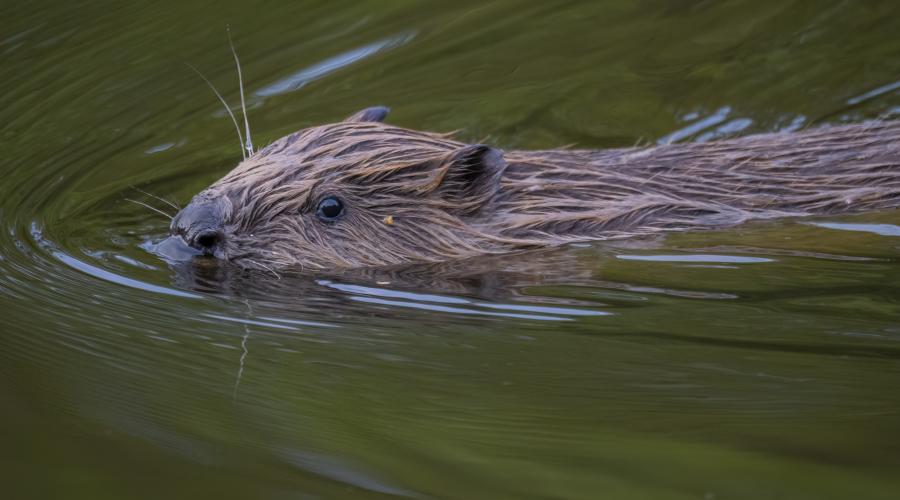
Genetic Scorecard Indicator - Eurasian beaver
Eurasian beaver (Castor fiber)

IUCN Category:
- Great Britain: Endangered (indicated above)
- Europe: Least Concern
- Global: Least Concern

Genetic Health Status:
- Scottish Risk: Serious (indicated above)
- UK Risk: Serious
- Scottish Mitigation status: Partially effective
- UK Mitigation status: Not in place
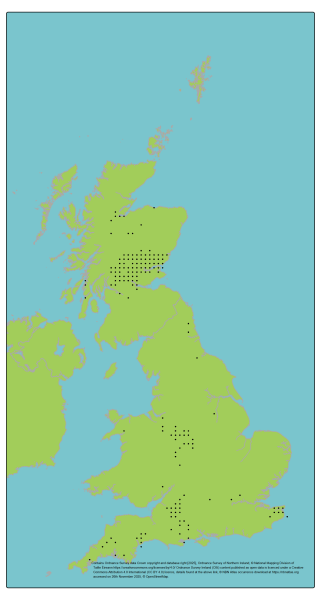
Background
The Eurasian Beaver (Castor fiber) is a semi aquatic rodent and a natural ecosystem engineer shaping freshwater habitats. Beavers once occurred throughout Europe, including Great Britain, but were widely exploited for fur and other products leading to their extinction across much of Europe by the 1900s. Beavers disappeared from Great Britain by the 16th century and only five isolated ‘refugia’ populations remained in Europe by the early 20th century. Since then, Beaver numbers have recovered across their former range through hunting regulation, active reintroductions and natural recolonisation. A total of five populations in Scotland permitted by NatureScot are located in Knapdale, Tayside, Beauly, Badenoch & Strathspey and Loch Lomond & the Trossachs National Park; these have been reintroduced from both known and unknown sources, and through licensed reintroduction efforts and escapes/illegal releases. A further permitted population was reintroduced in England (Devon) from escapees/illegal releases from unknown source(s) and reinforced with beavers from Tayside, Scotland. All populations in Great Britain are less than 100 individuals except from Tayside which was estimated to comprise 954 (range: 602 – 1381) individuals in 2021 (Campbell-Palmer et al., 2021). Genetic studies have investigated the licensed reintroduction and reinforcement efforts in Knapdale, Scotland (Dowse et al., 2020; Taylor et al., 2023), the non-licensed reintroduced population in Tayside, Scotland (Campbell-Palmer et al., 2020; Ritchie-Parker et al., 2021), and captive and wild-living beavers residing in England (Ritchie-Parker et al., 2021).
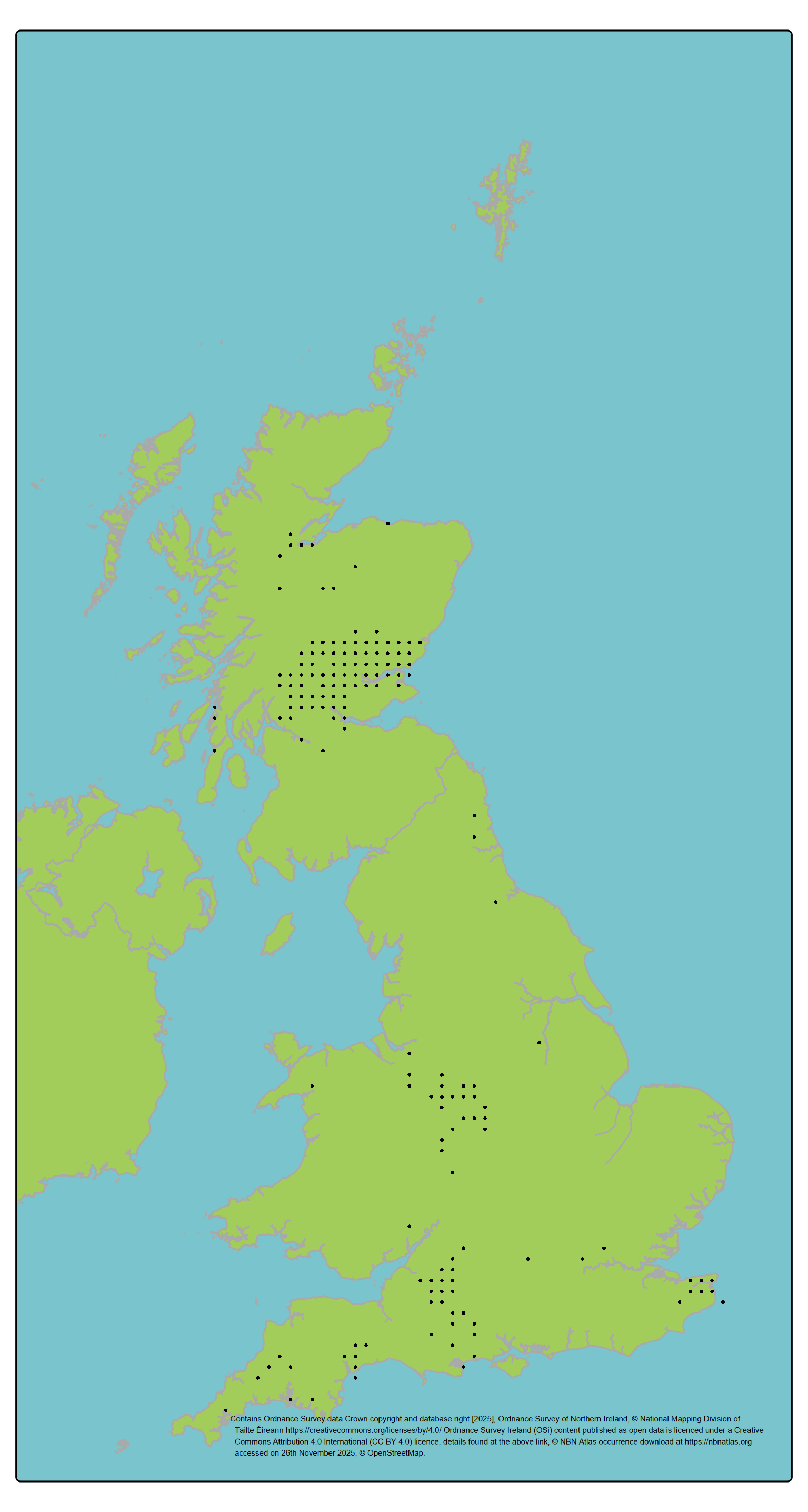
View a larger version of the distribution map for the Eurasian Beaver.
Current Threats
Habitat loss, persecution, road traffic accidents.
Contribution of Scottish/UK population to total species diversity
Populations in Scotland have been reintroduced from both known and unknown sources. Genetic studies have suggested that individuals from Tayside most likely originated from Lithuania/Poland, Bavaria, Germany and Baden-Württemberg, Germany (Campbell-Palmer et al., 2020; Ritchie-Parker et al., 2021). The majority of beavers found elsewhere in Scotland have been translocated from the population in Tayside with the addition of 28 beavers translocated from Norway to Knapdale (Dowse et al., 2020). As such, the species diversity encapsulated within Scotland is not unique and is a representation of diversity from several locations from mainland Europe.
Genetic risks
Diversity loss: population declines
No populations are more than 25 years old, and all are growing to some extent, rather than declining. However, some populations such as Beauly remain very small, others such as Knapdale are currently at carrying capacity, while Tayside shows a continuing trend of population growth. There remains a significant risk of genetic diversity loss through drift in the smaller isolated populations, although at present, diversity in beavers across Scotland is comparable to that seen in mainland Europe.
Global Biodiversity Framework Indicators
Population definitions:
Populations in Scotland and Great Britain are geographically disparate and currently unconnected. As such the populations have been defined based on geography. However, dispersal can be high within watersheds and connectivity may increase over time.
Ne500: The proportion of populations that have an effective population size of more than 500.
- Proportion of populations with Ne > 500 in Scotland = 0/5
- Proportion of populations with Ne > 500 in UK = 0/6
PM: Proportion of populations that existed in 2000 that still exist in 2025.
- Proportion of populations maintained in Scotland = 5/5
- Proportion of populations maintained in UK = 6/6
all populations maintained only since recent introductions (>2000).
Diversity loss: functional variation
Functional variation
As beavers in Scotland originate from a reintroduction and subsequent translocations the genetic diversity is a subset of mainland European diversity, and there has been no opportunity for local adaptation, therefore there is no risk of loss of functional variation at present.
Divergent lineages
As beavers in Scotland originate from a reintroduction and subsequent translocations genetic diversity is a subset of mainland European diversity and no known or suspected distinct lineages are present.
Hybridisation/Introgression
Eurasian beavers do not hybridise with American beavers (C. canadensis) which are not present within Scotland or Great Britain. Hybridisation has not been deemed a threat to Eurasian beavers.
Low turnover - constraints on adaptive opportunities
Species reproduces annually with sufficient fecundity for rapid mammalian population growth.
Cumulative Risk Summary
Overall Genetic Health Status
The Beaver population in Tayside continues to increase alongside the capacity to expand further. Other populations in Scotland are already at carrying capacity and unable to expand further (i.e. Knapdale) and some are too small to maintain diversity without further intervention. Translocations are ongoing in both Scotland, with potential to be expanded to wider Great Britain, to mitigate this risk. Overall genetic diversity in Scotland is low but comparable to diversity available across the species range.
Scotland
- Risk: Serious
- Mitigation: Partially effective
GB/UK
- Risk: Serious
- Mitigation: Not in place
Overall Genetic Health status explanation
Classified as serious as all populations have an Ne < 500 with only one population (Tayside, Scotland) expanding and large enough to be self-sustaining in the long term. Mitigation is actively being carried out in Scotland with translocations from Tayside to other populations to increase population sizes. Translocations to wild living populations in England is possible but not currently managed.
In situ genetic threat level
In situ genetic threat level
- In situ Risk for Scotland: Serious
Relatively low genetic diversity, fragmented populations, no populations with Ne > 500.
- In situ Risk for UK: Serious
Relatively low genetic diversity, fragmented populations, no populations with Ne > 500.
Confidence in in situ threat level
- Confidence score for Scotland: High
The population in Knapdale is at carrying capacity (~20-30 individuals) with all suitable habitat occupied by beavers. The population in Beauly has been surveyed in 2017, 2019 and 2021 and numbers have remained low suggesting the population is not likely to be viable without reinforcement. The population in Tayside has been surveyed three times with the most recent survey completed in 2020-2021. This most recent assessment showed considerable expansion in territories and range with an estimate population size of 954 (range 602 – 1381). Although the numbers continue to increase in Tayside it likely does not yet constitute a population with Ne > 500.
- Confidence score for UK: High
The population of beavers in the River Otter, Devon is estimated to be comprised of 15 family groups which is significantly below an Ne of 500. While the rest of the potential populations of wild living beavers in England have not been effectively surveyed, they most likely will not constitute a population with Ne > 500.
Ex situ representation
Not widely bred in zoos with only 71 individuals kept across European Association of Zoo and Aquaria (EAZA) establishments although none of these are in the UK. A studbook for beavers translocated from Tayside to other Great British populations and enclosures is managed by The Beaver Trust. There are currently 27 licensed sites in England where beavers have been released into an enclosure.
Current conservation actions
Eurasian Beaver was made a European Protected Species under Scots law (2019).
A Scotland's Beaver Strategy 2022-2045 has been published by NatureScot with a roadmap for conservation of the species until 2045. The strategy outlines conservation actions to be taken including: promotion of natural population expansion, additional translocations to new sites in Scotland, engaging with stakeholders to reduce conflict and persecution, improving monitoring methodologies and developing surveys, and establishing long term population and genetic monitoring.
In England, studies are being carried out by Natural England and other stakeholders, such as The Wildlife Trusts, to determine the viability of Eurasian Beaver populations. There is currently no formalised conservation strategy for beavers across England but a Beaver Management Strategy Framework for the River Otter has been published by the Devon Wildlife Trust.
| Ex situ | Translocation | Habitat management | Legal protection of habitat or species | Regulation of exploitation | Control of INNS/pests/pathogens |
|---|---|---|---|---|---|
| - | X | X | X | - | - |
Population assessment/monitoring
Population
Demographic
Population in Tayside, Scotland has been surveyed in 2012, 2017-2018, and 2020-2021 with other populations surveyed sporadically. More routine monitoring of Scottish populations outlined as a required action in Scotland’s Beaver Strategy.
N pops assessed/monitored in Scotland = 5/5
N pops assessed/monitored in UK = 6/6
Genetic
The most recent genetic assessment was undertaken in 2021 which surveyed Tayside, Scotland (n=65), Knapdale, Scotland (n=37), and Devon, England (n=5).
N pops assessed/monitored in Scotland = 2/5
N pops assessed/monitored in UK = 3/6
Further Research
Population surveys of all wild living populations in Scotland and Great Britain, genetic monitoring of all populations in Scotland and Great Britain, better understanding of adaptive potential, improve estimates of Ne for the species, and feasibility studies for development of additional populations across Great Britain.
References
Campbell-Palmer, R., Senn, H., Girling, S., Pizzi, R., Elliott, M., Gaywood, M., Rosell, F. (2020) Beaver genetic surveillance in Britain. Global Ecology and Conservation, 24: e01275.
Campbell-Palmer, R., Puttock, A., Needham, R.N., Wilson, K., Graham, H., Brazier, R.E. (2021) Survey of the Tayside area beaver population 2020-2021. NatureScot Research Report 1274.
Dowse G., Taylor H.R., Girling S., Costanzi J.-M., Robinson S., Senn H. (2020) Beavers in Knapdale: Final report from the Scottish Beavers Reinforcement Project. Published by Scottish Beavers, Edinburgh, UK.
Ritchie-Parker H., Ball A., Campbell-Palmer R., Taylor H., and Senn H. (2021) Genetic diversity analysis of beavers (Castor fiber) in England. Natural England Commissioned Report NECR433.
Taylor H.R., Costanzi J.M., Dicks K.L., Senn H.V., Robinson S., Dowse G., Ball, A.D. (2023) The genetic legacy of the first successful reintroduction of a mammal to Britain: Founder events and attempted genetic rescue in Scotland's beaver population. Evolutionary Applications, 17(2):e13629.
Assessor: Heather Ritchie-Parker, Royal Zoological Society of Scotland
Reviewer: Rob Ogden, University of Edinburgh