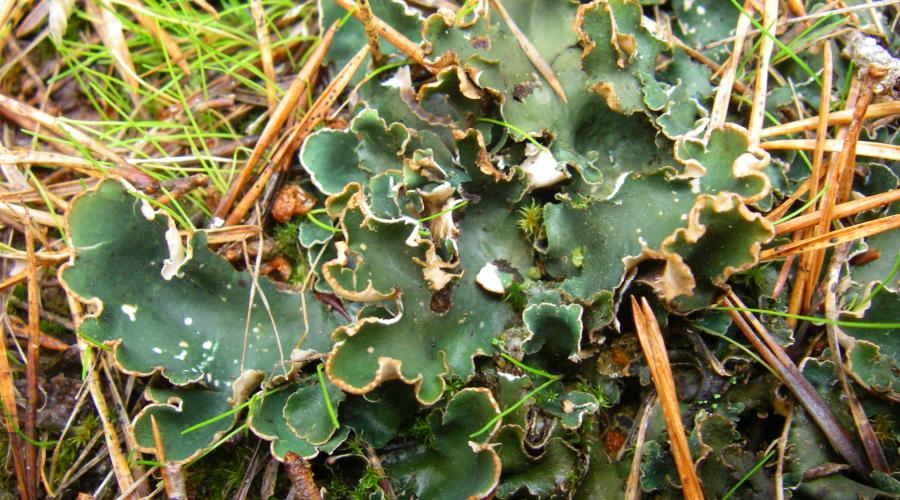
Genetic Scorecard Indicator - Emerald Pelt Lichen
Emerald Pelt Lichen (Peltigera malacea)

IUCN Category:
- Great Britain: Endangered (indicated above)
- Europe: Not assessed
- Global: Not assessed

Genetic Health Status:
- Scottish Risk: Moderate/Serious (indicated above)
- UK Risk: Moderate/Serious
- Scottish Mitigation status: Not effective
- UK Mitigation status: Not effective
Background
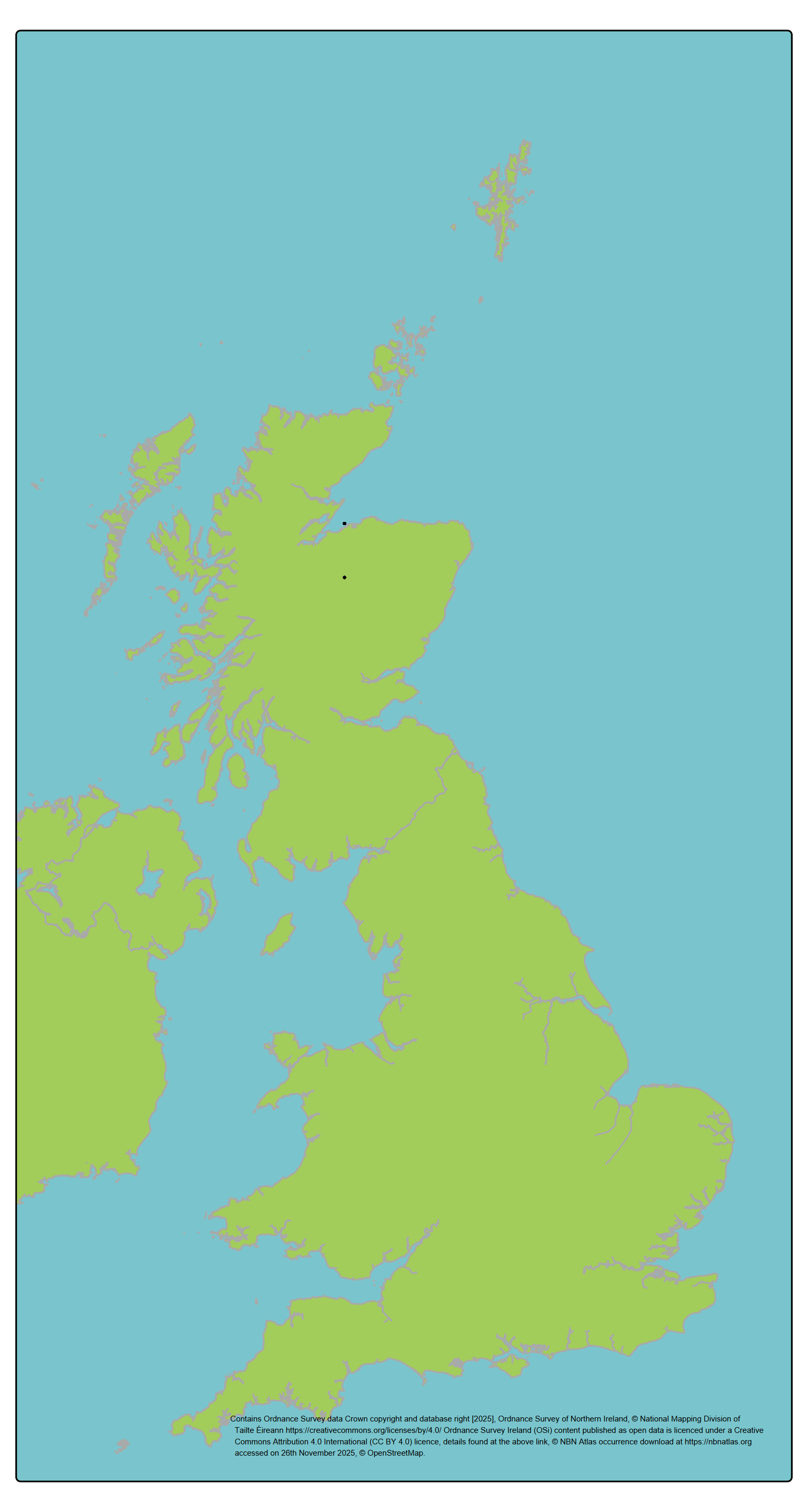
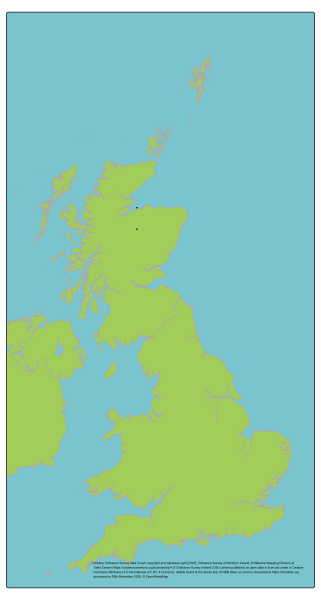
A soil-dwelling lichen of acid dunes and conifer plantations, restricted to 5 known dune systems in eastern Scotland and scattered inland sites (Speyside, Perthshire, Scottish Borders) and apparently dependent on bare sand habitats (Coppins and Coppins, 1997; Paul, 2025). At least two populations appear scattered but extensive (Findhorn Dunes, Loch Fleet SSSI; Paul, 2025; Genney, 2017), but several sites in Perthshire have presumably been lost and most occurrences are of small numbers of colonies (Coppins and Coppins, 1997). Vegetative growth and spores may both contribute to population growth and expansion. Experimental translocations with habitat management interventions have succeeded in better understanding biology of recruitment and the establishment of new individuals at one site. Genetic studies across the entire species have not included specimens from the UK, but in Norway, three distinct cryptic lineages are present (Miadlikowska et al., 2018).
The species is widespread, circumpolar, temperate to arctic.
View a larger version of the distribution map for the Emerald Pelt Lichen.
Current Threats
Populations are severely fragmented and there are a range of known threats to this species, particularly in its dune habitats: dune stabilisation, reduced patchy disturbance by rabbits, invasive species such as gorse and broom and developments (houses, golf courses). Human recreational disturbance has damaged some sites (Paul, 2025).
Contribution of Scottish/UK population to total species diversity
The Scottish populations are separated from those in Fennoscandia and North America by large distances. Although spores may travel long distances to the UK, it is possible that Scottish populations are isolated and harbour unique genetic diversity, but there is no direct evidence of this.
Genetic risks
Diversity loss: population declines
Several inland sites known from prior to 1960 in Perthshire have not been relocated.
Global Biodiversity Framework Indicators
Population definitions:
In the absence of evidence regarding geneflow amoung sites, populations are defined as spatially discrete meta-populations separated by unsuitable habitat.
Ne500: The proportion of populations that have an effective population size of more than 500.
- Proportion of populations with Ne > 500 in Scotland = 0/13
- Proportion of populations with Ne > 500 in UK = 0/13
PM: Proportion of populations that existed in 2000 that still exist in 2025.
- Proportion of populations maintained in Scotland = 9/13
- Proportion of populations maintained in UK = 9/13
Diversity loss: functional variation
Functional variation
There is no evidence for unique functional variation within Scottish populations, although it is possible there is adaptation to local environmental conditions.
Divergent lineages
The existence of cryptic lineages within neighbouring countries (Miadlikowska et al., 2018) suggests the possibility of similarly cryptic lineages within Scottish populations, but this has not been studied, and isolated populations appear to still occupy the full extent of the historic UK range.
Hybridisation/Introgression
There is no evidence for hybridisation or introgression.
Low turnover - constraints on adaptive opportunities
Reproduction is assumed to be a combination of vegetative growth and fragmentation from disturbance and via sexual spores. Monitoring of the Findhorn Scottish population suggests recruitment of new individuals is occurring, particularly where bare sand is available near established patches. Over a monitoring period of 8 years, patches generally appear stable (Paul, 2025).
Cumulative Risk Summary
Overall Genetic Health Status
Scotland
- Risk: Moderate
- Mitigation: Partially effective
Great Britain/UK
- Risk: Moderate
- Mitigation: Not in place
Overall Genetic Health status explanation
The genetic health of the species is dominated by the effects of fragmented and small populations, which are threatened by a range of factors from management, development, recreation, and invasive species. Populations have potentially declined inland in the past. Ensuring self-sustaining populations relies on achieving a balance of small-scale disturbance from tracks or rabbit grazing in suitable habitats and the maintenance of low vegetation in dunes.
In situ genetic threat level
In situ genetic threat level
- In situ Risk for Scotland: Moderate
- In situ Risk for UK: Moderate
Populations are generally small, with census size likely below 500, and the number of populations is small, suggesting that risks from genetic threats are moderate.
Confidence in in situ threat level
- Confidence score for Scotland: Medium
- Confidence score for UK: Medium
No published data on census size is available, but the habitats are restricted in size and notes on populations usually suggest limited sizes; however, at least two of the dune systems may host larger populations, at least one of which appears stable (Paul, 2018).
Ex situ representation
No ex-situ collections exist.
Current conservation actions
Current conservation actions include lobbying for protections from development, testing translocation methods, removal of established gorse stands in dunes and surveys.
| Ex situ | Translocation | Habitat management | Legal protection of habitat or species | Regulation of exploitation | Control of INNS/pests/pathogens |
|---|---|---|---|---|---|
| - | X | X | X | - | X |
Population assessment/monitoring
Population
Demographic
The Findhorn population has been monitored, and translocations have been tested for establishment and recruitment of new individuals; a site at Loch Fleet NNR has undergone recent surveys due to proposed development at the site.
N pops assessed/monitored in Scotland = 2/13
N pops assessed/monitored in UK = 2/13
Genetic
No genetic assessment or monitoring within UK/Scottish populations.
N pops assessed/monitored in Scotland = 0/13
N pops assessed/monitored in UK = 0/13
Further research
Genetic tests to understand the contribution of Scottish lineages to overall European and North American diversity would be helpful to understand the distribution of unique genetic variation. Continued management to improve the condition of low dune vegetation and ensure hydrology, grazing pressure and habitat structure are maintained.
References
Coppins, A.M. and B.J. Coppins. (1997) Action Plans for Lower Plants in Scotland Project. Peltigera malacea Species Dossier. A report for Scottish Natural Heritage & Royal Botanic Garden Edinburgh.
Genney, D. (2017). Coul Links, Dornoch – proposed Golf Course development. Comments on the Environmental Statement, Bryophytes, Lichens and Fungi. Ref: CDM147883. Scottish Natural Heritage.
Paul, H. 2025. Caring for Lichens in our Local Environment. Findhorn Hinterland Trust blog. Accessed 7 November 2025.
Miadlikowska, J., Magain, N., Pardo de la Hoz, C., Niu, D., Goward, T., Sérusiaux, E. and Lutzoni, F., 2018. Species in section Peltidea (aphthosa group) of the genus Peltigera remain cryptic after molecular phylogenetic revision. Plant and Fungal Systematics, 63(2).
Assessor: Rebecca Yahr, Royal Botanic Garden Edinburgh
Reviewer: Pete Hollingsworth, Royal Botanic Garden Edinburgh
Last updated: