Genetic Scorecard Indicator - Common Scoter
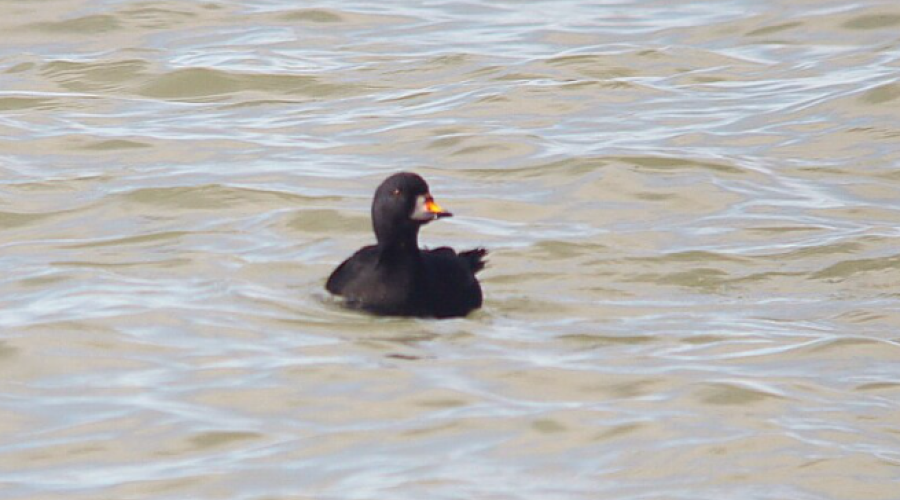
Common Scoter (Melanitta nigra)

IUCN Category:
- Great Britain: Red List species under the Birds of Conservation Concern (indicated above)
- Europe: Least Concern
- Global: Least Concern

Genetic Health Status:
- Scottish Risk: Negligible (indicated above)
- UK Risk: Negligible
- Scottish Mitigation status: Not required
- UK Mitigation status: Not required
Background
Common Scoter (Melanitta nigra) is a medium-sized sea duck that breeds in northern Europe, western Siberia, and Greenland, and winters in large flocks along Atlantic, Baltic and western Mediterranean coasts as far south as Morocco. The breeding range includes northern Scotland and Northern Ireland, and the UK also hosts important wintering and passage areas.
Numbers of UK breeding common scoters have been declining since a recorded peak of several hundred pairs in the 1970s. The contemporary UK breeding population is mainly restricted to a small group of lochs in west Inverness-shire and the Flows of Caithness and Sutherland, with 1-2 pairs also recorded at sites in Perthshire, Islay, East Inverness, and Wester Ross. Tracking studies have shown that Scottish breeding birds disperse to multiple overwintering areas (Griffith et al., unpublished).
Common scoters nest on the ground within dense vegetation in open wetland areas, typically around oligotrophic lakes in remote areas. At sea, Common Scoters feed mainly on molluscs and bivalves, diving up to 30m, but on their breeding lakes they show a preference for shallow waters up to 3-4m depth, where large invertebrates form the bulk of their prey.
A reference genome for M. nigra has recently been published. Population genetic studies of scoter ducks to date have focused on north American taxa, including M. nigra (Sonsthagen et al., 2019). These have shown high panmixia across the breeding range of all species, likely driven by mixing and pair formation on the wintering grounds (Alaska and Central/Atlantic regions).
Current Threats
A recent study in the Flow Country (Hughes et al., 2024) has shown that poor productivity is the primary driver of Scottish population decline, with contributing factors including:
predation from generalist meso-predators and introduced pike; water level fluctuations in hydro-power systems; deterioration of nesting and freshwater feeding habitat; introduction of fish to freshwater breeding lochs resulting in competition for food; disturbance from humans and invasive non-native species (Canada geese); and possible collision with wind turbines around breeding lochs and at sea. Many of these factors are interrelated and impacted by other land use activities such as afforestation and the introduction of fences and tracks to previously undeveloped areas.
There are additional threats to Common Scoters wintering at sea, which are exacerbated by the large flock sizes and include: acute and chronic oil pollution, bycatch in fisheries, commercial exploitation of benthic bivalves, windfarm interactions and disease, notably, avian influenza
Contribution of Scottish/UK population to total species diversity
Scottish (UK) breeding population is <0.05% of the total European breeding population (214,000 - 263,000) and <0.01% of the global breeding population (1,070,000, Birdlife International 2018). However, the UK, including Scottish waters, hosts a large proportion of European overwintering birds (estimated at 135,000, Woodward et al., 2020), which may have recently increased due to shifts in wintering areas away from the Baltic (Birdlife International, 2018).
Genetic risks
Diversity loss: population declines
The UK breeding population is declining. European trend appears stable, global trend is unknown due to poor monitoring of many remote breeding locations (Birdlife International, 2018).
Global Biodiversity Framework Indicators
Population definitions:
UK/Scottish breeding population is considered part of the larger European breeding population. Based on closely related species with similar migratory and breeding behaviour, there is a single panmictic population.
Ne500: The proportion of populations that have an effective population size of more than 500.
- Proportion of populations with Ne > 500 in Scotland = 1/1
- Proportion of populations with Ne > 500 in UK = 1/1
Considered as part of the wider European population.
PM: Proportion of populations that existed in 2000 that still exist in 2025.
- Proportion of populations maintained in Scotland = 1/1
- Proportion of populations maintained in UK = 1/1
Diversity loss: functional variation
Functional variation
Some historical loss of diversity is possible due to past declines, but high gene flow and a large population size means the risk of loss is low.
Divergent lineages
No divergent lineages documented within the UK.
Hybridisation/Introgression
No evidence of divergent lineages or loss.
Low turnover - constraints on adaptive opportunities
No evidence of hybridisation/introgression.
Cumulative Risk Summary
Overall Genetic Health Status
Scotland
- Risk: Negligible
- Mitigation: Not required
GB/UK
- Risk: Negligible
- Mitigation: Not required
Overall Genetic Health status explanation
UK/Scottish population is very small and declining and there is a lack of population genetic information on the species as a whole. However, the European population is large, and studies of closely related species with similar life history traits demonstrate substantial gene flow between geographically separated breeding populations.
In situ genetic threat level
In situ genetic threat level
- In situ Risk for Scotland: Negligible
- In situ Risk for UK: Negligible
Very small UK breeding population but data from closely related species suggests that there is likely to be substantial gene flow from the much larger population breeding in mainland Europe.
Confidence in in situ threat level
- Confidence score for Scotland: Low
- Confidence score for UK: Low
No genetic studies of either the UK Common Scoter population or the species as a whole.
Ex situ representation
Some individuals in captivity e.g. WWT Arundel Wetland Centre’s conservation breeding programme.
Current conservation actions
Common Scoter is classified as Red under the UK Birds of Conservation Concern 5: the Red List for Birds (2021), protected as a Schedule 1 species under the Wildlife and Countryside Act, 1981, and is a priority species under the UK Post-2010 Biodiversity Framework. Current conservation actions focus on habitat protection and monitoring, with four Marine Protected Areas having been designated for the species in Scotland. A supportive rearing programme is under consideration.
| Ex situ | Translocation | Habitat management | Legal protection of habitat or species | Regulation of exploitation | Control of INNS/pests/pathogens |
|---|---|---|---|---|---|
| - | - | X | X | - | - |
Population assessment/monitoring
Population
Demographic
N pops assessed/monitored in Scotland = 1/1
N pops assessed/monitored in UK = 1/1
Genetic
N pops assessed/monitored in Scotland = 0/1
N pops assessed/monitored in UK = 0/1
References
BirdLife International (2018). Species factsheet: Common Scoter Melanitta nigra. (Downloaded on 23/09/2025)
Hughes R, Klein D, Andersen R, Anderson R, Gullett PR, Littlewood N, Martin-Walker A, MacLennan A, Pravia A, Stagg P, Bingham C, Hancock MH (2024). Breeding Common Scoters Melanitta nigra in Scotland’s Flow Country: a population in decline despite productivity being stable. Bird Study, 71, 1-14.
Paposhvili N et al. (2023) Genetic connectivity between Caucasian and Northern Velvet Scoter Melanitta fusca populations and its importance for the long-term survival of the species in the Caucasus. Wildfowl 73:250-261.
Sonsthagen SA, Wilson RE, Lavretsky P, Talbot SL. (2019) Coast to coast: High genomic connectivity in North American scoters. Ecol Evol. 2019; 9: 7246–7261.
Underhill MC, Gittings T, Callaghan DA, Hughes B, Kirby JS, Delany S (1998) Status and distribution of breeding Common Scoters Melanitta nigra nigra in Britain and Ireland in 1995, Bird Study, 45:2, 146-156
Woodward, I., Aebischer, N., Burnell, D., Eaton, M., Frost, T., Hall, C., Stroud, D.A. & Noble, D. (2020). Population estimates of birds in Great Britain and the United Kingdom. British Birds 113: 69–104.
Assessor:
- Victoria Pritchard, UHI
- Alison MacLennan, RSPB
Reviewer: Isa-Rita Russo, University of Cardiff
Image: ©Thomas Griesohn-Pflieger Wikimedia Commons