Genetic Scorecard Indicator - Cod (or Atlantic Cod)
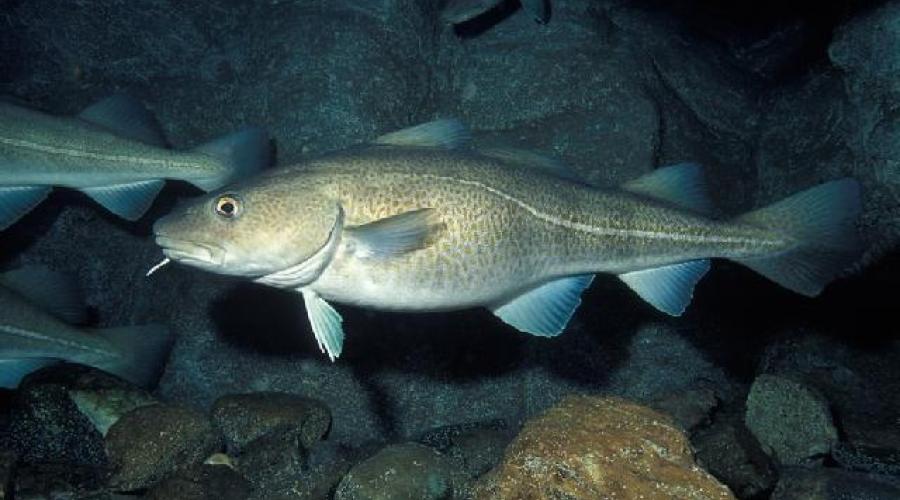
Cod (or Atlantic Cod) (Gadus morhua)

IUCN Category:
- Great Britain: Not Assessed
- Europe: Least Concern
- Global: Vulnerable

Genetic Health Status:
- Scottish Risk: Serious (indicated above)
- UK Risk: Serious
- Scottish Mitigation status: Partially Effective
- UK Mitigation status: Partially Effective
Background
Gadus morhua is restricted to the northern Atlantic Ocean and adjacent waters of the Arctic Ocean (Sobel, 1996). The species is commercially important and, within the European Regional Assessment Zone is managed via stocks (ICES, 2020, 2023a). Of relevance to UK waters are the stocks: Northwestern (Scottish waters), Southern (North Sea), Eastern English Channel and Southern Celtic Sea, Irish Sea and Rockall.
All Northeastern Atlantic stocks experienced prolonged periods of decline between 1970 and the mid-2000s as a result of overfishing (Cook et al., 2015). Following severe management interventions, most stocks have shown some signs of recovery, although for some this is still insufficient to enable commercial fishing to resume.
Cod can be found from the shoreline down to depths of 600m. Cod aggregate annually at specific localities to spawn, generally between December to June, with some temporal variation by sub-population. Different stocks have different growth rates, age at maturity and surplus production levels linked to water temperature (Dutil and Brander, 2003; Cook et al., 2015). Juvenile cod tend to settle and overwinter in shallow coastal areas, eventually dispersing into deeper water as they mature.
Across the North Atlantic, population differentiation occurs through an isolation-by-distance pattern (Pogsen et al., 2001; Bradbury et al., 2013; Dahle et al., 2018; Barth et al., 2019). Cod show phenotypic plasticity leading to substantial population structure and variability in morphology, ecology and behaviour (O’Leary et al., 2007; Cook et al., 2015; Dahle et al., 2018; Barth et al., 2019; ICES, 2020, 2023; Olsen et al., 2024).
Cod is one of the UK’s most popular commercially important species and has been important throughout human history. Cod function as a keystone predator. Depletion of cod populations can lead to trophic cascades at various scales (Frank et al., 2005; Norderhaug et al., 2021).
Current Threats
The greatest threat to cod is over-exploitation (OSPAR, 2014; Cook et al., 2015). Variability in climate (particularly water temperature) contributes to variability in recruitment, growth, and natural mortality which can impact the recovery of exploited stocks (Lilly et al., 2008; Freitas et al., 2015; Tyler-Walters et al., 2016 Wright et al., 2024).
Contribution of Scottish/UK population to total species diversity
Scotland plays a crucial role in cod conservation, supporting key subpopulations with distinct genetic characteristics. There are important spawning grounds to the west and east of Shetland, extending offshore from around Lewis and Harris in the Outer Hebrides, between Islay and Mull and within the Clyde. Coastal nursery areas in the Firths of Clyde, Tay, Forth and Moray supply nearby spawning areas whilst nursery areas around Shetland contribute to both local spawning groups and larger offshore spawning areas in the North Sea.
Genetic risks
Diversity loss: population declines
Since the 1980s, cod have experienced significant overexploitation (Synnes et al., 2021). Declines in age and size at maturity in many cod stocks have been attributed to a genetic response to the selective pressures of high fishing mortality (Cook et al., 2015).
Global Biodiversity Framework Indicators
Population definitions:
Cod is continuously distributed in the NE Atlantic with finer scale population structure derived from fidelity to spawning grounds and local environmental adaptation, which have resulted in variability in morphology, ecology and behaviour.
Ne500: The proportion of populations that have an effective population size of more than 500.
- Proportion of populations with Ne > 500 in Scotland = 0/2
- Proportion of populations with Ne > 500 in UK = 0/5
The GBF indicator uses a census size ratio of 0.1. This however does not hold true for many marine species, particularly those that are highly fecund and have high juvenile mortality (Hauser and Carvalho, 2008; Hoban et al., 2020; Delord et al., 2024). A ratio of 10-5 or 10-6 has been proposed for cod (Hutchinson et al., 2003; Arnason, 2004; Palstra & Fraser, 2012). Populations therefore need to contain at least 50M and possibly as many as 500M individuals to maintain genetic diversity.
Cod in the NE Atlantic is divided into stocks for the purposes of fisheries management. Those relevant to UK waters are:
- Northwestern (Scottish waters). Spawning stock biomass (SSB) is above thresholds of concern with a recommended total allowable catch of 9,920 tonnes (ICES, 2024a). Average weight of cod at minimum landing size of 35cm is 550g, indicating the population has at least 18M individuals.
- Southern (North Sea). SSB is below the minimum reference level for stock recovery although a recommended total allowable catch of 2,248 tonnes was set (ICES, 2024a). This equates to at least 4M individuals at minimum landing size.
- Eastern English Channel and Southern Celtic Sea. SSB is estimated to be 3428 tonnes and is below the minimum reference level for stock recovery so zero catch recommended (ICES, 2025a). The SSB equates to at least 6M individuals of minimum landing size.
- Irish Sea. SSB is estimated to be 212 tonnes and is below the minimum reference level for stock recovery so zero catch recommended (ICES, 2025b). The SSB equates to at least 385k individuals of minimum landing size.
- Rockall. There are no SSB reference points for this stock, although a total allowable catch of 11 tonnes was recommended (ICES, 2024b). This equates to at least 20,000 individuals of minimum landing size.
Using the lower ratio of 10-5, Ne500 has not been met in any of the cod stocks.
PM: Proportion of populations that existed in 2000 that still exist in 2025.
- Proportion of populations maintained in Scotland = 2/2
- Proportion of populations maintained in UK = 5/5
Scotland: The northwestern stock covers the majority of Scotland’s waters and is being maintained. The situation for the Rockall stock is less clear but catch is permitted.
UK/GB: With the exception of the northwestern stock, there are concerns about the spawning stock and its ability to continue to support commercial exploitation but catch is permitted. Within the stock definitions, it is likely that there is further genetic structuring, some of which may have been lost during the severe declines in cod populations throughout almost 4 decades of overexploitation.
Diversity loss: functional variation
Functional variation
Observed changes in phenotypic traits, such as altered growth rates and shifts in spawning periods, reflect potential reductions in functional genetic diversity (Cook et al., 2015).
Divergent lineages
Cod populations exhibit strong regional differentiation, with distinct genetic signatures. As a result of over-exploitation, some populations may already have lost critical genetic variants that support local adaptation and ecological resilience (Dahle et al., 2018).
Hybridisation/Introgression
Genetic introgression and admixture between different cod populations indicate that the current stock structure used for fisheries management may require further revision to ensure recovery (Dahle et al., 2018; ICES, 2020, 2023).
Low turnover - constraints on adaptive opportunities
Some cod populations are experiencing low recruitment, particularly in coastal areas with degraded habitats. This restricts generational turnover and slows the spread of beneficial genetic variants, limiting adaptive potential when experiencing fishing pressure and climate change (Barth et al., 2018).
Cumulative Risk Summary
Overall Genetic Health Status
Scotland
- Risk: Serious
- Mitigation: Partially effective
GB/UK
- Risk: Serious
- Mitigation: Partially effective
Ne500 not met in any stock and SSB is below minimum thresholds in many. Overexploitation remains an issue. The only stock with a SSB above management thresholds is the northwestern stock which covers much of Scotland’s waters.
Overall Genetic Health status explanation
Population differentiation occurs through isolation-by-distance and phenotypic plasticity leading to local adaptations. Significant long term historical overexploitation has resulted in changes in the size at maturity and growth rates, as well as the likely loss of local adaptations. Although conservation measures are in place, population recovery is slow due to continued over-exploitation.
In situ genetic threat level
In situ genetic threat level
- In situ Risk for Scotland: Serious
- In situ Risk for UK: Serious
SSB is below minimum thresholds in many stocks and overexploitation remains an issue.
Confidence in in situ threat level
- Confidence score for Scotland: High
- Confidence score for UK: High
Cod are one of the most studied fish species with regular assessments of the stocks undertaken internationally. Assessment based on extensive data regarding biology, population differentiation and genetic studies.
Ex situ representation
Cod are held in some aquaria, with a focus on public display rather than genetic conversation.
Current conservation actions
Cod is listed as an OSPAR Threatened and Declining Species as all stocks in UK waters are recognised as being under threat or in decline (OSPAR, 2014).
Cod is recognised as a priority marine feature (PMF) in Scotland’s seas, which means that National Marine Plan General Policy GEN 9b applies. This ensures that development and use of the marine environment does not have a significant effect on their national status.
All cod stocks are currently under management plans with annual total allowable catches, temporal and spatial closures to protect spawning fish, protected areas, and various gear restrictions and rebuilding plans (Scottish Government, 2024). Reductions in exploitation rate has led to the improvement of some cod stocks in the Eastern Atlantic, however it is notable that despite stringent management measures, some cod stocks still remain in a poor condition. For example, zero catches have been proposed for the Irish Sea stock (ICES, 2025a) and the eastern English Channel and southern Celtic Sea stock (ICES, 2025b), and no more than 11 tonnes at Rockhall (ICES, 2023).
The Scottish Biodiversity Strategy to 2045, the Scottish Biodiversity Duty and UK Marine Strategy Good Environmental Status provide further drivers to ensure biological diversity is restored, and ecosystems on which cod rely are safeguarded.
| Ex situ | Translocation | Habitat management | Legal protection of habitat or species | Regulation of exploitation | Control of INNS/pests/pathogens |
|---|---|---|---|---|---|
| - | - | X | X | X | - |
Population assessment/monitoring
Population
Demographic
N pops assessed/monitored in Scotland = 2/2
N pops assessed/monitored in UK = 5/5
Regular groundfish surveys are undertaken seasonally and/or annually. Data from these are submitted to ICES for determination of fisheries advice.
Genetic
N pops assessed/monitored in Scotland = 0/2
N pops assessed/monitored in UK = 0/5
There is a long history of genetic assessments being undertaken for cod stock identification. These are not however systematic or regular.
References
Arnason, E. (2004) Mitochondrial cytochrome b DNA variation in the high-fecundity Atlantic cod: trans-Atlantic clines and shallow gene genealogy. Genetics, 166, 1871–1885.
Barth, J.M.I., Villegas-Ríos, D., Freitas, C., et al. (2019). Disentangling structural genomic and behavioural barriers in a sea of connectivity. Molecular Ecology, 28, 1394–1411.
Bradbury, I.R., Hubert, S., Higgins, B., Bowman, S., Borza, T., Paterson, I.G., Snelgrove, P.V.R., Morris, C.J., Gregory, R.S., Hardie, D., Hutchings, J.A., Ruzzante, D.E., Taggart, C.T. and Bentzen, P. (2013). Genomic islands of divergence and their consequences for the resolution of spatial structure in an exploited marine fish. Evolutionary Applications, 6, 450-46.
Cook, R., Fernandes, P., Florin, A., Lorance, P. & Nedreaas, K. 2015. Gadus morhua (Europe assessment). The IUCN Red List of Threatened Species 2015: e.T8784A45097319
Dahle, G., Quintela, M., Johansen, T. et al. (2018). Analysis of coastal cod (Gadus morhua L.) sampled on spawning sites reveals a genetic gradient throughout Norway’s coastline. BMC Genomic Data, 19, 42
Delord, C., Arnaud-Haond, S., Leone, A., Rolland, J. and Nikolic, N. (2024), Unraveling the Complexity of the Ne/Nc Ratio for Conservation of Large and Widespread Pelagic Fish Species: Current Status and Challenges. Evolutionary Applications, 17, e70020
Frank, K.T., Petrie, B., Choi, J.S., & Leggett, W.C. (2005). Trophic cascades in a formerly cod-dominated ecosystem. Science, 308, 1621–1623.
Freitas, C., Olsen, E.M., Moland, E., Ciannelli, L., Knutsen, H. (2015). Behavioral responses of Atlantic cod to sea temperature changes. Ecology and Evolution, 5(10), 2070-83.
Hauser, L., and G. R. Carvalho. 2008. “Paradigm Shifts in Marine Fisheries Genetics: Ugly Hypotheses Slain by Beautiful Facts. Fish and Fisheries, 9, 333–362.
Hoban, S., Bruford, M., D'Urban Jackson, J., Lopes-Fernandes, M., Heuertz, M., Hohenlohe, P.A., Paz-Vinas, I., Sjögren-Gulve, P., Segelbacher, G., Vernesi, C., Aitken, S., Bertola, L.D., Bloomer, P., Breed, M., Rodríguez-Correa, H., Funk, W.C., Grueber, C.E., Hunter, M.E., Jaffe, R., Liggins, L., Mergeay, J., Moharrek, F., O'Brien, D., Ogden, R., Palma-Silva, C., Pierson, J., Ramakrishnan, U., Simo-Droissart, M., Tani, N., Waits, L., Laikre, L., (2020). Genetic diversity targets and indicators in the CBD post-2020 Global Biodiversity Framework must be improved. Biological Conservation, 248, 108654
Hutchinson, W.F., Carvalho, G.R. and Rogers, S.I. (2001). Marked genetic structuring in localised spawning populations of cod Gadus morhua in the North Sea and adjoining waters, as revealed by microsatellites. Marine Ecology Progress Series, 223, 251–260.
ICES (2020). Workshop on Stock Identification of North Sea Cod (WKNSCodID). ICES Scientific Reports. 2:89. 82 pp.
ICES (2023). Benchmark workshop on Northern Shelf cod stocks (WKBCOD). ICES Scientific Reports. 5:37. 425 pp.
ICES (2024b). Cod (Gadus morhua) in Division 6.b (Rockall). ICES Advice: Recurrent Advice. Report
ICES (2025b). Cod (Gadus morhua) in Division 7.a (Irish Sea). ICES Advice: Recurrent Advice. Report.
Lilly, G.R., Wieland, K., Rothschild, B.J., Sundby, S., Drinkwater, K.F., Brander, K., Ottersen, G., Carscadden, J.E., Stenson, G.B., Chouinard, G.A., Swain, D.P. & Daan, N. (2008). Decline and Recovery of Atlantic Cod (Gadus morhua) stocks throughout the North Atlantic. Resiliency of Gadid stocks to Fishing and Climate Change, Alaska Sea Grant College Program, AK‐SG‐08‐01: 39‐66.
Norderhaug, K.M., Nedreaas, K., Huserbråten, M., & Moland, E. (2021). Depletion of coastal predatory fish sub-stocks coincided with the largest sea urchin grazing event observed in the NE Atlantic. Ambio, 50, 163–173.
O’Leary, D.B., Coughlan, J., Dillane, E., McCarthy, T.V., Cross, T.F. (2007). Microsatellite variation in cod Gadus morhua throughout its geographic range. Journal of Fish Biology, 70, 310–35.
Olsen, E. Hutchings, J.A., Rogers, L.A., Stenseth, N.C., Vøllestad, L.A. (2024). Plasticity and Evolution in Atlantic Cod Populations during Climate Change. In Biology and Ecology of Atlantic Cod. Boca Raton: Tyler & Francis Group, pp. 6–7.
Palstra, F. P., & Fraser, D. J. (2012). Effective/census population size ratio estimation: a compendium and appraisal. Ecology and Evolution, 2(9), 2357–2365.
Pogson, G. H., Taggart, C. T., Mesa, K. A., and Boutilier, R. G. (2001). Isolation by distance in the Atlantic cod, Gadus morhua, at large and small geographic scales. Evolution, 55(1), 131-146.
Scottish Government (2024). UK national North Sea cod avoidance plan
Sobel, J. (1996). Gadus morhua. The IUCN Red List of Threatened Species 1996: e.T8784A12931575.
Synnes, A-E.W., Huserbråten, M., Knutsen, H., Jorde, P.E., Sodeland, M., Moland, E. (2021) Local recruitment of Atlantic cod and putative source spawning areas in a coastal seascape. ICES Journal of Marine Science, 78, 3767–3779.
Tyler-Walters, H., James, B., Carruthers, M. (eds.), Wilding, C., Durkin, O., Lacey, C., Philpott, E., Adams, L., Chaniotis, P.D., Wilkes, P.T.V., Seeley, R., Neilly, M., Dargie, J. & Crawford-Avis, O.T. (2016). Descriptions of Scottish Priority Marine Features (PMFs). Scottish Natural Heritage Commissioned Report No. 406.
Wright, P.J., Dobby, H. & Fox, C. (2024). Northwest European Shelf Cod Stocks; North Sea, West of Scotland, Irish Sea and Celtic Sea. In Biology and Ecology of Atlantic Cod. Boca Raton: Tyler & Francis Group, pp. 136-173.
Assessors:
- Emma-Louise Smith (University of Edinburgh)
- Eunice Pinn (NatureScot)
Reviewer: Alex Thomson (Seawilding)