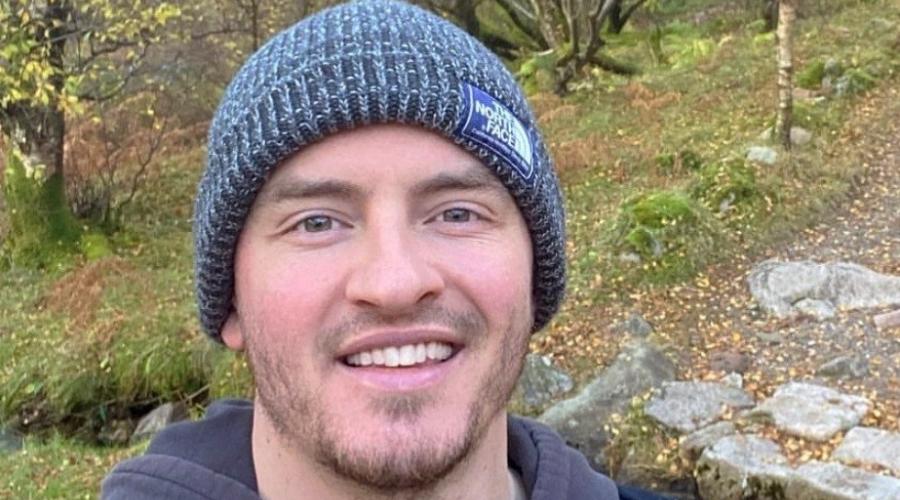
Beyond the Diagnosis: How Digital Creator Liam Robertson Found Support in Nature
Some days getting to the front door feels like a summit. We sit down with digital creator Liam Robertson to explore how living with ulcerative colitis reshaped his life, why he chose to share the hard parts publicly, and how time outdoors became a steady anchor for his mind and body.
We dig into the realities of inflammatory bowel disease, the loneliness of delayed diagnosis, and the stigma that keeps so many silent. Liam walks us through lockdown as a turning point—finishing a self-published book, launching a social platform, and discovering a community hungry for honesty.
You'll hear concrete strategies for planning outdoor time with a chronic condition: prepping meals that avoid triggers, building in rest, packing essentials, mapping facilities, and staying flexible. We talk favourite restorative outdoor places and offer simple ways to connect with nature on days you can't get out.
At its heart, this is a story about redefining strength. Liam's message is clear: you are not your diagnosis, and you don't need grand adventures to feel better. One small step outside, repeated often, can change the shape of a day.
Information:
Liam Robertson on Instagram: @livingwithulcerativecolitis
Transcript:
00:05 Kirstin
Welcome to Make Space for Nature from NatureScot, the podcast celebrating Scotland's nature, landscapes and species. I'm Kirstin Guthrie, and in this episode, Tim Hancox and I are joined by Liam Robertson, the creator behind Living with Ulcerative Colitis, an inspiring online social media space where he shares the honest ups and downs of living with a long-term health condition alongside his love of Scotland's outdoors. We'll be chatting about resilience, mental health and how connecting with nature can help you find calm, even on difficult days.
So hi, Liam, and welcome to the Make Space for Nature podcast. Now you've been creating inspiring content for NatureScot, focusing on encouraging people, particularly those who might have a long-term health condition like yourself, to get outside if they can, to help both their mental and physical health. Could you please share a little bit of your journey with ulcerative colitis? You know, what it is, when you were diagnosed and how it shaped your life?
00:54 Liam
Yeah, sure. And also, firstly, thanks for having me here. So it's a type of inflammatory bowel disease. It's basically where your immune system attacks your colon, your large intestine. It causes inflammation and ulcers and a whole host of other symptoms, a lot of which people never really see.
I was diagnosed in my early twenties, kind of after years of – not personally me ignoring signs, but going back and forth to the GP and the hospital and getting kind of fobbed off. And that went on for years. To be honest, I think it was three years from the first time I got ill until I was finally diagnosed. I got a lot of, you know, "there's nothing wrong with you, just get on with it" kind of thing, which in hindsight is a bit crazy because, you know, I think if I was a GP and somebody was coming to tell me they were bleeding from their backside 20 times a day, it's pretty obvious something's wrong. But unfortunately, back then – this was, you know, maybe 15 years ago or something – the awareness wasn't there. It wasn't like what it is now. I think they were less likely to point to Crohn's and colitis back then than they are now. It's kind of one of their go-to things for those type of symptoms.
So yeah, it totally changed my life. Physically, mentally, socially. You know, there were times where I felt trapped by it. I was stuck indoors, I was drained, I was anxious and worried about when my symptoms would flare. And over time, I kind of learned to change my lifestyle a bit – like slow down, listen to my body more, you know, find bits of peace in small activities as opposed to everything having to be a big event.
And I think nature did become a massive part of that for me to be honest. It kind of helped shape probably the kind of person I was, you know, based on values around health and balance and connection to something that I probably hadn't really had before.
03:02 Kirstin
Yeah, it must have been a pretty scary time for you. And you know, the thing is though, I suppose, as you say, it's more well-known now and I think you've probably helped with that by, you know, talking about it, writing your books, these kinds of things. So what led you to start sharing your story publicly on social media? Were you a bit nervous? Were you afraid of the responses? What kind of response have you had from other people?
03:24 Liam
Oh, well yeah. Well to be honest, I mean, the funny thing is I'd kept it a secret for like 10 years or something and really didn't tell people. I think I felt embarrassed and I think it made me feel weak, like less of a man in some way, like it decreased my value as a human. You know, I spent a lot of my younger years, especially my late teens and into my early twenties, being quite vain. And, you know, I wanted to have abs and be muscly and be the sports person who was fit and strong and whatever else. And then suddenly all that was taken away and I realised, oh, I didn't really have much left when I was unwell.
So I couldn't bring myself to tell people about it. I felt like it would change how people would look at me and it would affect my life in too many ways. And so I tried to keep it secret and didn't tell my family, didn't tell my friends or my colleagues. People knew if I had to go to hospital for something, but I always played it down. I said it was nothing big, like no big deal.
And because there was a lot of stigma around that kind of stuff, especially when you talk about bowels, you know, it's not very sexy telling someone that you've sh*t yourself and you've been bleeding 20+ times a day for the last couple of months.
04:36 Kirsti
Yeah, yeah - I may have to... I may have to bleep that word out. But yeah.
04:47 Liam
And yeah, yeah. So when it came to the time, it was in lockdown, and I'd been taking notes over things that had happened over the years. I kind of developed a book. And then when I got to lockdown – I think it was in 2019 originally – I thought, I can't share this. The book is too embarrassing. Like, you know, I haven't even spoken to people about it that I know closely, never mind publish a book online. And then it got into 2020, when the COVID lockdown happened, and I just thought, you know what? I've got nothing else to do. I'm stuck in my house, lived on my own at the time as well, and the medication I was on was mentioned on the NHS website as one of those where you were going to die basically if you got COVID while you're on this medicine.
A doctor friend of mine had got in touch with me and she said, "Are you on this medication?" – azathioprine. "Oh yeah, I'm still on it." And she was like, "Don't leave your house, this is serious. Like, it could be fatal if you get COVID."
So I was one of these people that literally didn't actually leave my house for the first two weeks. I didn't even open a window because I thought I could breathe it in through the window or, you know. So to say I was going a little bit crazy is an understatement. And I needed stuff to output, you know, my energy, and not drive myself crazy. So I finished up the book and I just published it onto Amazon through a self-publishing programme they have.
Then I decided I need to tell people about it. So I created that Instagram page and started reaching out to people and to be honest, the response was incredible. I had hundreds of people message me really quickly. My page grew really quick initially.
I think it turns out there's a lot of people who were in a similar position to me, felt like they hadn't been seen and they didn't have the courage to speak about their own experience. And I feel like it allowed me to build this community of support for people. And yeah, I mean the connection with the people is what kept me doing it. You know, it became less about the book and more about being able to connect with others. It almost became a two-way kind of therapy thing. You know, I was listening to people's problems and telling them about mine and suddenly the burden didn't feel so heavy. You know, after 10 years of keeping it a secret, it suddenly became something that I was proud of and felt like a strength, not a weakness.
And I don't know, I feel like it gave me a purpose in life. You know, it made me feel like I had something to give that really could help people and myself. Amazing.
07:26 Tim
Hi Liam. You often talk about how important nature is for your wellbeing. When did you realise that being outdoors would help you mentally and physically, especially – you've just been talking about how long you were cooped up during the pandemic – so presumably the freedom of being able to get outdoors now has made a big difference as well?
07:46 Liam
Yeah, totally. I think for a long time I was somebody who – I didn't realise it – but spent a lot of time outdoors without realising it, you know, even just things like I'd play golf or would go for a hike somewhere, go somewhere nice with friends.
And then when I got unwell and I started flaring up and I couldn't really go anywhere, I was stuck to the toilet all the time, I was in hospital. That's when it really hit me. It was like, oh, I'm actually really missing out on something that's really important for my physical and mental wellbeing here. There was something about fresh air and greenery and being outside in nature that was doing something that I hadn't realised was happening. It was almost like a subconscious kind of energy or a vibe. I don't know what you want to call it, but it gave me something that I didn't realise I was getting until it was gone.
So I think what – basically when I flared and I was stuck inside for the time, that's when I realised. So I purposely started trying to take short walks and initially it was literally out into my garden and back because when I was flaring super bad – like for example in 2023, I couldn't even leave my house. I barely left my house for over a year apart from to go to hospital. Even that was a nightmare trying to get there without having some sort of incident.
So I'd start by taking walks in my garden and I realised, oh, I'm actually feeling better just being around green, real grass and bushes and trees and fresh air. Just enough of that was enough to shift my mindset and make me feel – I don't want to say it totally made me better, but it definitely lightened the burden of what I was going through. I feel like when I'm in nature, it does something that – almost like I feel like everything slows down, you know. The stress and anxiety of busy life, modern life between social media and work and friends and colleagues and bills and, you know, just life stuff. I just felt like everything slowed down a bit when I'm around nature. And I don't know, it's hard to explain, but when everything else feels chaotic, I feel like it gives you a moment of calm. And it definitely became part of my recovery mentally and physically in a lot of ways. You know, part of the healing process.
10:06 Tim
Yeah. And you mentioned, you know, sometimes not being able to get much further than your garden. But are there any particular landscapes or spots that you find particularly helpful or comforting when things have been tough or when you're able to get out a little bit further than your garden that you find is helpful to you?
10:26 Liam
Yeah. Yeah. I do. I have a dog as well. So I really do enjoy taking walks places close to the shore or around the beach and stuff.
It probably sounds cliché, but I do feel that the sound of the waves is a calming thing. You know, a lot of people listen to them now. They put the nature sounds on – waves and rain and stuff. And I do feel like it feels calm, the kind of thing it's doing to you. But for me, I think it's more something to do with the colour green and being around forest stuff.
I really love a walk in a forest. I feel like being around trees and bushes and plants and things that feel natural – I feel like it's like a nice healing kind of energy you get from them and I feel so calm and relaxed and I don't feel like there's pressure on me like I do when I'm in other environments. And I've always been somebody who struggles to relax properly. I've always felt like I need to be doing something productive, you know. I'm not very good at taking a nap and not feeling guilty. And when I'm in nature, I tend to feel like – I don't know, it just allows me to switch off. So I think definitely, it's stuff like forest walks, being out hiking when you're away from everything and away from all the business of city life. You know, that kind of stuff? Definitely. I can almost like – I've got to say this – it lets me sharpen my focus a bit and take a better perspective of things that I'm stressing about. With that, you know, it really does make a noticeable difference.
11:54 Kirstin
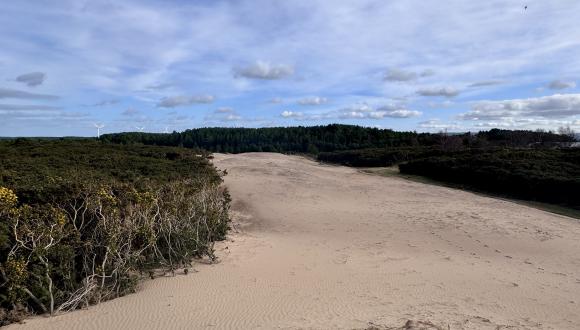
Yeah, I totally agree. Yeah. Obviously, I've got a dog too. And taking her to the beach really helps me. But one of my favourite places is Tentsmuir, it's one of our nature reserves. But it's got forest and it's got beach. So the two – the beach itself is absolutely stunning. So yeah, it's a great place to go and you can certainly switch off.
And you know, you talk about the kind of noise of waves and absolutely it does. It's definitely a lovely sound. So what about days when you can't get out? You know, can you find ways to connect with the natural world, you know, even just looking out the window, using – I mean, some people have like bird feeders on their windows or listening to bird song or wave music. You know, what kind of things do you do?
12:37 Liam
Yeah, I've learned on my bad days not to force it. You know, even just things like you've mentioned. Opening the window. I've even sat in my car before when it's been raining and just the noise of the rain on the roof of the car, I find it really relaxing.
In my old flat, not where I am now, but the two windows in the living room both looked out onto a road, but there were big trees running along it. And when I lay on the sofa looking out the window you could just see the sky and the trees and I used to find this was a therapeutic place to get relaxed. And just even the colour green, windows open, almost getting the fresh air through and a bit of feeling like you're outside because you could see the trees and bushes and stuff. Yeah. I find it really relaxing.
And I think sometimes as well it's better to – I think sometimes when I tell people, especially the chronic illness community, about getting into nature, the immediate thing is, "Oh, I can't manage. I'm not well enough." But I think reframing what getting into nature really means – you know, we don't have to climb Everest every day. Sometimes it's just letting the natural world kind of come to you a bit. That can be just as good.
13:42 Kirstin
Yeah, absolutely. I mean, just walking out your front door, even if you have a garden, it's just noticing what's going on. And particularly in autumn, I think it's amazing the amount of fungi and the leaf changing. You know, the colours, it's just lovely. But even just noticing these things can really help. And what about when you do get out, when you – how do you plan or adapt your outdoor activities to fit around your health? You know, things like food, access to facilities. Do you have any tips for others with chronic conditions who may perhaps feel anxious about venturing out?
14:13 Liam
Oh yeah, yeah, honestly. Planning with a chronic illness is everything, especially when it comes to travel or doing activities like this.
For me, if I was going somewhere and I knew I'd have to leave early – like say I was going to go and walk around a lake somewhere or somewhere out the road and maybe do a little small Munro or something or walk around some nature reserve, whatever – if I know I've got to leave early, the first thing I'll be doing, I'll probably plan it a couple of days before at the minimum. If I'm honest, I'd probably think about things like what I'm eating. Think about stress management stuff as well because, you know, sometimes in the chronic illness community, there's foods that I know will trigger people. People have their things they know aren't good for them, but they're often the things we really enjoy. So we kind of pick and choose when we'll eat the naughty foods, you know. And so what I'll do is I'll purposely just only eat wholesome, natural, non-triggering foods in the lead-up to an event. So if I know I've got to go somewhere that morning, I'm going to do an outdoor activity, I'll make sure my day or two before it's really clean and healthy and I'm managing stress and getting good sleep and staying hydrated and doing all the stuff I need to do to make sure that it's not going to be a bad day for me in terms of accidents or needing toilet access or whatever.
And other things as well – I'm not embarrassed now to take wipes with me and spare boxers, you know. Although I'm not flaring now, I kind of get that. But still, you put some in your car with you, it gives you a sense of confidence. And I know when people are actually in full-on flare-up, some people when they've got important things they need to do, they actually wear pads and stuff as well. And even though it doesn't do anything, it just gives you a little extra confidence that you can go and do the thing you need to do and it's not going to be a total disaster. And yeah. And I've learned to be flexible too as well. Like, if I need to cut a walk short or – I don't know – if I'm planning some huge hike and then I get five minutes into it and I realise, oh, I'm not feeling too good, you know, you can just walk back. You don't have to push yourself to the point where you're not going to enjoy it. Allowing yourself that flexibility, I think, increases the chance you'll actually get out there and do stuff more.
16:37 Tim
Liam, you talk about all the work you've been doing. So you're obviously very busy with creating content which you seem to be enjoying and your writing and all your other work commitments. How do you balance your love for that and also the commitments that you've made with avoiding burnout and pushing yourself too hard?
16:59 Liam
Yeah, it's a fine line, isn't it? I think I've learned – well, I think I've learned – if I don't take care of myself first, the content and everything else is going to suffer anyway. I do try and set boundaries, step away from social media a little bit, but if I'm honest, I'm not very good at it. I'm getting better.
I can do things like create content and schedule posts in advance, or you know, I'm quite big on routine as well. So I try to stick to my routines as much as possible and rest is part of that.
And it all comes from experience, because I think when you first got unwell and you've got a busy lifestyle, you try to almost be a bit ignorant to it and just keep going because you think you can push past it. But I've realised that assessing your body and how you feel and allowing yourself to rest, even if you feel slightly guilty about it, actually makes for better long-term success in my opinion.
17:59 Tim
It's obviously hugely impressive and very brave sharing your personal story online about your health. And you've talked about how it gave you a sense of purpose. Can you talk about what you hope it offers others or what you're hoping that your content is able to do for the people that hear your story?
18:23 Liam
Yeah, well, I kind of just hope that people know they're not defined by their illness. You know, you can live a full life also with colitis. It might just look a little bit different than you thought.
I want to show that vulnerability can be powerful as well. Talking about the hard days, you know, it doesn't make you weak. It makes you real. And then if someone sees my content and they feel less alone or – I don't know – they get inspired to go outside and take their first walk or feel more confident about it, that's what it's all about.
18:52 Kirstin
Yeah, absolutely. It's great. And you know, listeners, they might be in a tough place right now. You know, perhaps they're stuck indoors, whether that's through anxiety, depression, or maybe they're just feeling overwhelmed for whatever reason. You know, what's your advice for making that kind of first step, the initial move outside?
19:11 Liam
I think it's probably just start small, you know, like I mentioned earlier, you don't need to climb Everest. You could just step outside your door and breathe and feel the air, even if it's just for a couple of minutes.
Even more so if you've got a garden you can spend time in, you know, go and sit in your garden for half an hour.
And I think the key is consistency as well. If you stick to small steps, the momentum kind of builds up with it, you know. You don't necessarily have to be doing something productive outside. You're not ticking off a Munro off your list or making your way down the circuit of nature somewhere that you always wanted to do. You could just be present, being outside and appreciating those moments, you know. And I think it does add up and it does shift how you feel generally.
19:58 Kirstin
Absolutely. And I think even just – I think a lot of people are working from home as well – just making sure they get out for a break either at lunchtime or whatever, and maybe it is just having that kind of routine, isn't it? Every day, if possible. Obviously, if people can. And you know, if somebody is newly diagnosed with a chronic illness, if they're listening, what message would you share with them?
20:19 Liam
I suppose the first thing is that it's OK to feel – I don't know – upset and lost and confused and all that stuff because I did as well.
I mean, I'm probably the best example of someone who was too embarrassed to tell people for a decade, you know. I totally get it. And you need to give yourself time to process it. It's a big change.
And it isn't the end of your story either. You know, I know a lot of people, as I did, would feel like, oh, that's the fun over. It's the end. That's the person who I thought I was. I'm not there anymore. And I can't do this. I can't do that. And it does feel like life's over at points, but I think you'll learn more about yourself and the people around you during chronic illness. I used to say it was kind of like a filter for fake friends and the real people in your life. And you'll build strength in ways you never expected and it'll allow you to connect with people that are more true and real than probably the people around you currently, and that you can still live a full, meaningful life. It's just one that's built around your own pace and not someone else's.
21:31 Kirstin
And how did you feel when you were actually diagnosed? Obviously you had a long period of time when you weren't diagnosed. Did you feel slightly kind of mentally better about knowing what you were diagnosed with? Did that help in any way?
21:44 Liam
Yeah, I suppose it did. I suppose it did. I think it's hard because – you know what I tell people? I tell people all the time as well – it's like knowledge is power. If you're confused, you're not sure or you're feeling like you don't have the answers you need, that's one thing the community is amazing for – being able to connect with others and find out information that you didn't know before. It's unfortunate because the way things are with the NHS, you often might go to your GP for help, and they either don't have the answers or they don't have time. And it's really a common thing amongst people within the community, the chronic illness community, is that they go to their GP, get told what's wrong with them, they get diagnosed and they get a five minute, ten minute chat, but it's not enough. It's not enough to answer the questions they might have, it's not enough to make them feel more comfortable with the diagnosis. Whereas they come to the online community and there's all these people who have been there, done that for years and they know everything you've been through and they can kind of provide you with the support and knowledge that you need to allow you to work through life and get yourself in a good place where you're enjoying life again, you know.
22:54 Tim
Speaking of enjoying life again, we ask all our guests who come on the show what they do to make space for nature in their lives and any advice or top tips you might have for anybody listening as to how they might be able to do the same and find ways to make space for nature.
23:15 Liam
I think making it part of your daily life. It doesn't have to be a special occasion. And I think, like you mentioned, even just on your lunch break or maybe it's part of your commute to work, even if it's just a few minutes before bed, you go outside, get some fresh air.
It doesn't necessarily – nature doesn't have to necessarily be somewhere you travel to, you know. It's all around us. And I think we can make the most of that.
23:43 Tim
Thank you so much Liam, and thanks for sharing your story and your insights with us today. It's a reminder that even when life feels unpredictable, you know, slowing down, connecting with the natural world right on our doorsteps, can bring calm and perspective and some real healing. Thanks so much, Liam.
23:59 Kirstin
Thank you. Thanks for listening. For more ways to connect with and help protect Scotland's natural world, go to nature.scot.
Last updated: