SAC members
The Committee’s external members bring to NatureScot a mix of expertise in a wide range of disciplines.
The Scientific Advisory Committee (SAC) has up to seven members, plus one of our Board members as Chair.
All of the SAC members come from outside NatureScot. They bring to the table a mix of expertise in a wide range of disciplines.
Professor Peter Higgins
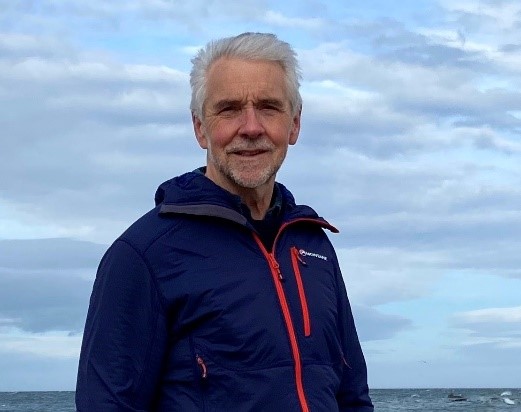
Peter is Professor of Outdoor, Environmental and Sustainability Education at the University of Edinburgh.
Whilst his academic background is in physical environmental sciences, salmon ecology, freshwater and fisheries biology, much of his recent career has been spent working in and for the environment promoting its educational, social and economic value through his teaching, research, and policy development. He teaches extensively indoors and outdoors locally and on the hills and rivers of Scotland, where he also spends much of his recreational time.
He has held a number of advisory Scottish Government advisory roles, including as Chair of the Ministerial Advisory/Implementation Groups on Learning for Sustainability, and membership of the National Parks Act Review Group.
He is an expert advisor to the UK Commission for UNESCO, several international nature and sustainability education networks, and is a member of the International Union for Nature Conservation (IUCN) Commission on Education and Communication and its Task Force on Nature-based Education. He is a member and previous Chair of the Board of Trustees of Europe's largest environmental education charity, the Field Studies Council.
Peter's work has been recognised through teaching awards, and Fellowships of the Royal Society of Edinburgh, the Royal Geographical Society and the Higher Education Academy. He was awarded the Order of the British Empire (OBE) for services to the Environment and Outdoor Education.
He is a NatureScot Board representative on the UK Joint Nature Conservation Committee and will act as Chair of the NatureScot Scientific Advisory Committee until 31 March 2029.
Kathy Dale
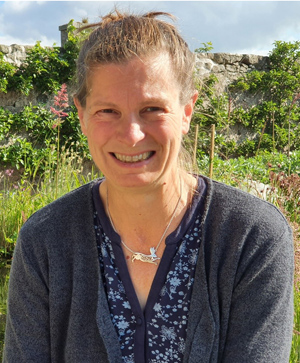
Kathy Dale has a BSc (Hons) degree in Ecology from Loughborough University and an MSc in The Biology of Water Resource Management from Napier University, Edinburgh. She is a Chartered Ecologist and has thirty-five years’ professional consultancy experience. She was a Principal Consultant at EnviroCentre Limited for 14 years before retiring in November 2020.
Kathy is authoritative in the fields of Ecological Impact Assessment (EcIA), Habitats Regulations Appraisal (HRA) and industry standard ecological surveying, research and good practice. She is an accomplished aquatic ecologist with wide-ranging knowledge of freshwater and coastal environments, including habitat and botanical surveying, site assessment and management, and devising survey and monitoring strategies. She specialises in aquatic macrophytes and has a specific interest in river restoration.
Kathy was a Founder Member of the Chartered Institute of Ecology and Environmental Management (CIEEM) and was instrumental in setting up the first Geographic Section, in Scotland. She is driven by the strong need to recognise ecology as a profession, to improve the standards of ecological research and reporting, and for ecologists to have professional representation. For a number of years, until November 2020, she was a member of the University of Aberdeen School of Biological Sciences (SBS) Programme Advisory Board (PAB), advising on the skills graduates require for a career in consultancy.
Dr Janet Fisher
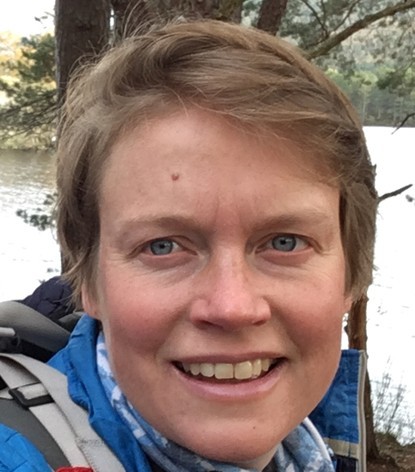
Janet Fisher is a Senior Lecturer in Geography and environmental social sciences within the University of Edinburgh’s School of GeoSciences. She had an interdisciplinary training at the interfaces of geography, ecology and environmental social sciences at the Universities of Durham and East Anglia. She joined the University of Edinburgh as a Chancellor’s Research Fellow in 2013.
Janet has research interests in the social dimensions of environmental change, land management, conservation and ecological restoration. Her early career work focused on ecosystem services, human wellbeing and systems of incentives for changed land management, known as payments for ecosystem services, and broadly had an empirical focus in East and Southern Africa. More recently, she has been working on environmental and land use contention, focusing on the potential of deliberative methods to inform and improve the character of debates about using land to enhance biodiversity and mitigate climate change. This has taken a focus on upland environments in Scotland and the north of England. This work has developed research-grounded tools for practitioners to use in stakeholder engagement processes in areas with anticipated changes in land use.
Janet also sits on the Programme Advisory Board for the Scottish Biodiversity Strategy. She is an Associate Editor for the British Ecological Society journal, People & Nature, an external examiner for St Andrews University, and regularly sits on funding panels for UK Research and Innovation and the German Research Foundation (DFG).
Professor Xavier Lambin

A population ecologist, Xavier is Professor of Ecology at the University of Aberdeen. Xavier undertook his PhD at the Universities of Louvain and British Columbia, and a post-doc at the Banchory Research station of the then Institute of Terrestrial Ecology before moving to the University of Aberdeen in 1993.
His research interests span:
- Empirical quantitative and theoretical approaches to population and ecosystem dynamics
- The demography, dispersal, dynamics and species interactions with fragmented and cyclically irruptive populations of voles and species that eat them
- The generation of evidence during and its use in informing conservation action, and wildlife management including in ecosystems undergoing restoration with pine martens and capercaillie
- The management of invasive non-native species, including American mink through participatory approaches
- He maintains 3 long term studies of water voles in Assynt and Balmoral (spanning 28 years), of tawny owl and field voles in Kielder Forest spanning 44 years dynamics and carnivores in the Cairngorms Connect partnership area.
Xavier is proud educator of junior researchers and is deeply committed to natural history education. Xavier is a Fellow of the Royal Society of Edinburgh.
Professor Jane Reid
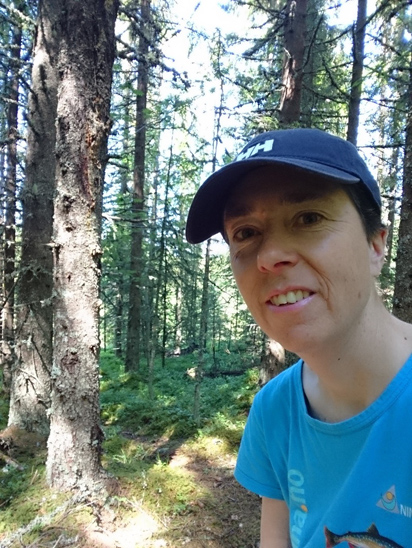
Jane is a Professor of Population and Evolutionary Ecology at the University of Aberdeen, and currently also an International Chair Professor at the Norwegian University of Science and Technology.
Jane’s research interests lie in understanding population dynamic and evolutionary responses to environmental variation and change. She is particularly interested in understanding the impacts of inbreeding in small populations, and in understanding the consequences of movements (dispersal and seasonal migration) for population and evolutionary dynamics. She focuses on long-term field studies of wild bird populations, primarily including red-billed choughs, European shags and song sparrows.
Jane is a Fellow of the Royal Society of Edinburgh and the Royal Norwegian Society of Sciences and Letters. She was previously awarded the Zoological Society of London Scientific Medal, and the Marsh Award for Ornithology. She is an experienced field ornithologist, and is a long-standing director of Fair Isle Bird Observatory Trust.
Professor Marian Scott
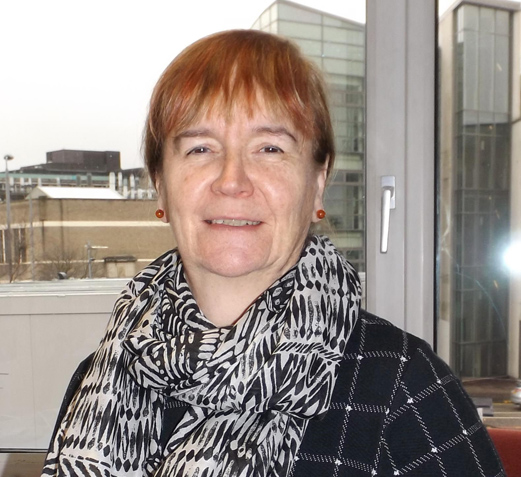
Marian is Professor of Environmental Statistics at the University of Glasgow. She gained her PhD at the University of Glasgow and has spent periods of study at the IAEA Marine Radioactivity Laboratory in Monaco and at CSIRO in Melbourne.
Her research interests span:
- Environmental informatics (including data fusion from in situ sensors, drones and satellites to provide improved mapping of spatio-temporal modelling; and applications to water quality and quantity, and air quality and health)
- Animal welfare and quality of life
- Radiocarbon dating and the carbon cycle
Marian is currently a member of the Scottish Science Advisory Council, JNCC Committee, and the EU SCHEER committee.
Marian is a Fellow of the Royal Society of Edinburgh, the International Statistical Institute and a chartered statistician of the Royal Statistical Society. She was awarded an OBE in 2009 for services to science.
Dr Carol Sparling

Carol Sparling is a marine mammal ecologist known for research on the energetics and behaviour of seals. She earned her PhD from the University of St Andrews, where she then continued to research the energy requirements of grey seals, providing critical insights into seals' role in marine ecosystems and informed conservation strategies. More recently, Carol has focused on understanding the interactions between marine mammals and human activities, such as tidal turbines, offshore wind farms and fishing. Her work aims to inform conservation strategies and mitigate potential impacts on marine ecosystems. She has also spent over a decade working in consultancy, including a year spent on secondment to the Scottish Government, specialising in the provision of evidence based scientific advice to inform decision making and policy development and implementation.
As Director of the Sea Mammal Research Unit (SMRU) at the University of St Andrews, Carol oversees the UK wide programme of seal population monitoring and provides scientific advice to the UK Government and Devolved Administrations on matters relating to the management and conservation of marine mammals. She also leads a programme of strategic research for the Scottish Government, oversees the UK Protected Species Bycatch Monitoring Programme and oversees the monitoring of the east coast population of bottlenose dolphins. Her work integrating scientific research with practical conservation efforts underscores her commitment to preserving and enhancing marine biodiversity in the face of increasing human impacts on the marine environment. Carol also sits on the Scientific Advisory Committee of the UK Mammal Society.
Last updated: