Scottish Action Plan for Invasive Non-Native Species 2026-2032
Published: March 2026
NatureScot plan has developed this INNS action plan on behalf of Scottish Government.
Why do we need a Scottish INNS Action Plan?
Invasive Non-Native Species (INNS) threaten our biodiversity, our ecosystems, and our economy. Human-assisted movement of living invasive organisms beyond their native range is an increasing global problem. The International Panel on Biodiversity and Ecosystem Services (IPBES) identifies INNS as one of five direct drivers of biodiversity loss (IPBES Global Report on Biodiversity). Globally INNS have contributed to 60% of recorded extinctions, of which 90% occurred on islands. In Scotland, INNS are spreading and increasing in terrestrial, freshwater and marine environments, affecting Scotland’s islands, temperate rainforests and peatlands, and iconic species such as Atlantic puffin, water vole and red squirrel (State of Nature Scotland 2023).
In addition to the harm caused to our precious biodiversity, INNS add substantial direct costs to the Scottish economy, estimated at £499 million per year in 2021(Direct cost of INNS to the UK, CABI 2023). The majority of these costs are borne by agriculture (£278m) and forestry (£145m), with significant costs also to construction (£20m), tourism (£19m) and transport (£12m). However, less than 1% of the total direct costs were spent on strategic control programmes, which are the most sustainable way to manage INNS.
This action plan contributes to meeting global ambitions for addressing the harms caused by INNS, as set out in Target 3 and Target 6 of the Kunming-Montreal Global Biodiversity Framework. These targets call for action to prevent the introduction and establishment of priority INNS, and to control or eradicate invasive species which threaten ecosystems, habitats and species. It sets out ambitious targets for reducing the rates of introduction and establishment by at least 50% by 2030 and eradicating or controlling INNS in priority sites such as islands.
If we do not act now, then:
- INNS that are already widespread will have increasing impact as most will continue to spread
- INNS that are now limited in extent will continue to spread
- Biodiversity will continue to decline as habitats are degraded, and local populations of native species are impacted or lost
- The economic and social impact of INNS will grow, as new species become established and existing species continue to spread over a wider area
- Natural capital will be degraded as INNS pressures on ecosystems grow and undermine their health and function
An explanation on how INNS interact with other direct pressures on biodiversity is detailed in the box below.
INNS amplify other drivers of biodiversity loss.
INNS amplify other anthropogenic drivers of biodiversity loss and threaten our ability to meet wider environmental targets and respond to the climate and nature emergencies. Climate change creates new pathways and favourable conditions for INNS, while land use change creates disturbed habitats and corridors where INNS can establish and spread. This interaction makes ecosystems less resilient and more vulnerable to invasion, leading to greater ecological and economic damage.
For example, extreme flood events as a result of our changing climate can transport invasive plant seeds to new areas and create disturbed seedbeds where seeds can germinate. By outcompeting native plants and then dying back in winter, invasive plants weaken riverbanks making them more vulnerable to soil erosion.
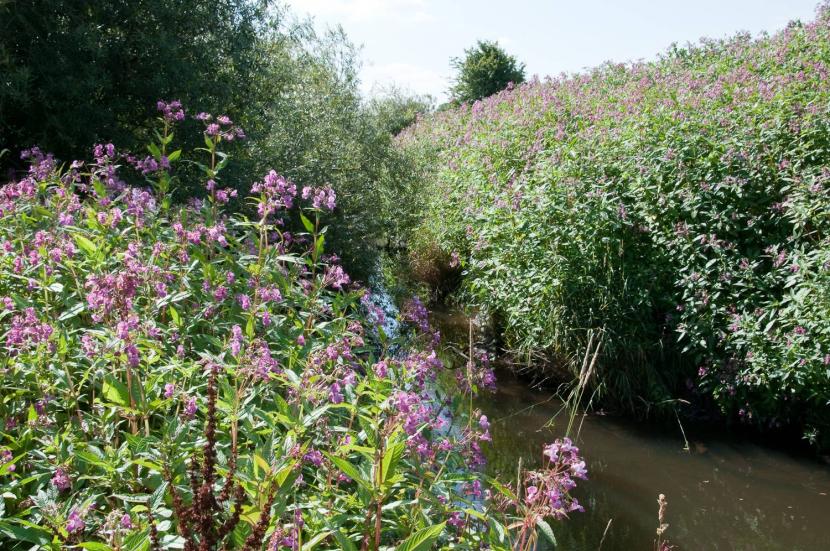
Himalayan balsam
Click for a full description
Himalayan balsam makes riverbanks more susceptible to erosion during high-flow periods. copyright NNSS.
Seabirds are affected by pressures including climate change, threats to food supplies, lack of safe habitats and direct mortality. Invasive predators make islands unsuitable as breeding sites for seabirds and restrict seabirds’ ability to adapt to a changing environment.
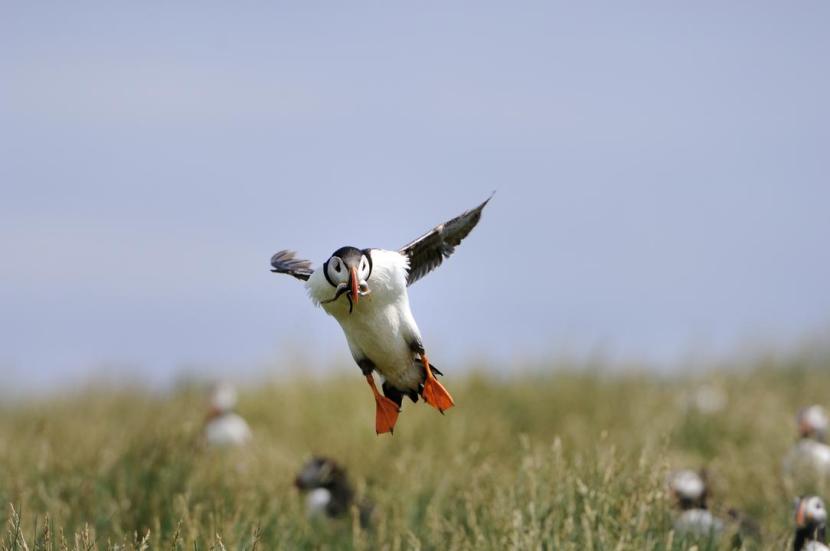
Puffin
Click for a full description
A puffin landing at its nesting burrow is especially vulnerable to predation by brown rats.
This action plan is aimed at a broad partnership of government bodies, environmental NGOs, industry sectors, researchers, and the public, who want to take action on INNS. Key groups include environmental organisations, citizen scientists, recreational users (anglers/boaters), land and infrastructure managers, the marine sector, alongside industry sectors like horticulture and the pet trade. Key stakeholders contributed to the development of this action plan through four workshops held between 2024 and 2025.
This plan provides a starting point for the Scottish Government’s INNS ambitions and is intended to demonstrate and recognise the importance of tackling INNS. It is acknowledged that Environmental Standards Scotland is currently carrying out an investigation into the impacts of INNS in Scotland which is likely to result in further recommendations to the Scottish Government. This plan will be reviewed in light of those recommendations and additional actions will be added, as necessary.
Scaling-up to meet the challenge
The Scottish Government has set out a clear ambition for Scotland to be Nature Positive by 2030, and to have restored and regenerated biodiversity by 2045 in our Scottish Biodiversity Strategy (SBS).
The SBS includes the following outcome:
By 2045, priority invasive non-native species (INNS) will be managed so that established INNS no longer degrade native habitats and species or impede their restoration and regeneration, and new introductions are managed quickly and effectively.
Our Scottish Biodiversity Delivery Plan has two relevant priority actions, which set a clear yet challenging direction of travel:
- Reducing the rate of establishment of known or potential INNS by at least 50% by 2030 compared to 2000 levels.
- Coordinating the control of priority INNS at scale with the aim of eliminating or reducing the impacts of INNS in at least 30% of priority sites.
These link to Target 6 of the Global Biodiversity Framework, reducing the introduction of invasive alien species and their impacts. They also link to Target 2, restoring degraded ecosystems, and Target 3, conserving 30% of land, water and seas.
An urgent step-change is required in the level of funding and action for INNS control. Over the past decade £42 million has been invested in strategic INNS projects through a blend of public and private sector finance. These projects cover more than a third of Scotland’s land area, employ approximately 80 staff and involve more than 2,500 volunteers. However, significant scaling-up is required to achieve a ten-fold increase (£500 million) in INNS finance over the next decade estimated by the Alliance for Scotland’s Rainforest, Scottish Wildlife Trust and NatureScot. In addition to maximising the levers available across government we will seek to develop opportunities through Scotland’s Private Investment in Natural Capital (PINC) programme to increase sustainable investment into INNS management.
A data-driven approach will be used to drive transformative change and provide evidence for scaling-up investment in INNS control. Records of first introduction, INNS distribution data and evidence of impacts are and will continue to be used to prioritise action. Standardised methods for monitoring the success of INNS management will provide evidence for its contribution to ecosystem health.
Cross-sector collaboration and partnerships are at the core of action against INNS. We must continue to work with key sectors to raise public awareness and change behaviours through initiatives such as “Check Clean Dry” and “Save Our Seabirds” biosecurity campaigns. Members of the public and site managers reporting INNS are the first line of defence against new invasions. Shared responsibility involves land managers and local communities in monitoring, reporting, and controlling invasive species at a local level with support from regional and national initiatives.
Roles and responsibilities
Strategic action on INNS requires collaboration across sectors, countries and regions. Shared efforts and commitments require all actors to understand their specific roles. The Code of Practice on Non-Native Species (due to be reviewed in 2027) provides guidance on the responsibilities individuals, businesses and different sectors have towards INNS, including lead roles for public bodies. This is illustrated in Table 1.
| Action type | Description | Relevant body |
|---|---|---|
| Marine | Below Mean High Water Spring Level or limit of saline influence | Marine Directorate of the Scottish Government (MD) |
| Freshwater | Rivers, streams, lakes, artificial water bodies, and estuaries to saline limit | Scottish Environment Protection Agency (SEPA) |
Woodland
| Woodlands, plantations, trees, woody shrubs and invertebrate tree pests | Scottish Forestry (SF) |
| All other terrestrial ecosystems | All other terrestrial and transitional biomes except those listed above | NatureScot (NS) |
| Strategic | Develop and formulate government policy and overall strategy | Environment and Forestry Directorate and Marine Directorate of the Scottish Government (ENFOR, MD) |
| Tactical | Coordinates cross-cutting actions, technical advice and information sharing | Non-native Species Secretariat (NNSS) for GB-wide actions, and NatureScot (NS) for Scottish actions |
| Operational | Inspects for compliance with regulations, assists with rapid response | Non-Native Species Inspectorate (NNSI) |
Great Britain. The NNSS coordinates work on data, risk analysis, pathways, rapid response, communications and research. The British Irish Council fosters high-level collaboration across its eight member administrations, whilst Defra leads on international trade and cooperation. The NNSI inspects business and activities associated with priority pathways, whilst the Maritime and Coast Guard Agency regulate larger vessels and shipping.
Regional. Marine planning partnerships, local coastal partnerships, regional INNS forums and regional land use partnerships provide formal structures for agreeing regional INNS priorities. Regional actors include local authorities, partnerships delivering local action plans, biological record centres, fisheries boards and trusts, coastal partnerships, countryside trusts, community land and nature restoration partnerships.
Local. Everyone must act responsibly to ensure that INNS under their ownership, care or management do not harm the environment, and that their activities do not cause INNS to spread. Land managers, community groups and volunteers deliver vital actions on the ground.
How strategic actions on INNS will be integrated at national and regional scales
Most INNS have been introduced to Scotland by human activities, either deliberately or accidentally. Very few have spread here naturally after invading other parts of the UK or the nearby continent. Patterns of introduction are strongly associated with urban areas or ports. Invasions typically progress from south to north-west, following transport and trade routes.
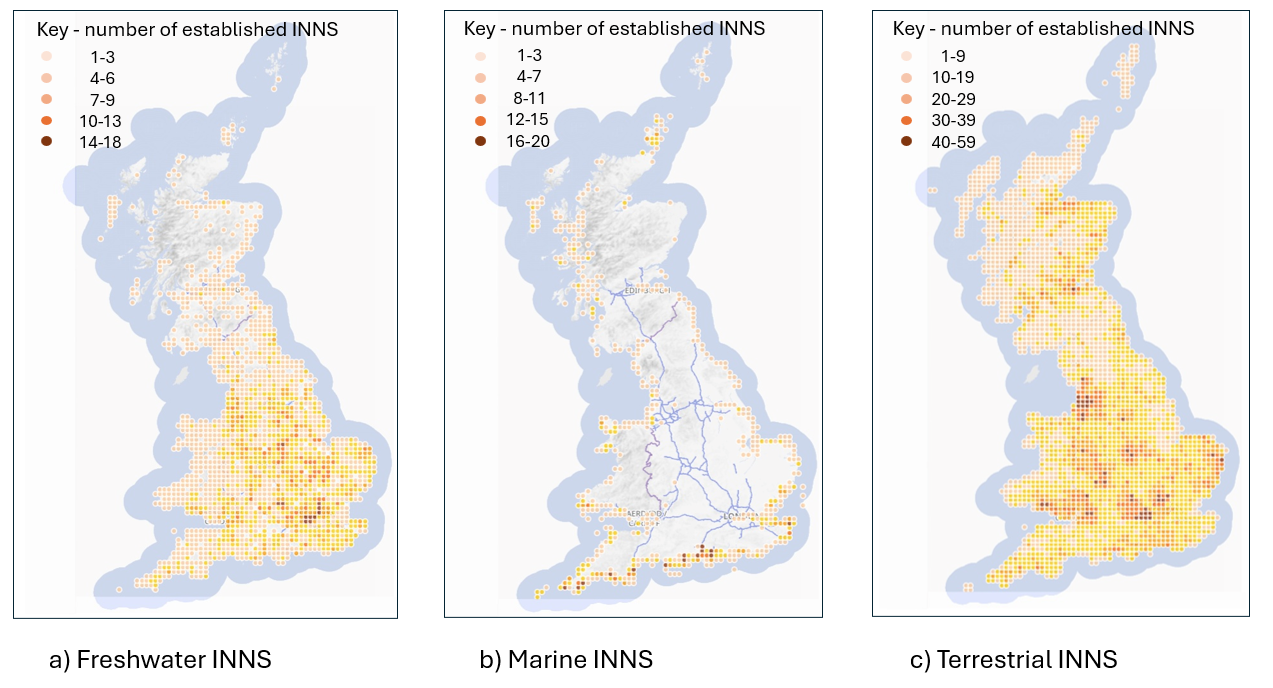
Scotland has fewer established INNS than other parts of Great Britain (GB), especially for freshwater and marine species. The heat maps show the highest number of established INNS is in the South and Southeast of England, which is the primary entry point for international trade and travel. INNS species richness is strongly associated with centres of human population and transport hubs and decreases as you move north and west. These maps also reflect the lack of availability data, especially for marine species.
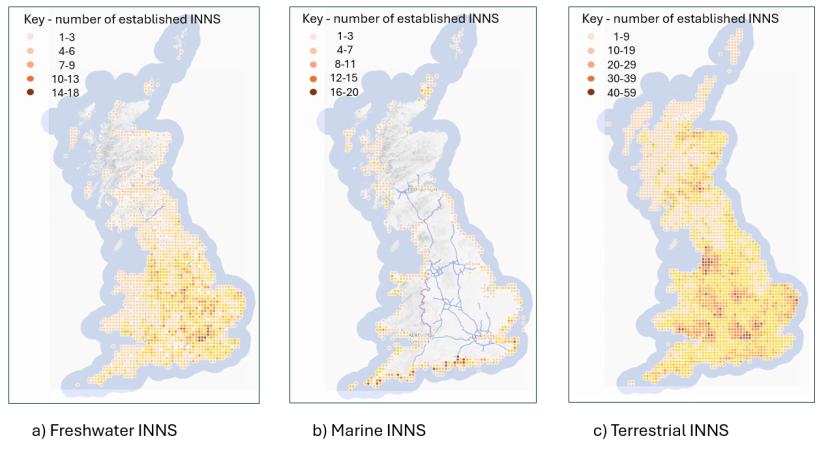
Heat maps showing the number of INNS recorded in each 10km square.
Click for a full description
Source: NBN Atlas - Enlarge maps.
This image shows three heatmaps illustrating the distribution and species richness of freshwater, marine and terrestrial INNS across Great Britian. Marine INNS follow the coastline, with high concentrations around major ports and estuaries, particularly on the south coast of England. Freshwater INNS follow the river and canal networks, showing a more ‘vein-like’ spread throughout the Midlands and the Southeast of England. Terrestrial INNS are ubiquitous, covering almost every grid square of the landmass, with "hotspots" specifically centred on major cities like London, Manchester, Edinburgh and Glasgow.
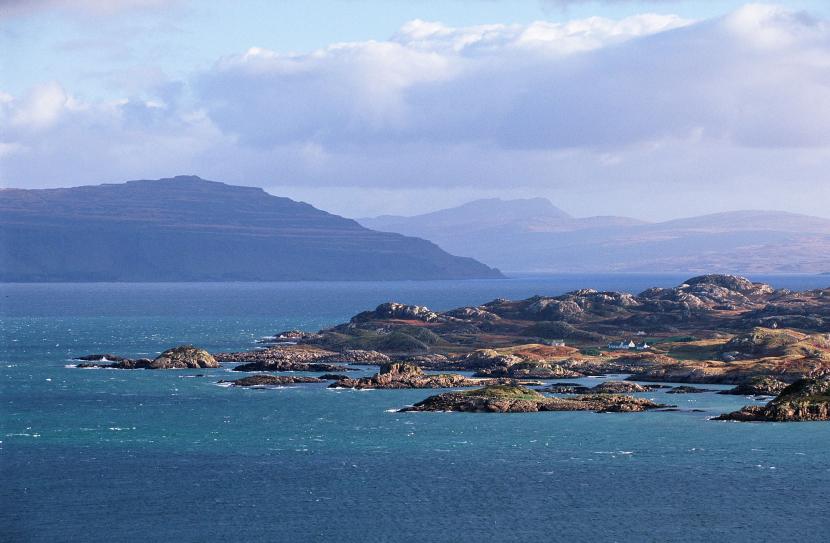
Ross of Mull
Click for a full description
A view over the Ross of Mull to Ardmeanach and the head of Loch Scridain from the summit of Dun Auchabhaich on Iona.
Geography provides natural barriers to successful invasion without human assistance.
This plan adopts an integrated approach to biosecurity, surveillance and rapid response at national and regional levels. Natural barriers in Scotland’s landscapes and seascapes can prevent INNS from expanding their range naturally. Collaboration between national and regional partners will help to tailor action on INNS by catchment, marine region and island.
Outcomes, objectives and high-level actions
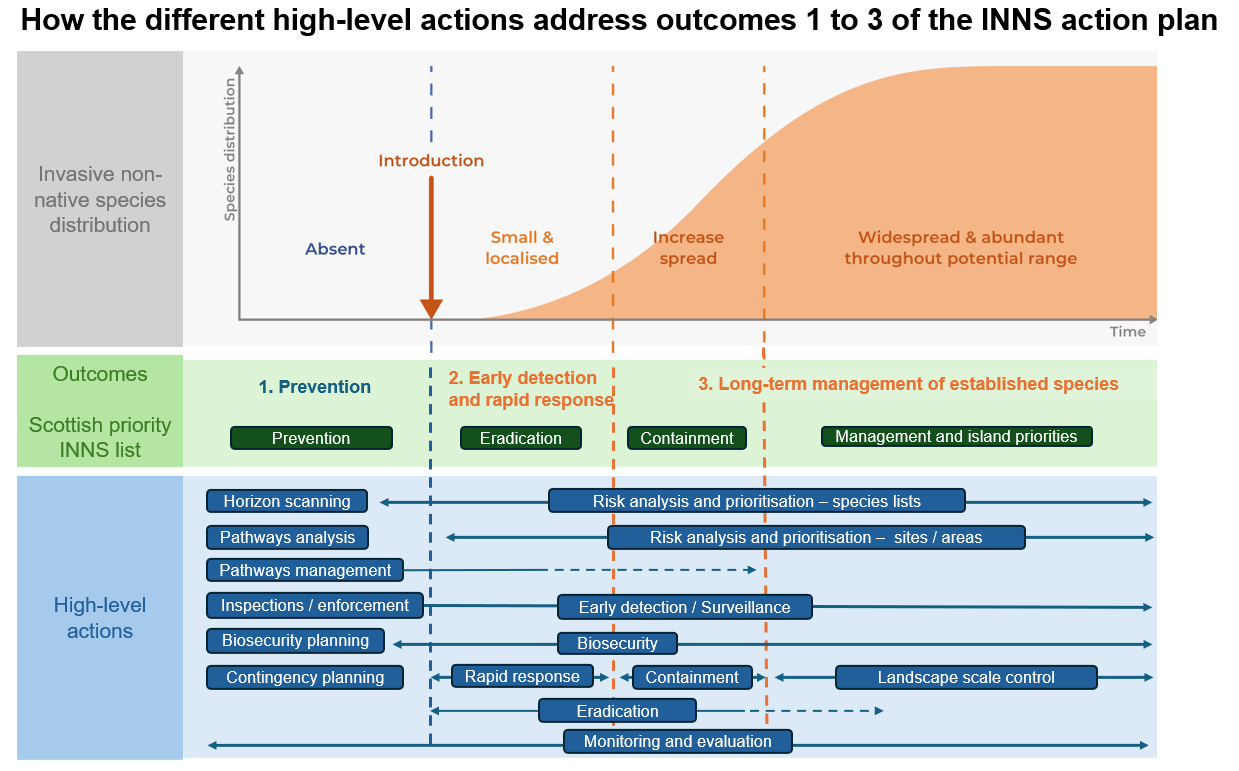
The outcomes, objectives and actions in this plan have been co-developed with delivery partners and stakeholders following the CBD guidance for developing a national INNS action plan. Table 2 aligns these high-level actions with clear objectives and desired outcomes. Figure 2 in Annex B shows how these relate to the corresponding invasion stages. Outcomes 1 to 3 are based on Target 6 of the Global Biodiversity Framework and their objectives map onto INNS actions contained in the SBS Delivery Plan and the Scottish National Adaptation Plan. Outcome 4 provides the tools and solutions needed to scale-up participation and resources to meet these challenging objectives. Section 6 sets out a monitoring framework and targets to drive transformative change in reducing INNS pressures.
| Outcomes | Objectives | High-level actions |
|---|---|---|
| Prevention | Reduce the rate of establishment of known or potential INNS by at least 50% by 2030 compared to 2000 levels. |
|
| Early detection and rapid response | Increase the volume of reports received and investigated for prevention, eradication and containment priority INNS by 20% by 2030, compared to 2025 levels. |
|
| Long-term management of established species |
|
|
| Whole of society approach |
|
|
Action plan
This action plans follows the three-stage hierarchy for tackling INNS adopted by the CBD. The following principles are critical to the success of any INNS management activity but especially to the actions in this plan.
- Prioritise prevention. Good biosecurity should be part of normal practice.
- Act early to increase the likelihood of success and minimise damage and costs.
- Be strategic. Manage INNS populations at ecologically appropriate scales, set realistic management objectives and prevent or minimise reproduction and dispersal.
Preventing the introduction of INNS is the highest priority and most cost-effective measure.
Outcome 1: Prevention
Pathways of introduction and spread are managed to prevent transport of priority INNS into new areas and INNS in captivity or cultivation are kept securely to prevent escape.
Pathway management prevents the introduction and spread of INNS and manages the risks using measures such as raising awareness, secure keeping, physical barriers to spread, and minimising contamination by making appropriate checks and cleaning goods and equipment. The Scottish Government has published a horizon scanning report, which identifies the pathways of spread of INNS into Scotland and ranked lists of species based on their impact and likelihood of arrival and establishment.
Pathways action plans for pets, horticulture, angling, recreational boating, and zoos have been co-developed with relevant professional and governing bodies and NGOs at GB-level. Prevention is the most effective way to manage INNS and is especially important in the marine and freshwater environments. Marine INNS are typically extremely difficult to eradicate once established, far more so than most terrestrial or freshwater INNS and particularly those in enclosed freshwater systems. An integrated biosecurity regime for islands is vital to protect breeding seabirds from invasive predators and to prevent other INNS from affecting island ecosystems and communities. We need to encourage the widespread adoption of good biosecurity practice and secure keeping, backed up by regulatory enforcement.
Biosecurity is the first line of defence against the introduction of INNS. It interrupts pathways through proactive measures, such as inspections and hygiene practices. Import and export control is generally a reserved matter. The UK Border Force leads on inspections at UK ports of entry, whilst the NNSI inspects business and activities associated with priority pathways. Biosecurity plans provide a link between national priorities and local on the ground action. Biosecurity plans are produced for areas such as river catchments, marine areas and islands, and sites such as marinas, fisheries and nature reserves. Biosecurity planning should be a standard requirement for relevant government procurement, and relevant licensing and development approval processes. (The National Sustainable Procurement Tools and guidance have been produced to help public bodies comply with policy and legislation, including taking account of biosecurity and biodiversity in relevant procurements alongside other social, economic and environmental factors).
Inspections, enforcement and licences help to manage compliance with restrictions on the keeping, sale and breeding of species of special concern. The NNSI encourages owners to keep animals and plants securely through a combination of education, outreach via stakeholder groups, and enforcement. NNSI inspectors operating in Scotland have been appointed as wildlife inspectors under section 19ZC(1) of the Wildlife and Countryside Act 1981. Much of the non-compliance that has been found is attributed to business owners and members of the public being unaware of the legislation and their obligations. Most cases of non-compliance can be remedied through licences, rehoming unwanted animals, or disposing of unwanted plants responsibly. Consideration will be given to whether inspectors need clearer or additional legal powers to undertake effective compliance and enforcement action.
Objective
Reduce the rate of establishment of other known or potential INNS by at least 50% by 2030 compared to 2000 levels.
Supporting actions
Horizon scanning
- We will undertake a regional horizon scanning exercise to identify emerging biological risks to Scotland’s islands, catchments and marine regions from 2026, followed by a national horizon scanning exercise for INNS that have not yet become established in Scotland in 2031. [ENFOR, NS, SEPA, MD]
Risk analysis and prioritisation
- Non-native Species Action Group (NNSAG) will propose updates to the national prevention priority species list, based on evidence from GB and Scottish horizon scanning exercises. From 2026. [NS, SEPA, MD]
- We will propose species for GB non-native species risk assessments, where necessary. Ongoing. [ENFOR, MD, NS, SEPA]
Biosecurity
- We will work with stakeholders to review existing or develop new biosecurity plans for river catchments, coastal areas and islands to reflect regional INNS priorities and tailor pathway actions to the geographical area. From 2026. [SEPA, MD, NS]
- We will continue to work with stakeholders to develop and promote codes of practice and biosecurity planning within business sectors and activities which can play a role in disrupting the introduction, transport or spread of INNS, including ecosystem restoration, green infrastructure and offshore development. From 2026. [ENFOR, SF, NS, SEPA, MD]
Pathway analysis
- We will undertake a regional analysis of pathways of introduction and spread into Scotland’s river catchments, marine regions and islands in 2026. [ENFOR, NS, MD, SEPA]
- We will continue to gather data to quantify current and emerging pathway risks with the aim of developing a better understanding of pathways of introduction into, and of internal spread within, Scotland. Ongoing. [ENFOR, NS, SEPA, MD, NNSI]
Pathways management
- With stakeholders, we will deliver GB pathways action plans and island biosecurity actions, including monitoring and evaluation to ensure that agreed actions are delivered effectively across Scotland. Ongoing. [ENFOR, NS, SEPA, MD]
- NNSAG will review the implementation of current existing pathways actions within Scotland and will make recommendations based on available evidence. From 2027. [NS, SEPA, MD]
Inspections, enforcement and licences
- NNSI will implement inspections and investigations for species of special concern and prevention priority species ensuring appropriate integration with relevant lead bodies and biosecurity regimes in Scotland. Ongoing. [ENFOR, NS, SEPA, MD]
If prevention fails, early detection and eradication is the preferred option, followed by containment.
Outcome 2: Early detection and rapid response
Priority INNS are detected early, and decisions are taken rapidly so that populations can be eradicated or contained before they can become established and spread.
Where pathway management fails to prevent invasion, the top priority is to identify where priority INNS have invaded and act quickly to remove them before they become established and spread. Once they take hold, control is expensive and sometimes not possible; delaying action until an INNS is established can cost up to fifty times more than early intervention.
Early detection currently relies on vigilant citizen scientists report sightings via iRecord and other online recording schemes. An alert mechanism directs these sightings to the relevant bodies, who investigate and verify reports. Those who work on or use our land and water need to know what INNS to look out for and where to report sightings. The relevant bodies need to develop robust, risk-based surveillance strategies which target surveillance effort towards sentinel sites and vulnerable ecosystems. Technology has the potential to revolutionise INNS surveillance and control. Remote sensing, environmental DNA and wireless sensors are becoming more affordable, and machine learning can improve the efficiency of surveillance.
Rapid response is triggered by official confirmation of a prevention, eradication or containment priority species. The aim is to prevent these from forming self-sustaining populations or, if this is not possible, contain them before they become widespread. The relevant body determines the appropriate response, based on the level of threat to biodiversity and the feasibility of different management options.
The response needs to be rapid because the window of opportunity for eradicating INNS before they become established is often short. Ideally, risk analysis and contingency planning should be carried out to prepare for the arrival of potential INNS before they arrive in the country. However, lack of scientific evidence and uncertainty should not be used as a reason to postpone prevention or early action.
Objective
Increase the volume of reports received and investigated for prevention, eradication and containment priority INNS by 20% by 2030, compared to 2025 levels.
Supporting actions
Risk analysis and prioritisation
- We will run risk management workshops to assess the feasibility of eradicating INNS on land and from isolated water bodies and of containing INNS in marine and connected freshwater systems from 2027. [NS, NNSS]
- We will agree on a national list of ‘eradication priorities’ on land and in isolated water bodies in 2026 [SEPA, NS, ENFOR, NNSS], and a national list of ‘containment priorities’ for marine and connected freshwater systems in 2027. [SEPA, MD]
- We will work with stakeholders to develop regional lists of prevention, eradication and containment priorities for groups of river catchments, marine regions and island authorities, using the outputs from the regional analysis of pathways [2026] and horizon scanning [2026] and risk management workshops in 2027 [NS, SEPA, MD]
Early detection
- We will work with biological recording organisations and data managers to standardise data collection and dissemination for prevention, eradication or containment priority INNS, to improve data flows and support more rapid response and also to enhance knowledge about INNS distributions. From 2026. [NS, SEPA, MD]
- We will work with stakeholder organisations to promote awareness of and increase capacity for detecting prevention, eradication or containment priority INNS, especially at sites vulnerable to invasion. From 2027. [NS, SEPA, MD]
- We will develop standardised monitoring approaches for verifying sightings of prevention, eradication or containment priority INNS, setting out clear procedures, roles and responsibilities and response times. From 2027. [NS, SEPA, MD]
- We will develop risk-based INNS surveillance frameworks in 2027 and implement targeted surveillance for priority species and pathways from 2028. [NS, SEPA, MD]
Contingency planning
- We will adopt generic contingency plans, continue to develop species-specific guidance for responding to incursions from priority species, and regularly test, evaluate and improve the effectiveness of responses. From 2026. [NS, SEPA, MD]
Rapid response
- We will investigate reported sightings of prevention, eradication or containment priority INNS and coordinate appropriate responses in line with the generic contingency plans. As required. [NS, SEPA, MD]
- We will work with regional actors to develop and support partnership approaches to investigating and responding to reports of INNS identified as prevention, eradication and containment priorities for regions and islands. From 2027. [NS, SEPA, MD]
Long-term control can be an effective option for certain terrestrial INNS that have not been eradicated or contained at an early stage in the invasion process.
Outcome 3: Long-term management of established species
Priority INNS are eradicated or controlled so that they no longer degrade sensitive ecosystems and vulnerable species or impede their restoration and regeneration.
INNS are a significant and growing pressure on the health of many of Scotland’s ecosystems. However, long-running initiatives such as the Tweed Invasives Project and Scottish Invasive Species Initiative have shown that with sufficient will and resource the impact of INNS can be effectively minimised to provide sustained benefits for people and nature. Long-term management needs to be coordinated at an appropriate ecological scale and follow the recommended hierarchy for INNS management.
Since the early 2000s, we have developed ambitious INNS control programmes, which now cover more than a third of Scotland’s land area. These have been funded by the Scottish Government, European Commission, National Lottery and other charities and delivered by a broad coalition of government and NGO partners, landowners and volunteers. They demonstrate that it is both practical and cost-effective to manage priority INNS on a large geographical scale. To meet the aim of restoring biodiversity, these programmes will require scaling-up to the whole of Scotland by 2045.
A sustained commitment is needed to complete eradications and to sustain long term management. It is important to support decision making with realistic, long-term assessments of feasibility, costs and benefits. The following will continue to be key strategic priorities:
- Accelerating action to restore Scotland’s rainforest, 40% of which is threatened by rhododendron
- Containing grey squirrel populations to protect populations of red squirrels
- Island restoration and biosecurity, completing predator eradications on Orkney and the Outer Hebrides, and a programme of island restoration for seabirds
- River catchment biosecurity plans and existing source-to-sea control programmes for invasive plants and mink which spread along river corridors
Eradication can be successful in terrestrial and closed water systems but is much more challenging in open freshwater and marine ecosystems. Eradicating INNS is a key island restoration tool with more than one thousand successful eradications worldwide (Spatz et al., 2022). Eradicating non-native predators from large islands like Orkney and the Outer Hebrides is ambitious but is still the most cost-effective long-term management option. Successful eradication requires access to all relevant areas of land, a firm commitment to completing the operation, and at least two years INNS-free monitoring. Long-term biosecurity and surveillance are essential to insure against reinvasion. Before eradication is declared, monitoring must show an area to be INNS-free for a minimum of two years for animals and three to five years for plants (Ramsey et al., 2023). Long-term plans for biosecurity and surveillance are essential.
Landscape scale control aims to remove entire reproductive populations of INNS at scale and use geographical barriers together with buffer control zones to prevent reinvasions. The Scottish Invasive Species Initiative has demonstrated that cost and control effort per unit land area reduce over time when entire populations of INNS are managed at a landscape scale. The long-term ambition is for catchment-by-catchment species eradication.
Owners and managers should ensure that INNS on their premises do not spread and cause a nuisance to others. This includes cooperating with landscape scale control initiatives.
Containment aims to limit the spread of INNS by creating physical barriers to movement or buffer control zones. Saving Scotland’s Red Squirrels defends the Scottish Highlands from the northward spread of grey squirrels, but this requires a constant management effort.
Suppression reduces INNS distribution or abundance for a brief period, but the population reinvades or recovers when management is stopped. It can be used as a temporary measure, for example to control disease outbreaks, but it is not sustainable in the longer term.
Monitoring, evaluation and adaptive management are a fundamental part of how we tackle INNS. It is important to learn lessons from successes and failures of early detection and eradications and landscape scale control projects. Ambitious eradication projects can benefit from peer review by internationally acknowledged experts. To secure the long-term benefits for biodiversity and ecosystems there must be ongoing biosecurity, surveillance and rapid response to prevent reinvasion of areas where INNS have been removed.
Objectives
Use the pipeline of strategic INNS projects to coordinate the control of priority INNS and eliminate or reduce the impacts of priority INNS in at least 30% of priority areas by 2030.
Develop and implement a rolling programme of INNS eradications on islands and reduce the risks to seabird colonies from non-native mammals in the Greater North Sea and Celtic Seas.
Supporting actions
Risk analysis and prioritisation
- NNSAG will agree a process for making changes to the management priority species list to reflect changes in assessed risk, technology or understanding of cost-effectiveness of control measures in 2026. [ENFOR, NS]
- NatureScot will establish a mechanism for reporting Environmental Impact Classification for Alien Taxa (EICAT) assessments for species suspected of having increased negative impacts from 2027
Eradication
- The Seabird Predator Reduction and Biosecurity Project Advisory Group will oversee the development and implementation of a programme to eradicate non-native predators on islands and implement biosecurity measures at seabird colonies from 2026. (Note that this is also an action under the Scottish Seabird Conservation Action Plan). [NS, MD]
- We will plan and coordinate a rolling programme of national eradication projects for ‘eradication priorities.’ From 2026. [MD, NS]
- We will work with partners to plan and implement eradication projects for other INNS identified as regional or island ‘eradication priorities.’ From 2027. [ENFOR, NS, SEPA, MD]
Landscape scale control
- NatureScot will work with relevant bodies to agree criteria and establish a baseline for ‘priority areas’ which have a management objective of eliminating or reducing the impacts of INNS. From 2026. [NS, SF, SEPA, MD]
- NatureScot will establish an NNSAG subgroup to oversee the development of a pipeline of strategic INNS projects to coordinate INNS control in priority areas, at appropriate ecological scales. In 2026
- We will integrate appropriate INNS management objectives into ecosystem restoration and species recovery strategies, such as the Scottish Government's strategic approach to restoring Scotland's rainforest, the Scottish Seabird Conservation Action Plan and the Scottish Strategy for Red Squirrel Conservation, to promote strategic control of priority INNS at appropriate ecological scales. Ongoing. [ENFOR, NS, SEPA, MD]
Monitoring and evaluation
- NatureScot will develop data standards for recording the effectiveness of INNS management and include this within the ecosystems management insights (EcoMI) database from 2026. [ENFOR, SEPA, SF, MD]
- The Scottish Government and NNSS will work together to establish an international panel of experts to review and make recommendations on large-scale and technically challenging eradication and landscape scale control projects. From 2027 [ENFOR, MD, NS]
Scaling up resources to achieve the challenging objectives set by the Scottish Biodiversity Delivery Plan requires support from across government, business and civil society.
Outcome 4: Whole of society approach
There is increased awareness of the threats posed by INNS and appropriate actions are taken to prevent and manage these across government, business and civil society.
IPBES calls for a “whole-of-society” approach to the biodiversity crisis because addressing challenges like INNS needs the involvement of every person and organization at multiple levels to achieve transformative change. The SBS highlights the importance of collective action and a strong partnership between government, researchers, businesses, land managers and the public to achieve the vision of restoring and regenerating biodiversity by 2045. The Code of Practice on Non-Native Species sets out how stakeholders can act responsibly to ensure they do not introduce or spread INNS through their activities. This objective considers the enabling conditions for success that will help to integrate action on INNS into the SBS approach and scale-up the response to meet the Strategy’s ambitious vision.
Stakeholder engagement is fundamental to the whole-of-society approach. This includes developing and implementing coherent policies on biosecurity and INNS control across multiple policy areas within government and sectors of business and civil society. The GB Non-Native Species Secretariat coordinates engagement with key stakeholders at GB-level through pathways action plans, a communications plan, annual stakeholder forum, and support for local action groups. Engaging local communities offers opportunities for increasing capacity but also challenges for coordinating and sustaining effort. Landscape scale control projects engage hundreds of volunteers and land managers in INNS control activities and have active community outreach programmes. Meeting the challenge set by the SBS will require engagement with new audiences, such as the nature finance sector, as well as encouraging grassroots action by local communities, landowners and water users.
Raising awareness of the threats posed by INNS and the need for action is critical at all levels across sectors. The INNS Communications Plan for Great Britain identifies the target audiences for promoting biosecurity as gardeners, recreational water users, pet owners, landowners and marine users. The Check, Clean, Dry and Be Plant Wise campaigns and Invasive Species Week are promoted throughout the UK and Ireland. Biosecurity for Life encourages good biosecurity for seabird islands through public awareness raising and predator-free certification for boat operators. Indirect drivers of biodiversity loss strongly influence the rate of INNS establishment, particularly those related to trade in commodities and travel. Key INNS messages such as the importance of biosecurity, which INNS to look out for and where to report sightings and supporting control need to be integrated into wider public messaging on biodiversity. Public understanding of the need to manage INNS avoids conflicts and builds support for a whole-of-society approach.
Legislation provides the powers for inspections, enforcement and licensing. This is underpinned by our overarching policy in relation to INNS which encourages collaboration across sectors on INNS management. Regulators and stakeholders derive a shared understanding of responsibilities, along with when and how inspections or compliance measures will be used. We need to raise awareness of the rules on species of special concern and to monitor and evaluate the effectiveness of legal powers supporting inspections, enforcement and licensing. The impacts of INNS are amplified and compounded by our changing climate and use of land and sea. Coherent policy responses need to incorporate INNS prevention and control; this will ensure that measures to address climate change do not increase the threat of INNS and avoid the risk that INNS undermine the effectiveness of those measures in the future. Climate change should be incorporated into prioritisation approaches for INNS to identify and address future threats at an early stage.
Research and innovation provide the evidence base for policy and management decisions and underpin the effectiveness of action on INNS. Evidence needed to support this INNS action plan will be fed into the GB INNS Evidence Strategic Plan and into relevant research priorities within Scotland. Innovative technologies such as use of eDNA in monitoring, sensor networks, smart traps and biocontrol have the potential to significantly improve the effectiveness of INNS detection and support control. We need to accelerate the innovation of techniques for INNS detection and management, especially in the marine environment.
Building Capacity. The ability to respond to INNS varies widely across organisations, sectors and different regions. Scotland needs to invest in landscape scale control of INNS and in early detection and rapid response. Lessons need to be learned from plant and animal health about developing a culture of contingency planning and preparedness to ensure that relevant knowledge and sufficient resources are available within the relevant bodies and elsewhere to deliver effective responses. INNS control initiatives need a workforce of staff and contractors to coordinate and deliver INNS control across large geographical areas. For transformative change we need to grow this workforce, especially in remote rural areas, by supporting skills development and training. We also need to increase organisational capacity to respond to INNS by broadening the base of organisations and delivery mechanisms involved.
Funding for INNS control will need to increase substantially to meet the ambition for Scotland to be Nature Positive by 2030 and restore biodiversity by 2045. INNS control is an integral part of restoring ecosystems and species recovery; however, the need to coordinate action over large geographical areas and long timescales presents challenges. Stakeholders identified the amount, duration and flexibility of funding arrangements as significant barriers to scaling-up action on INNS: planning and initial removal are significant up-front costs; monitoring and biosecurity require long-term funding; and adaptive management and rapid response require flexible funding arrangements. Sustainable financing models are needed to support the entire life of INNS control programmes, such as blended finance combining public, private and philanthropic funding. Potential private investors need standardised methods for measuring, reporting and verifying the outputs and benefits of INNS control programmes.
Objectives
Increase participation in INNS control activities, including volunteering and citizen science, and increase adoption of good biosecurity practice among target audiences.
Scale-up investment by removing barriers to sustainable funding for strategic INNS control and we will look to increase the contribution of private investment to INNS management by 2030.
Supporting actions
Stakeholder engagement
- NatureScot will organise sharing good practice events on relevant aspects of INNS prevention, surveillance and control for practitioners working in different sectors to share innovative ideas and practical experience. Biennial from 2027
- We will engage with stakeholders to clarify roles and responsibilities on biosecurity, surveillance and control of priority INNS at national, regional and local levels, including relevant bodies, local authorities, delivery bodies, businesses and land managers. From 2028. [ENFOR, NS]
- NatureScot and Scottish Government will facilitate or support initiatives that engage communities, landowners and businesses in regional and island approaches to INNS prevention, surveillance and control at appropriate ecological scales
- NatureScot will provide guidance, training and support for setting up and running volunteer-based INNS control projects, and increase numbers of volunteers, including citizen scientists, to help deliver INNS prevention, surveillance and control. Ongoing
Awareness raising
- NatureScot will integrate key messages about the threats posed by INNS and the need for action, including raising awareness of species of special concern, practising biosecurity, reporting sightings and support for control efforts, and communicating about scientific uncertainties into public engagement work under the SBS Delivery Plan. From 2026. [ENFOR, NS]
- NatureScot and the animal and plant health divisions of the Scottish Government will develop a ‘one-health’ campaign for Scotland’s islands promoting integrated biosecurity messaging for INNS and animal and plant health. From 2028.
- NatureScot will seek to measure changes in awareness of INNS risks and adoption of good biosecurity practice through the NatureScot Opinion Survey. From 2026
Legislation and policy
- We will undertake a review of policy, use and efficacy of legal powers relating to inspections, enforcement and management of INNS in Scotland in 2026. Taking into account the outcomes of that review and all other relevant evidence and investigations, if appropriate we will consider the opportunities to strengthen INNS legislation. From 2026. [ENFOR, NS, SEPA, SF, MD, NNSI]
- We will publish guidance on the use of powers of entry and species control orders to support voluntary approaches to INNS inspections, surveillance, eradication and strategic control in Scotland. In 2027. [ENFOR, NS, SF, SEPA, MD, NNSI]
- We will undertake a review of the Code of Practice on Non-Native Species to provide clarity on roles and responsibilities of key actors, reflecting changes in policy and legislation, and will lay a revised Code before parliament in 2027. ENFOR, NS, SEPA, MD, NNSI]
- Scottish Government will map out opportunities for key policy integration on biosecurity and INNS control and develop a plan for achieving this. From 2026. [ENFOR, MD]
- Scottish Forestry will undertake a review of its guidance and procedures for Woodland Creation and Long-Term Forest Plans, taking account of the Environmental Principles and all available evidence. As part of this review, consideration will be given to whether there is a role for additional regulations under the Forestry and Land Management (Scotland) Act 2018. Scottish Forestry will also, in its review, take account of stakeholder concern over the natural seed dispersal and regeneration of Sitka spruce (a non-native tree species which is exempt from the offence of planting, or otherwise causing to grow, any plant in the wild at a place outwith its native range due to its important contribution to Scotland's economy and ability to rapidly sequester carbon and reduce soil erosion and flooding) on adjacent, sensitive habitats. From 2026. [ENFOR, SF]
- We will seek to ensure the list of species of special concern is up-to-date and relevant to Scottish priorities. Ongoing. [NS, ENFOR, MD]
Research and innovation
- NatureScot and the Scottish Government will ensure that strategic INNS evidence needs, including modelling future impacts, return-on-investment for management, optimising tools for detection, and methods to eradicate or control aquatic INNS, are fed into priority evidence needs for the SBS and the five-year Environment, Natural Resources and Agriculture (ENRA) research strategy. In 2026
- We will commission research to enhance scientific understanding of gamebird releasing practices in Scotland and inform the development of guidance and policy measures to ensure these activities are ecologically sustainable. In 2026. [ENFOR, NS]
- NatureScot will hold events for INNS practitioners working in different sectors to share and learn about techniques for INNS detection, monitoring and management, including a focus on INNS in the marine environment. From 2026
Building capacity
- We will review the resources, skills and technology needed to deliver the pipeline of strategic INNS control projects in 2027 [NS, SF]
- The Scottish Government will map out opportunities to integrate knowledge- and skills-needs for INNS prevention, surveillance and control into relevant policies providing direction and investment in green skills for just transition and nature-based education. [ENFOR]
- We will identify through the contingency planning process how knowledge, skills and equipment will be sourced and deployed to deliver rapid responses, including consideration of regional response hubs. From 2026 [ENFOR, SEPA, NS, SF, MD]
- We will continue to work in partnership with England and Wales to deliver relevant actions under the GB INNS Strategy and with international organisations to support best practice and information sharing. Ongoing. [ENFOR, NS, MD]
Funding
- We will align existing government funding schemes which can support INNS control so that they are targeted, complementary and address the challenges for INNS management. From 2026. [ENFOR, NS, SF]
- We will develop future agri-environment and forestry grants for post-2030 implementation (which is when the current agriculture reform commitment runs until) to consider how best to support removal of newly arrived INNS and surveillance and follow-up treatment for INNS after initial removal. From 2029. [ENFOR, NS, SF]
- NatureScot will work with partners, including the Private Investment in Natural Capital programme and the Scottish Forum on Natural Capital, to explore opportunities to increase private investment into INNS management. From 2026
- NatureScot will work with partners in the Scottish Forum on Natural Capital to support the development of sustainable financing models for INNS prevention, surveillance and control across all the stages of invasion and management. From 2026
The effectiveness of the actions in this plan will be evaluated through a monitoring framework.
Monitoring and evaluation
Monitoring, evaluation and adaptive management will be used to regularly review progress and take corrective action.
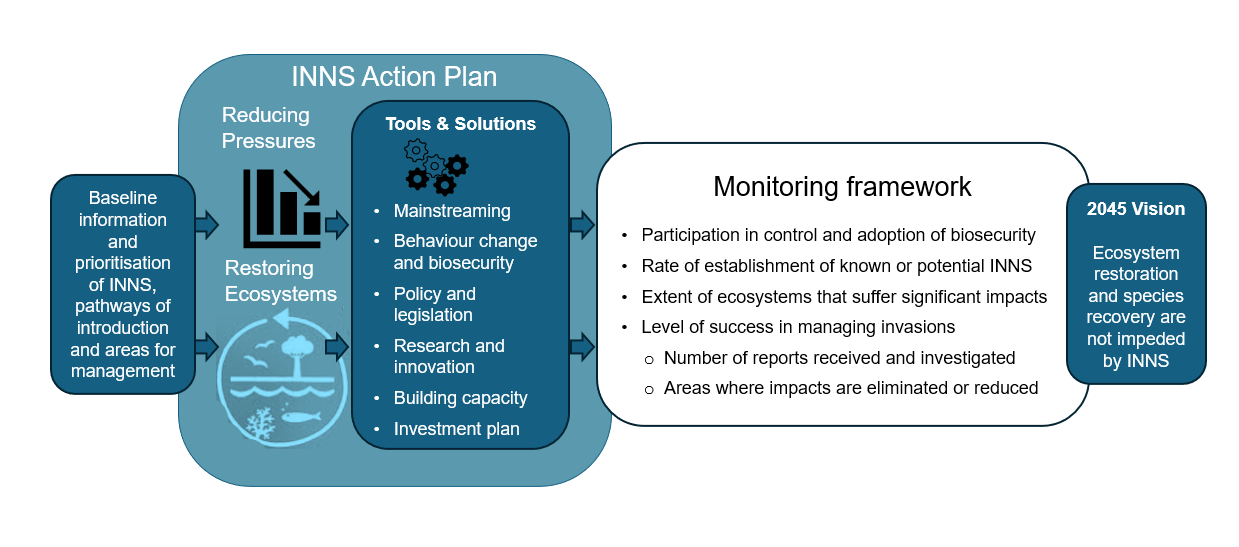
This plan will drive transformative change by putting in place tools and solutions aimed at broadening support for reducing pressures from INNS and restoring ecosystems so that they are more resilient. Reducing INNS pressures and restoring ecosystems will be enabled by policy, legislation, public awareness and behavioural change, and by adequate means of implementation including financial resources, capacity and technology. It is assumed there is a causal chain linking the human activities that lead to introduction and spread, the increasing pressure from the number and extent of INNS, their impacts on ecological condition, and the effectiveness of our management interventions. The monitoring framework below sets out indicators and an initial set of milestones for assessing progress towards the long-term vision of minimising impacts of INNS on biodiversity by 2045.
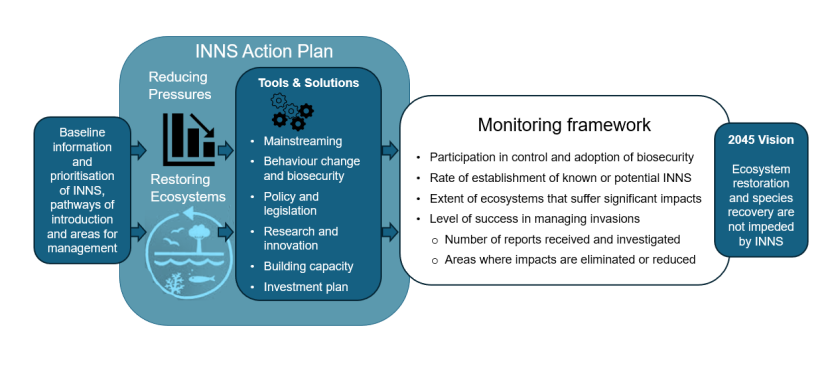
Figure 1. Theory of change for strategic control of INNS
Click for a full description
Enlarge image
The theory of change model starts with baseline information about where INNS occur, their pathways of introduction and the ecosystems they invade. These data streams inform and prioritise the high-level SBS actions of reducing INNS pressures and restoring ecosystems. The tools and solutions in this plan aim to scale up these actions to meet the challenge of restoring ecosystems and biodiversity by 2045. The monitoring framework uses these data streams to monitor and evaluate effectiveness and drive transformative action.
This plan will drive transformative change by putting in place tools and solutions aimed at broadening support for reducing pressures from INNS and restoring ecosystems so that they are more resilient. Reducing INNS pressures and restoring ecosystems will be enabled by policy, legislation, public awareness and behavioural change, and by adequate means of implementation including financial resources, capacity and technology. It is assumed there is a causal chain linking the human activities that lead to introduction and spread, the increasing pressure from the number and extent of INNS, their impacts on ecological condition, and the effectiveness of our management interventions. The monitoring framework below sets out indicators and an initial set of milestones for assessing progress towards the long-term vision of minimising impacts of INNS on biodiversity by 2045.
Monitoring. The objectives of this INNS action plan map directly onto the high-level actions on INNS identified in the SBS Delivery Plan, Scottish National Adaptation Plan and onto four objectives in the GB INNS Strategy. The following indicators and targets provide a framework for assessing progress against these objectives and the high-level actions in related plans.
| Outcome | Indicators | Targets for 2030 |
|---|---|---|
| One - Prevention |
|
|
| Two - Early Detection |
|
|
| Three - Long-term Management |
|
|
| Four - Whole of society |
|
|
The data for these indicators is drawn from the following sources:
- Number of established INNS uses records collated on the NBN Atlas for Scotland and includes UK Biodiversity Indicators B6 list and local absent aquatic and island species. The indicator is split into terrestrial, freshwater and marine species, to take account of differences in data availability, and can be broken down further by geographical region.
- Numbers of priority INNS reported – new sightings trigger an alert in iRecord, or are reported direct to the relevant bodies, who keep a record of investigations and responses.
- Impacts of management priority INNS – strategic control projects record whether these INNS are widespread, spreading, reproducing, surviving, or absent in the wild in each management unit. The headline indicator will show the proportion of management units across all priority areas where the stated management objectives for INNS are being met.
- Priority areas are of importance for nature conservation and have a management objective of eliminating or reducing the impacts of INNS. These are made up of 30 by 30, Nature Networks, and wider landscapes and seascapes identified in the context of ecosystem restoration or species recovery. These areas must have a biodiversity focus, which is informed by the Scottish Biodiversity List and the associated big biodiversity layer.
- Participation in INNS control is currently tracked through volunteers engaged by projects. [NatureScot will add questions on participation in INNS-related activities and attitudes to biosecurity to the Scotland’s People and Nature Survey].
- Public and private expenditure on strategic INNS control is tracked by NatureScot.
Trends will provide a picture of how INNS pressures change over time and ‘invasion debt’ can be used to model the effectiveness of different management strategies in abating future spread. Planned work to classify the magnitude of INNS impacts in Great Britain should give a clearer picture of the cumulative impacts of INNS on native species and ecosystems. Sources of uncertainty, bias and gaps in knowledge will be identified and documented.
Monitoring and Evaluation. We will monitor progress on delivering the outcomes annually. These data will contribute to the Scottish Biodiversity Delivery Plan annual assessments (internal) and the mid-review of the Delivery Plan in 2027 and a full statutory assessment of progress against the SBS in 2027 and in 2030.
Adaptive management. This INNS action plan will be a dynamic document where evidence, decision-making and actions are updated regularly to reflect the latest situation and information. The NNSAG acts as a technical advisory panel by undertaking regular reviews of implementation and making recommendations based on monitoring and evidence. The SBS Programme Boards monitor progress and remove obstacles to ensure the 2030 targets are met. The Biodiversity Portfolio Board has oversight of the Scottish INNS Action Plan and reports directly to the Cabinet Sub-Committee on Climate and Nature Emergencies.
Key actions
- We will establish baselines for the INNS action plan indicators and report annually thereafter. In 2027. [ENFOR, NS, MD]
- We will integrate the INNS action plan indicators into reporting on SBS delivery plans and climate change national adaptation plans. From 2027. [ENFOR, NS]
- We will agree suitable milestones for statutory biodiversity reporting in 2027 and 2030. In 2026. [ENFOR, MD, NS]
- NNSAG will support implementation of INNS management actions.
- NatureScot will review implementation of INNS management actions annually and carry out mid-term and full reviews of the INNS action plan in 2029 and 2032
Annexes
Annex A: Glossary of terms
Adaptive management - a philosophy that accepts that management must proceed even without complete information. It views management not only as a way to achieve objectives, but also as a process for probing to learn more about the resource or system being managed. Learning is an inherent objective of adaptive management. Adaptive management is a process where policies and activities can adapt to future conditions to improve management success.
Alert mechanism - a system used for rapid notification of specified INNS.
Biocontrol - the use of a natural enemy or predator to control an INNS.
Biosecurity practice – a set of precautions and activities that aim to prevent the introduction and spread of harmful organisms.
Biosecurity regime - a strategic and integrated approach that encompasses the policy and regulatory frameworks for identifying, analysing and managing risks, including INNS, to human, animal and plant health, and associated risks to the economy and the environment.
Citizen science - the collection and analysis of data by members of the general public, typically as part of a collaborative project with professional scientists.
Complete reproductive removal – a management objective aimed at removing the entire reproductive population from the area of interest but with remaining risk of re-invasion or further reproduction if not managed.
Containment – a management objective aimed at limiting the spread of a reproducing population of INNS within the area of interest.
Contingency plan - a high-level plan to respond to a future threat posed by an INNS.
Establishment / established species - the process of a non-native species in a new habitat successfully reproducing in the wild with the likelihood of forming a self-sustaining population.
Eradication – a management objective aimed at removing the entire population of INNS from the area of interest with no immediate risk of re-invasion. Usually this is only feasible for small, slow spreading populations or in isolated ecosystems, such as islands.
Eradication and containment priority species - these INNS that are not established within the area of search, or are established in isolated, slow spreading populations, for which it has been agreed that eradication or containment is a feasible and cost-effective management objective. The list identifies species that are a priority for eradication and contingency planning.
Horizon scanning - a systematic process used to identify future threats from INNS not already established in Scotland, our islands or regions.
Introduction - the movement by human agency, indirect or direct, of a non-native species outside of its native range. This movement can be either within a country or between countries.
Invasive non-native species (INNS) - any non-native species whose introduction or spread is likely to cause damage to the environment, the economy, our health, or the way we live. INNS in Scotland include species on the UK Biodiversity Indicator B6 list and locally absent species native to parts of Great Britain but translocated to parts of Scotland.
Landscape scale control - this is the overarching term which includes containment, and complete reproductive removal across large geographical areas, such as river catchments. It involves working co-operatively across multiple land holdings to manage entire local populations of INNS at an appropriate ecological scale. This approach is more effective at achieving long-term benefits than suppression of INNS on a smaller scale, on single sites.
Long-term management - this is the overarching term which includes containment, suppression and complete reproductive removal. This form of management requires the on-going input of management if the desired outcome is to be achieved and maintained.
Management priority species - these are INNS that are established in the area of interest, for which the technology to control is available and for which the costs and benefits of control are understood. The list identifies a small number of INNS, which are a priority for landscape scale control, and a small number which are priorities for control on islands.
Monitoring - a series of observations over time (often relating to species distributions) usually used to measure trends.
Native range - the locality to which the animal or plant of that type is indigenous, excluding any locality where the animal or plant has been imported by human actions, whether intentionally or otherwise.
Non-native species - (Equivalent to ‘alien species’ and ‘non-indigenous species’) - a species intentionally or unintentionally introduced outside its native range by human actions.
Non-Native Species Code of Practice - sets out guidance on how stakeholders should act responsibly within the law to ensure that non-native species under their ownership, care and management do not cause harm to our environment. The Code has been approved by the Scottish Parliament and issued by the Scottish Government.
One-health – a collaborative, multisectoral, and transdisciplinary approach—working at the local, regional, national, and global levels—with the goal of achieving optimal health outcomes recognising the interconnection between people, animals, plants, and their shared environment.
Pathway - a broad term used to describe the way in which a non-native species is transported or introduced by human activities. The CBD’s categorisation of pathways identifies six primary pathways: release, escape, contaminant (of commodities), transport-stowaway, spread along corridors (such as bridges or canals) and unaided spread (from an introduced range).
Pathway Action Plan - a high-level plan setting out the broad policy aim and actions designed to reduce the risk posed by a particular pathway.
Prevention – is an overarching term to describe biosecurity, pathway management and interception. This primary stage of management has been described as ‘stop invasions before they happen, either by preventing high-risk species from entering the area of interest or by intercepting individuals before they escape into the wild.’
Prevention priority species – non-native species that are not yet established within the area of interest, which are most likely to be introduced within the next ten years, to establish self-sustaining populations, and to cause damage to biodiversity and ecosystems.
Priority areas - these are areas of importance for nature conservation ranging from protected areas and Nature30 to wider landscapes and seascapes in the context of ecosystem restoration, where significant INNS pressures have been identified.
Priority species – the Scottish list of INNS priorities identifies priorities for distinct categories of management intervention, according to their stage in the invasion process. (See also definitions for ‘eradication and containment priority species,’ ‘prevention priority species’ and management priority species’ and ‘species of special concern’).
Pipeline of strategic INNS projects – a collegiate approach to coordinating and resourcing landscape scale control programmes and island eradication projects. This approach will help to ensure that funding is available to complete existing eradication projects and that landscape control programmes are expanded in a geographically coherent and sustainable way.
Rapid response - the instigation of action against an INNS threat at a stage when a locally, regionally or nationally important strategic win might still be achievable.
Relevant bodies – public bodies identified as having powers relating to non-native species under the Wildlife and Countryside Act 1981: Scottish Ministers (including Marine Directorate and Scottish Forestry), NatureScot and Scottish Environment Protection Agency.
Risk analysis - the overall process that provides decision makers with evidence to help determine priorities for INNS management (comprises hazard identification, risk assessment, risk management and risk communication).
Risk assessment - part of risk analysis, systematically assesses the risk posed by a non-native species using the GB non-native species risk assessment protocols.
Risk management - part of risk analysis, systematically assesses the options available for managing invasive non-native species including cost/benefit analysis.
Sentinel sites - selected locations with heightened levels of surveillance effort and effective reporting to enhance detection and improve cost-effectiveness of INNS surveillance.
Species of special concern - an INNS whose adverse impact has been deemed such as to require concerted action across Great Britain pursuant to Article 4(3) of the retained EU Invasive Alien Species Regulation 1143/2014. Most of these are also listed as priority species for distinct types of management intervention (see definition of ‘priority species’ above).
Suppression - management action aimed at reducing the distribution or abundance of a population within the area of interest.
Surveillance - close observation, usually to detect a particular change or event such as the arrival of a new invasive non-native species.
Annex B - Outcomes and high-level actions related to corresponding invasion stages
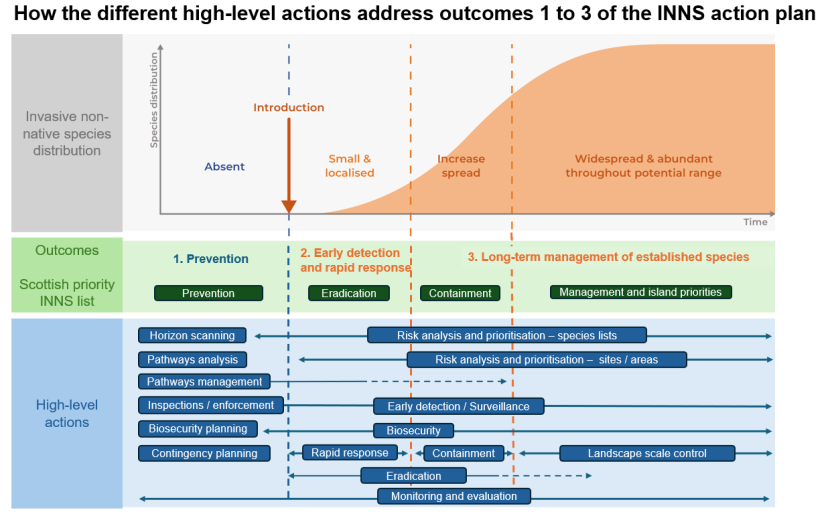
Figure 2. How the different high-level actions (blue box) address different outcomes (green box), and the corresponding invasion stages.
Click for a full description
Infographic showing how the different outcomes and high-level actions address the corresponding stages of the invasion process. The graph of INNS distribution against time is an S-curve – INNS distribution increases gradually when populations are small and localised after they are introduced, more rapidly as the INNS start to spread, and levels off once INNS populations become widespread and abundant throughout their potential range. When INNS are absent, we prioritise prevention through horizon scanning and pathways analysis and manage pathways of introduction through biosecurity, inspections and enforcement. Where prevention fails, contingency planning, early detection and rapid response facilitate the eradication of INNS populations when they are small and localised. Once INNS start to spread more widely, eradication may no longer be feasible, and containment is the best option. For INNS populations that are already widespread and abundant, landscape scale control can be a cost-effective way to reduce their impacts on priority areas. On islands, eradication may still be feasible and is an effective management option. Biosecurity, monitoring and evaluation are cross-cutting actions which are necessary to support management actions at all stages of invasion.
Last updated: