Menu
NatureScot Logo NatureScot Logo
Close navigation
  • Home
  • About NatureScot
  • Climate change
  • Enjoying the outdoors
  • Funding and Projects
  • Gaelic
  • Information hub
  • Landforms and geology
  • Landscapes and habitats
  • Plants, animals and fungi
  • Professional advice
  • Scotland's Biodiversity

Designated sites - Standing conditions

https://www.nature.scot/doc/designated-sites-standing-conditions
Breadcrumb navigation
  • Information hub Information hub
    • About NatureScot
    • Climate change
    • Enjoying the outdoors
    • Funding and Projects
    • Gaelic
    • Landforms and geology
    • Landscapes and habitats
    • Plants, animals and fungi
    • Professional advice
    • Scotland's Biodiversity
  • Publications and documents Publications and documents
    • News
    • Podcasts
    • Blogs
    • Webinars
    • Seminars
    • Research
    • NatureScot data services
    • Trends, Indicators and Official Statistics
    • Newsletters
    • Archived Publications

Pages: 1
Published: 2020

Document downloads

General Licensing - Designated sites - Standing conditions

xlsx, 16.55kB

Disclaimer: Scottish Natural Heritage (SNH) has changed its name to NatureScot as of the 24th August 2020. 
At the time of publishing, this document may still refer to Scottish Natural Heritage (SNH) and include the original branding. It may also contain broken links to the old domain.
If you have any issues accessing this document please contact us via our feedback form.

Contacts

If you already have a licence number, include it in the subject line of your email, or have it to hand when you call.

You should receive an automatic confirmation email from us if you send an email.  If you do not receive this, please phone us on the number below: 

Licensing Team

01463 725364

[email protected]

Feedback
  • Facebook
  • Whatsapp
  • Email

You may also be interested in

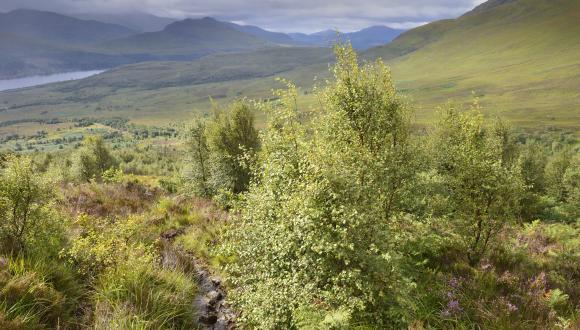
Native birch woodland natural regeneration, Choill a Choire, Creag Meagaidh National Nature Reserve ©Lorne Gill/SNH. For information on reproduction rights contact the Scottish Natural Heritage Image Library on Tel. 01738 444177 or www.nature.scot

Licensing

NatureScot deal with almost all species licensing in Scotland, including non-native species licensing. We can also license out-of-season muirburn for certain purposes.

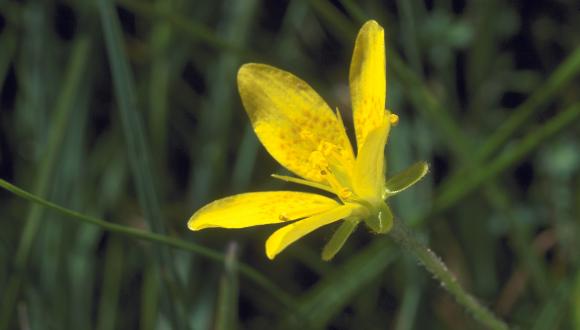
Yellow Marsh Saxifrage

Species licensing A–Z guide

Explore licensing for Scotlands protected species. A licence can permit action that would otherwise constitute an offence against a protected animal or plant.

News and Blogs

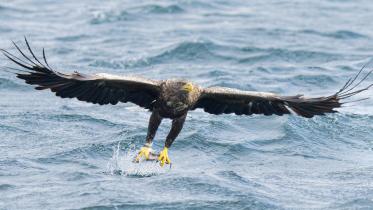
Sea eagle or white tailed eagle in flight with a fish in talons

Sea eagle tagging project

Forty new satellite tags will track how sea eagles interact with livestock in western Scotland.

News 17 July

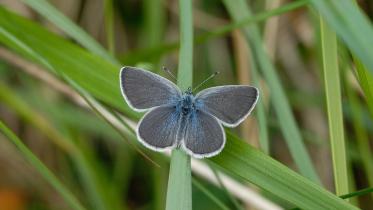
The Big Butterfly Count at Forvie

Join in the biggest butterfly survey in the world and help take the pulse of nature.

Event up to 9 August
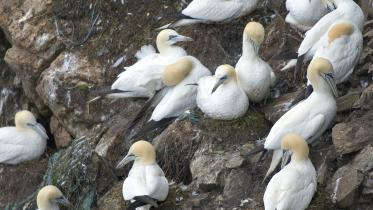
A group of coastal nesting gannets with white plumage, dark wingtips and distinctive yellowish-buff colour on their heads and necks. The birds are densely packed together on a dark, rocky ground.

Latest guga hunt statement

We understand there are strong feelings about the guga hunt.

News 7 July
Sandwich tern and chick

Whitewash and fluffy chicks

Reserve Officer Daryl shares his experience of 20 years looking after the tern colony at Forvie. 

Event 30 July
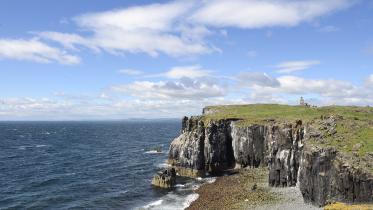
A coastal landscape of the Isle of May captured from an elevated perspective looking down at the sea and cliffs. On the left dark-rugged  asalt rock columns and cliffs meet the deep blue ocean with white surf crashing against the base. A small pebble beach or rocky shoreline is visible near the cliffs, blending into green moss or algae. The top half of the cliff face is covered in a vibrant green grassy plateau that extends in the distance. In the far background, a faint structure resembling a lighthouse.

Jewel of the Forth celebrations

The Isle of May is celebrating a huge milestone this month, marking 70 years as a National Nature Reserve (NNR).

News 30 June
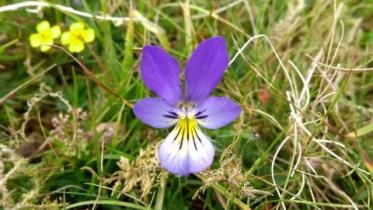
A lone flower that gradients from purple at the top of its petals to white at the bottom with a dash of yellow and dark purple lines emanating from its center.

Oh, changing flora of Scotland

Scotland is able to identify long-term and short-term trends for our plant populations.

Blog 24 July

View all news

View all events

Back to top Back to top

Quick Links

  • What we do
  • FAQs
  • Contact us
  • Our work
  • Licensing
  • Careers
  • Gaelic
  • Events
  • Sitemap
  • Publications & Documents
  • Board and Committees
  • NatureScot data services
  • Freedom of Information
  • LinkedIn
  • Facebook
  • Instagram
  • YouTube
  • Wordpress
  • Flickr


© NatureScot 2025

  • Privacy policy
  • Cookie policy
  • Accessibility
  • Copyright
  • Links policy
  • Feedback