Menu
NatureScot Logo NatureScot Logo
Close navigation
  • Home
  • About NatureScot
  • Climate change
  • Enjoying the outdoors
  • Funding and Projects
  • Gaelic
  • Information hub
  • Landforms and geology
  • Landscapes and habitats
  • Plants, animals and fungi
  • Professional advice
  • Scotland's Biodiversity

How and when to consult NatureScot Checklist

https://www.nature.scot/guidance-planning-how-and-when-consult-scottish-natural-heritage-checklist
Breadcrumb navigation
  • Information hub Information hub
    • About NatureScot
    • Climate change
    • Enjoying the outdoors
    • Funding and Projects
    • Gaelic
    • Landforms and geology
    • Landscapes and habitats
    • Plants, animals and fungi
    • Professional advice
    • Scotland's Biodiversity
  • Publications and documents Publications and documents
    • News
    • Podcasts
    • Blogs
    • Webinars
    • Seminars
    • Research
    • NatureScot data services
    • Trends, Indicators and Official Statistics
    • Newsletters
    • Archived Publications

We welcome consultations (including pre-application consultations) in relation to developments, proposals, or plans, including developments subject to prior approval procedures, that meet one or more of the criteria below. Please apply through InformedDECISION™. If you’re uncertain about whether to consult NatureScot, please email: [email protected]

Note that different arrangements apply for National Parks. Agreement on roles in advisory casework between NatureScot and Scottish National Park Authorities

 Nature - Statutory Consultation

  • Development affecting European sites: Special Protection Areas (SPAs), Special Areas of Conservation (SACs) and candidate sites (Guidance on Nature Sites and Habitats Regulations)
  • Development affecting Sites of Special Scientific Interest (SSSIs), including National Nature Reserves (NNRs)
  • Cases that involve the winning and working of peat for commercial purposes.
  • Development presenting a significant risk of hindering the achievement of the conservation objectives of a Nature Conservation Marine Protected Area (MPA) or the purpose of a Research and Demonstration MPA

Nature - Non-statutory Consultation

  • Development affecting protected species. We fulfil our advisory role on protected species through the provision of standing advice and do not expect to be consulted other than in exceptional circumstances not covered by the relevant standing advice available at Planning and development: protected species and Planning and development: birds. You should consider the need for species licences as part of any development and contact [email protected] regarding any licence application.
  • Development affecting Geological Conservation Review sites(GCRsites)
  • Development that could adversely affect priority peatland and carbon rich soil (category 1 and 2 in Scotland’s Carbon & Peatland Map (2016))
  • Development that could affect a watercourse of known or potential importance for oceanic mosses and liverworts (category A, B or D watercourse) in the west of Scotland as shown on our Oceanic Bryophyte Planning Tool
  • Development that could affect the Flow Country or St Kilda natural World Heritage Sites

Landscape - Statutory Consultation

  • Development in National Scenic Areas (NSAs) that meet the criteria in the TCP (Scotland) NSA Direction 1987

Landscape - Non-statutory Consultation

  • Development outside an NSA (or inside an NSA but below the threshold requiring statutory consultation as set out above) that could adversely affect the integrity of the NSA or the qualities for which it has been designated
  • Development within a Wild Land Area that may significantly affect its qualities.

Environmental Impact Assessment

  • Scoping requests and Environmental Reports received in connection with a development proposal that requires an environmental impact assessment report (EIAR). Note: In practice we are also consulted on the associated development proposal

Other

  • Marine Licence Applications
  • Licences for exploration of, production from and decommissioning of oil and gas fields within the 12 nautical mile territorial sea limit.
  • Hazardous substances consents and cases that could have significant repercussions on major accident hazards.
  • Seaweed harvesting – more information.

Published: 2019
Revised: June 2026

Last updated:05/06/2026
Feedback
  • Facebook
  • Whatsapp
  • Email

You may also be interested in

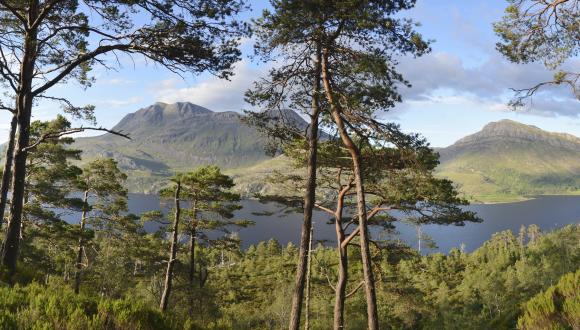
Scots pine woodland above Loch Maree with Slioch beyond, Beinn Eighe National Nature Reserve ©Lorne Gill/SNH. For information on reproduction rights contact the Scottish Natural Heritage Image Library on Tel. 01738 444177 or www.nature.scot

Our work

NatureScot promotes, cares for and improves Scotland’s nature and landscapes. Find out about what we do, how we do it and who funds our work.

News and Blogs

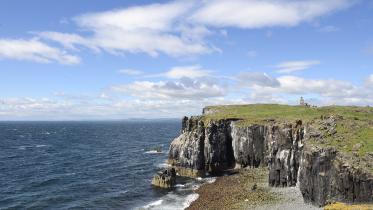
A coastal landscape of the Isle of May captured from an elevated perspective looking down at the sea and cliffs. On the left dark-rugged  asalt rock columns and cliffs meet the deep blue ocean with white surf crashing against the base. A small pebble beach or rocky shoreline is visible near the cliffs, blending into green moss or algae. The top half of the cliff face is covered in a vibrant green grassy plateau that extends in the distance. In the far background, a faint structure resembling a lighthouse.

Jewel of the Forth celebrations

The Isle of May is celebrating a huge milestone this month, marking 70 years as a National Nature Reserve (NNR)

News - 30 June
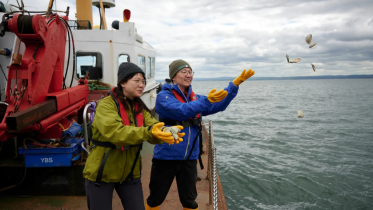
Oysters being thrown into the water off a fishing boat by two volunteers

Successes of Restoration Forth

More than 60,000 oysters return to their natural home in the Firth of Forth.

Blog - 29 June
News release

Agreement for better nature and more secure food in Scotland

Strengthening the link between nature and sustainable farming in Scotland.

News - 19 June
Harris Isle of Rum National Nature Reserve.

Manxie & rhoddy conservation on Rum

Northern National Nature Reserve staff recently visited the island to perform essential conservation and wildlife protection work. 

Blog - 24 June
Roe deer (Capreolus capreolus)

New funds for venison supply chain

The third round of the Low Ground Venison Supply Chain Project was launched today (18 June) at the Royal Highland Show at Ingliston.

News - 18 June
People surveying a beach. A woman at the front holding a pen and clipboard with  multiple people standing behind investigating findings discovered on the beach. The background shows an expansive sandy beach.

With a Little Help From our Friends

An announcement that celebrates nature-based volunteering and citizen science

Blog - 6 June

View all news

View all blogs

Back to top Back to top

Quick Links

  • What we do
  • FAQs
  • Contact us
  • Our work
  • Licensing
  • Careers
  • Gaelic
  • Events
  • Sitemap
  • Publications & Documents
  • Board and Committees
  • NatureScot data services
  • Freedom of Information
  • LinkedIn
  • Facebook
  • Instagram
  • YouTube
  • Wordpress
  • Flickr


© NatureScot 2025

  • Privacy policy
  • Cookie policy
  • Accessibility
  • Copyright
  • Links policy
  • Feedback