Review of Schedule 2: Wildlife and Countryside Report to Scottish Government
Purpose
The purpose of this paper is to outline the background and rationale for the proposed implementation of an adaptive harvest management approach as a management process to address the findings of a review of Schedule 2.
Background
The review of species on schedule 2 was completed by the NatureScot ornithology team in September 2023. These findings have been further considered by the by the Wildlife Management Team, in order develop further policy direction. In December 2023, Scottish Government agreed that an adaptive harvest management approach to Schedule 2 species should be explored. Subsequent dialogue with key stakeholders – GWCT, BASC and RSPB - confirmed an appetite for the development of this model.
Summary
The criteria (for the review), which was agreed with key stakeholders, focused on the conservation imperative (based upon the conservation status of each species) and whether they were listed as vulnerable because of population decline, or other factors, e.g. changes to migratory patterns due to climate change, and the vulnerability of any relevant breeding and wintering populations to hunting mortality. As a result of that, a number of species were discounted, by virtue of their geographic distribution and the stability of their populations and because they are not considered to be exposed to, or showing evidence of, significant hunting pressure. The report sets out the case for each of the remaining eight species.
With the exception of common pochard, our recommendations are to retain species on Schedule 2. In some cases, voluntary moratoria are suggested and in others a change to the duration of the closed season. As a science-led organisation we face a particular dilemma with two of the species – the black grouse and the ptarmigan. Intuitively, these species might be given precautionary protection and indeed we believe this would be the perception of many of the general public. The issue though is that while hunting mortality can affect ptarmigan populations, the impact varies and depends on several factors, including hunting pressure, habitat conditions, climate change and levels of predation. For black grouse, there are no indications that the existing moratorium is not working effectively. What is clear however, is that alongside this recommendation, the co-operation of the hunting sector is necessary along with a commitment to make an adaptive harvest model.
We do not have evidence to show that there are any bird species in Scotland where the pressure from hunting is material in the population declines; there is a paucity of information both in terms of bag returns and changes to hunting effort. For our recommendations to deliver the desired outcome and indeed have the possibility of enhancing populations of these listed species, there needs to be a change to bag-record keeping and a coordinated plan prepared by the hunting sector, to make this work.
The role of the Shared Approach
The development of a co-designed plan and its effective management and delivery, is something that our Shared Approach should be able to guide.
It is clear that there are no species under review that would recover their population numbers immediately, if shooting were to be stopped. While the shooting sector has had a number of chances to self-regulate, and some improvements have been forthcoming, initiatives are often mired in polarised debate. This represents a last opportunity for the sector to take constructive responsibility for the management of wildlife and contribute credibly, to conservation effort.
We recommend that a procedure be put in motion through the Shared Approach, on a prescribed timescale, that will result in more information being gathered. The proposal aligns with several existing licensing policies (i.e. grouse moor licensing, trapping licences and species control licensing such as for ravens), all of which prescribe that a licensing return is required.
Discussions would necessarily include questions about the ‘ownership’ of the data collected and about the resourcing and support required by NatureScot to service the data collection. However, we believe that this is a positive opportunity to use the Shared Approach to build partnership, extend knowledge and work towards the collation of information to guide future species management under an adaptive harvest model.
We recommend that an adaptive harvest model of management would be the most appropriate course of action and initial dialogue with key stakeholders suggests that they would be receptive to engaging in the process through their memberships – perhaps through an app-based collation tool. Proactive measures that increase and improve the information on species numbers and a process through which we were able to manage shooting levels and indeed seasons, are considered to be a constructive way forward.
Adaptive Harvest Management
Adaptive harvest management is an iterative process for continually improving management. Data is collected and assessed on a regular basis and decisions are based on monitoring and evaluation of past management, allowing a continuation or modified actions to be devised, which can be tested against desired objectives. (See Bunnefeld, N., Redpath, S. & Irvine, J. 2015. A review of approaches to adaptive management. Scottish Natural Heritage Commissioned Report No. 795 for further information)
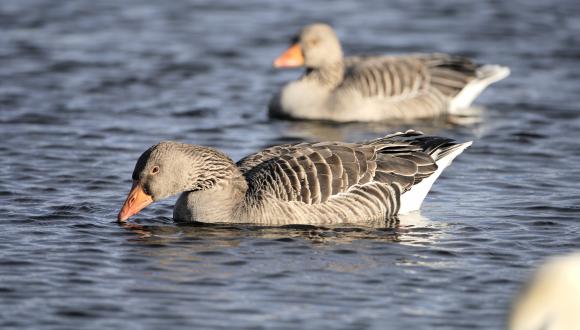
Adaptive management is well-established in other countries. It involves active monitoring, the setting of management targets, the compilation of bag-records and a system of data reporting. These policies are based on adaptive principles and involve the collection of data which in turn, inform management decisions, creating a record of the size of hunting bags, as well as an index of abundance. Examples include the management of Icelandic greylag geese in which NatureScot is currently involved with Icelandic colleagues, and hunters on Orkney in developing an adaptive approach to managing locally breeding greylag and wintering Icelandic greylag. The processes increase the amount and quality of data which is available to inform future management and could be reactive to the evidence gathered.
Although specific to waterbirds, the draft findings of recent UK reporting to the African-Eurasian Migratory Waterbird Agreement (AEWA), c commissioned by DEFRA, aimed to assess the sufficiency of evidence for the size of UK hunting bags of waterbird populations, identify any important evidence gaps and suggest options for filling them. The review concluded that accurate number of birds harvested was unknown and the current margins of error are often of an order of magnitude and that the quantity and quality of data relating to waterbird harvest and hunting behaviour should be markedly improved. If these recommendations were taken forwards, then the approach would support our own wider policy direction, of implementing effective adaptive management of game bird populations.
The adaptive process could, in the context of Schedule 2, include such recommended measures as adjustment to the closed season to ensure hunting activities are focused on migratory waterfowl, woodcock and common snipe, and would thereby, minimise the risk of over-harvesting of resident breeding populations. The model calls for management, restraint and offers accountability.
Such a measure is within the Act’s existing powers which includes the ability to make variations to the closed seasons for identified species or to restrict hunting within a geographical area. This power (introduced By Order) would allow a simple means to provide greater protection to resident populations of species such as snipe, woodcock and some wildfowl. Such an order might also be introduced to protect specific marginal geographical areas of distribution of a species, while maintaining an adaptive harvest approach in other areas.
Annexes
Annex 1 – Schedule 2 Review Report to Scottish Government
Purpose of the review
The purpose of this paper is to set out a review of the ornithological evidence available to support a review of Schedule 2 of the Wildlife & Countryside Act 1981 (as amended) in Scotland. It identifies the vulnerability of listed species and evidence available on the timing and impact of hunting activities.
Legislative context
Schedule 2 of the Wildlife & Countryside Act 1981 (as amended) lists birds which may be killed or taken under sections 2, 3 and 22 of the Act. The Schedule has two parts: Part 1 ‘Species which may be taken outside the closed season’ and Part 1A Exceptions ‘Birds included in Part 1 which may not be killed or taken on Sundays or Christmas Day’. The Act originally included another section (Part 2) listing species that could be taken ‘By authorised persons at all times’ (the ‘pest’ list) but this has been superseded by The Wildlife and Countryside Act 1981 (Variation of Schedules 2 and 3) Order 1992 which moved relevant species to control under General Licences.
Capercaillie was removed from Schedule 2 under The Wildlife and Countryside Act 1981 (Amendment) (Scotland) Regulations 2001 and placed on Part 1 of Schedule 1 to provide it with greater legal protection. The Schedule has not, however, been reviewed in full since the Act came into force in 1981. An update of the UK list of Birds of Conservation Concern (BoCC5) suggested there is now a requirement to review whether the species listed on Schedule 2 remain eligible as quarry.
Key issues
As the Schedule has not previously been reviewed there was no set process or criteria for selecting species. This needed to be addressed to ensure the rationale for retention or removal were clear and justified.
Schedule 3 lists species that can be sold. Parts 1A, II, IIA and III apply to species which may be sold when dead. A review of the species listed on Schedule 2 may impact on species listed on Schedule 3. No comment is made in the report on possible specific cross-over with Schedule 3 species.
Process
In establishing criteria, the review broadly followed the process established for Quinquennial Reviews (QQR) of the Wildlife & Countryside Act (Schedules 5 and 8). This first considers which species should be considered for review (the Eligibility Criteria) followed by consideration of the basis for any changes that could be made to deliver the provisions of the Act (the Decision Criteria). Given concern about the loss of biodiversity and the challenges of climate change, and in keeping with the change of selection criteria in QQR7, it also reviewed the conservation status of the species, as defined by the IUCN red list categories and Birds of Conservation Concern 5 (BoCC5), to identify the conservation imperative for each species
Stakeholder engagement
NatureScot engaged with key stakeholders in order to establish a broad consensus on criteria. Invitations to participate in the consultation, including indicative proposals for criteria, were sent to:
- Game and Wildlife Conservation Trust (GWCT)
- Scottish Gamekeepers Association (SGA)
- British Association for Shooting and Conservation (BASC)
- Scottish Association for Country Sports (SACS)
- Royal Society for the Protection of Birds (RSPB)
- Scottish Countryside Alliance (SCA)
- British Trust for Ornithology (BTO)
- Wildfowl and Wetlands Trust (WWT)
Detailed responses were received from BASC, GWCT, BTO and RSPB. Most comments focused on the process rather than the criteria, but three key points were raised:
- The review should exclude criteria around welfare.
- The review should consider adding species currently listed within one or more General Licences.
- The review should consider adding species that are invasive non-native species (INNS).
The final criteria excluded welfare grounds as a factor and the addition of Invasive Non-Native Species or species already listed on General Licences. Neither addition was felt to present any material benefit to the review process as specific legislation directs their control.
Eligibility Criteria
The following were used to identify species to be considered for review:
- Species are native or naturalised within GB.
- Species listed as Green under BoCC5 and/or Least Concern (LC) under the 2021 GB Regional IUCN assessment were discounted from the review and automatically retained on Schedule 2.
- Species listed as Amber or Red under BoCC and/or IUCN Critically Endangered (CR), Endangered (EN), Vulnerable (VU) or Near Threatened (NT) were subject to further consideration. This included:
- Whether the relevant population is subject to hunting mortality, i.e. a species classified as Red due to a decline in the breeding population may be eligible for retention if it is the wintering population that is hunted and this does not mix with the breeding population.
- The reason for a species classification is due to a significant decline in the population, i.e. >50% over 25 years for red-listed species or >25% for amber listed species); or
- Populations are localised such that >50% of the population is found at 10 or fewer sites during the open season.
Decision criteria
Changes to the current Schedule focused on the list of native or naturalised species identified under criteria (C). It included:
- An assessment of what is known about hunting mortality and whether this is likely to be a driver of population change.
- Consequences of any change to a species’ listing.
Information on hunting
Information on hunting was collated primarily from GWCT’s National Game Bag Census (NGC) which was established in 1961 to provide a central repository of records from shooting estates. Records are collected from shooting estates and game keeping activities about the number of each quarry species shot annually. However, there is no statutory requirement to report on hunting bags and participation in the Scheme is voluntary. It does not include information on all the species and interpretation of any trends depends on the level of effort as well as the number of birds taken. Consequently, information for some species is partial or may not be representative of the national situation as contributors to the Scheme are self-selecting. Not all hunters are members of GWCT or record their takes. In summary, whilst the National Game Bag can provide an indication of regional or national hunting trends, interpretation of these and their correlation with bird population trends and estimates needs to be treated with some caution. In addition, the figures collated relate UK-wide so some species with a largely Scottish breeding or non-breeding distribution are reflected well, others, such as grey partridge do not reflect the populations north of the border.
A summary paper was published in 2020 which sets out knowledge of current population sizes and estimated hunting bags using 2016 data (Table 1). This applied methods to the NGC data that were similar to those used for bird census estimates to derive annual bag indices for the UK and evaluate changes in bags over 50, 25 and 12 years as an index of change across years. Data from this table are referred to in the species accounts in Annex C.
| Species | Breeding population | Breding population | Wintering population | Wintering population | Estimated bag (2016) |
|---|---|---|---|---|---|
| Woodcock | Males | 50,570 | Individual | 1,400,000 | 140,000 |
| Snipe | Pairs | 66,500 | Individual | 1,000,000 | 85,000 |
| Pochard | Pairs | 720 | Individual | 18,000 | 370 |
| Pintail | Pairs | 27 | Individual | 22,000 | 680 |
| Goldeneye | Pairs | 200 | Individual | 18,000 | 450 |
| Ptarmigan | Pairs | 2,000-15,000 | - | n/e | 110 |
| Black grouse | Males | 4,850 | - | n/e | 59 |
| Grey partridge | Pairs | 37,500 | - | n/e | 30,000 (Whole of UK) |
| Grey partridge (released) | Individuals | - | Individual | 190,000 (whole of UK) | 30,000 (whole of UK) |
Breeding and wintering populations: Caulfield, E. Woodward, I., Peck, K., Wotton, S. and Frost. (2025). Overwinter Population Estimates of Waterbirds in Great Britain. British Birds 118: 642-657.
Estimated bags: Data taken from Table 3, Aebischer, N. (2019). Fifty-year trends in UK hunting bags of birds and mammals, and calibrated estimation of national bag size, using GWCT's National Gamebag Census. European Journal of Wildlife Research, 65: 64-76.
Results of the review
There are currently 24 species on Schedule 2 (Annex A) however, white-fronted goose is only listed as quarry in England and Wales so is not relevant to this review.
Annex B sets out a summary of the remaining species listed on the Schedule, their conservation status, criteria used to determine whether to include them in the review and an accompanying rationale and comments. Of the 23 remaining species, 16 were considered eligible for further consideration by virtue of their conservation status (IUCN CR, EN, VU, NT or Red/Amber on BoCC5).
These were:
- Pochard - Aythya ferina
- Eurasian Wigeon - Mareca penelope
- Gadwall - Mareca strepera
- Goldeneye - Bucephala clangula
- Greylag Goose - Anser anser
- Mallard - Anas platyrhynchos
- Northern Pintail - Anas acuta
- Northern Shoveler - Spatula clypeata
- Pink-footed Goose - Anser brachyrhynchus
- Teal - Anas crecca
- Black grouse - Lyrurus tetrix
- Grey partridge - Perdix perdix
- Ptarmigan - Lagopus muta
- Moorhen - Gallinula chloropus
- Snipe - Gallinago gallinago
- Woodcock - Scolopax rusticola
The remaining seven species are not assessed as vulnerable under either IUCN or BoCC5 criteria and, as per the Eligibility Criterion (B) above, were not considered for any change.
Using criteria C(a) to C(c), the following species were removed from further consideration based on the relevancy of the population listed, the stability of the population and/or population distributions. Reasons for their exclusion are set out in the table in Annex B.
- Eurasian Wigeon - Mareca penelope
- Gadwall - Mareca strepera
- Greylag Goose - Anser anser
- Mallard - Anas platyrhynchos
- Northern Shoveler - Spatula clypeata
- Pink-footed Goose - Anser brachyrhynchus
- Teal - Anas crecca
- Moorhen - Gallinula chloropus
The remaining eight species formed the basis of the detailed review.
Additional consideration
In response to feedback from stakeholders, we also considered the addition of two species to the schedule: the wood pigeon Columba palumbus and the Egyptian goose Alopochen aegyptiaca.
Wood pigeon have an extremely large range, and do not approach the thresholds for Vulnerable under the range size criterion. The population trend appears to be increasing, and hence the species does not approach the thresholds for Vulnerable under the population trend criterion. The population size is extremely large and hence does not approach the thresholds for Vulnerable under the population size criterion. For these reasons the species is evaluated as Least Concern.
Wood pigeons are widely hunted, ostensibly for crop protection purposes and they can also be sold at any time (Schedule 3). Their population is widespread, abundant and increasing, meaning that harvesting, whether for food or any other legitimate purpose is sustainable.
Egyptian Goose has an extremely large range and hence does not approach the thresholds for Vulnerable under the range size criterion. Despite the fact that the population trend appears to be decreasing, the decline is not believed to be sufficiently rapid to approach the thresholds for Vulnerable under the population trend criterion. The population size is very large and hence does not approach the thresholds for Vulnerable under the population size criterion. For these reasons the species is evaluated as Least Concern.
Egyptian goose is currently classified as a non-native in Scotland, was introduced as an ornamental species in the south of England, has escaped into the wild, is now breeding successfully in a feral state and has spread north. There are now very small numbers recorded in the south of Scotland and a precautionary mechanism for control in advance of a population spread, may be prudent.
Conclusions and recommendations
Details for each species review are set out in Annex C. Hunting data is available for some of these although, as stated, this information needs to be used with care. These species are, however, currently assessed as either Critically Endangered, Endangered or Vulnerable to extinction under IUCN international standards and/or Red/Amber under GB Birds of Conservation Concern.
Applying a precautionary principle could support the removal of these species from the schedule and afford them maximum protection. We believe however that the risks to the conservation of the species from hunting pressure, is low. The locations of the populations, the size and seasonality together with the available evidence, suggests that hunting of these species (common pochard, pintail, goldeneye, ptarmigan and black grouse) in Scotland, accounts for very low numbers of mortality and that a cessation of hunting would not impact the recovery of the species. As such, hunting poses no threat to the conservation of the species.
That said, Common pochard is listed on Column A of AEWA, which could justify its removal to meet with the requirements of the Agreement.
Large numbers of grey partridge are also released annually and, as most of the shot birds will likely be in this cohort, there is assessed to be no material benefit to removing this species from the schedule.
We believe that outright withdrawal of these species from schedule 2 is not necessary at this stage. Such a measure could be perceived as aimed simply to further limit shooting activity and at this point in time, we believe that other, more proactive measures may be more appropriate to trial. We recommend that an adaptive harvest model of management should initially be pursued. Initial dialogue with key stakeholders suggests that they would be receptive to engaging in the process through their memberships. Such a management procedure follows other adaptive processes already well-established in other countries and would involve active monitoring, the setting of management targets and reported data collection. The procedure would enhance the amount and quality of data available, to inform future management.
The adaptive process could include recommended measures such as an adjustment to the close season to ensure hunting activities are focused on migratory waterfowl, woodcock and common snipe would thereby minimising risk to resident breeding populations.
Recommendations are summarised below in Table 2.
| Species | Status | Resident population | Wintering population | Recommendation (details in Annexes) |
|---|---|---|---|---|
| Northern pintail | Amber | Decline | Increase | Retain on schedule with an extension to the close season. |
| Common pochard | Red | Decline | Decline | Remove from schedule, consistent with AEWA categorisation. |
| Common snipe | Amber | Decline | Decline | Retain on schedule with an extension to the close season. |
| Goldeneye | Red | Stable or increasing | Decline | Retain on schedule with an extension to the close season. |
| Eurasian woodcock | Red | Decline | Stable | Retain on schedule with an extension to the close season. |
| Black grouse | Red | Variable, but includes overall decline likely. | - | Retain the current non-statutory moratorium while population levels are low |
| Ptarmigan | Red | Decline | - | Retain on schedule and implement a non-statutory moratorium while population levels are low. |
| Grey partridge | Red | Decline | - | Retain on schedule with non-statutory moratorium while population levels are low in areas where there are no commercially driven releases. |
| Wood pigeon | Least concern | increasing | - | Add to schedule |
| Egyptian goose | Least concern | - | - | Manage under INNS controls |
NatureScot Ornithology and Wildlife Management Teams
09 March 2026
Annex A: Schedule 2, Wildlife & Countryside Act 1981 - Scottish quarry list
| Species group | Species name (English and Latin) | Closed Season (day/month) | Current BoCC 5 (2021) status |
|---|---|---|---|
Wildfowl (ducks and geese) | Canada Goose Branta canadensis | 21/02 – 31/08 | Introduced species - not assessed |
Wildfowl (ducks and geese) | Common Pochard Aythya ferina | 21/02 – 31/08 | Red -Wintering population decline |
Wildfowl (ducks and geese) | Eurasian Wigeon Mareca penelope | 21/02 – 31/08 | Amber - Localised wintering population |
Wildfowl (ducks and geese) | Gadwall Mareca strepera | 21/02 – 31/08 | Amber - Internationally important population |
Wildfowl (ducks and geese) | Goldeneye Bucephala clangula | 21/02 – 31/08 | Amber - Wintering population decline |
Wildfowl (ducks and geese) | Greylag Goose Anser anser | 21/02 – 31/08 | Amber - Localised wintering population |
Wildfowl (ducks and geese) | Mallard Anas platyrhynchos | 21/02 – 31/08 | Amber - Moderate population decline |
Wildfowl (ducks and geese) | Northern Pintail Anas acuta | 21/02 – 31/08 | Moderate breeding population decline |
Wildfowl (ducks and geese) | Northern Shoveler Spatula clypeata | 21/02 – 31/08 | Internationally important wintering population |
Wildfowl (ducks and geese) | Pink-footed Goose Anser brachyrhynchus | 21/02 – 31/08 | Localised wintering population |
Wildfowl (ducks and geese) | Teal Anas crecca | 21/02 – 31/08 | Internationally important wintering population |
Wildfowl (ducks and geese) | Tufted Duck Aythya fuligula | 21/02 – 31/08 | Green |
| Grouse/game birds | Black grouse Lyrurus tetrix | 11/12 – 19/08 | Red - Breeding population decline |
| Grouse/game birds | Red grouse Lagopus scotica | 11/12 – 11/08 | Green |
| Grouse/game birds | Pheasant Phasianus colchicus | 02/02 – 30/09 | Introduced species - not assessed |
| Grouse/game birds | Grey partridge Perdix perdix | 02/02 – 31/08 | Red - Breeding population decline |
| Grouse/game birds | Red-legged partridge Alectoris rufa | 02/02 - 31/08 | Introduced species - not assessed |
| Grouse/game birds | Ptarmigan Lagopus muta | 11/12 – 11/08 | Red - Breeding population decline |
| Crakes and Rails Rallidae | Coot Fulica atra | 01/02 - 31/08 | Green |
| Crakes and Rails Rallidae | Moorhen Gallinula chloropus | 01/02 - 31/08 | Green |
| Plovers Charadriidae | Golden Plover Pluvialis apricaria | 01/02 - 31/08 | Green |
| Waders Scolopacidae | Snipe Gallinago gallinago | 01/02 - 31/08 | Amber - Moderate decline (winter and breeding) |
| Waders Scolopacidae | Woodcock Scolopax rusticola | 01/02 - 31/08 | Red - Breeding population decline |
Annex B - Application of criteria
| Scientific name | Common name | Birds of Conservation Concern status (from BoCC5) | Regional (GB) IUCN status assessment (from IUCN2) | Is the population relevant to BoCC/IUCN listing subject to hunting mortality? | Is the reason for BoCC Red/Amber classification due to a significant decline in the population (i.e. >50% over 25 years for Red; >25% for Amber)? | Are populations are localised during the open season, based on BoCC criterion (ie >50% of the population is found at 10 or fewer sites)? | African-Eurasian Migratory Waterbird Agreement (AEWA) Column A? | Included in detailed review | Rationale and comments |
|---|---|---|---|---|---|---|---|---|---|
| Anas acuta | Pintail | Amber | CR (VU for non-breeding) | Yes | No | No | - | Yes | Multiple reasons for BoCC5 Amber listing mainly relate to the small breeding population, but also to European threat status and the localised/internationally important non-breeding population. Options took into account whether shooting may be impacting the status of the small breeding population which is thought to be largely resident. |
| Aythya ferina | Pochard | Red | EN (VU for non-breeding) | Yes | Yes | No | A | Yes | BoCC5 Red relates to significant, long-term breeding and non-breeding population declines, and global and European threat status. Species is also listed on Column A AEWA. High priority for review. |
| Gallinago gallinago | Common snipe | Amber | VU | Yes | Yes | No | - | Yes | BoCC5 Amber listing relates to moderate UK breeding and non-breeding population declines. Breeding declines in England have been severe though Scottish monitoring may not be sufficient to reflect actual trends. Large numbers of immigrant birds arrive each winter. Review considered whether changes to hunting might reduce potential impacts on breeding birds. |
| Scolopax rusticola | Eurasian woodcock | Red | VU | Yes | Yes | No | - | Yes | BoCC5 Red due to breeding decline. Review considered whether changes to shooting practices, including extending the closed season might benefit the status of the breeding population. |
| Bucephala clangula | Goldeneye | Red | VU | Yes | Yes | No | - | Yes | Recently BoCC5 Red due to the small size of its Scottish breeding population and severe decline in the non-breeding population - both populations are considered Vulnerable at GB scale. Decline of non-breeding abundance across GB is likely to be driven by changes in short-stopping. |
| Lyrurus tetrix | Black grouse | Red | VU | Yes | Yes | No | - | Yes | Long-term, severe decline and BoCC5 Red, though some localised populations known to be expanding with new woodland creation. |
| Lagopus muta | Ptarmigan | Red | VU | Yes | Yes | No | - | Yes | Apparent, severe decline in breeding population size and range is reason for BoCC5 Red. |
| Perdix perdix | Grey partridge | Red | VU | Yes | Yes | No | - | Yes | Long-term, severe decline and has put this species into a parlous status. BoCC5 Red. |
| Scientific name | Common name | Birds of Conservation Concern status (from BoCC5) | Regional (GB) IUCN status assessment (from IUCN2) | Is the population relevant to BoCC/IUCN listing subject to hunting mortality? | Is the reason for BoCC Red/Amber classification due to a significant decline in the population (i.e. >50% over 25 years for Red; >25% for Amber)? | Are populations are localised during the open season, based on BoCC criterion (ie >50% of the population is found at 10 or fewer sites) | African-Eurasian Migratory Waterbird Agreement (AEWA) Column A? | Proposed for more detailed review | Rationale and comments |
|---|---|---|---|---|---|---|---|---|---|
| Anser anser | Greylag goose | Amber | LC | Yes | No | No | A | No | BoCC5 Amber status refers to migratory Icelandic population. The Icelandic greylag population is listed on Column A under AEWA. |
| Mareca penelope | Wigeon | Amber | VU | Yes | No | Yes | - | No | Species not declining. BoCC5 Amber status due to localised and internationally-important non-breeding population. Localised, uncommon breeder in Scotland. |
| Mareca strepera | Gadwall | Amber | LC | Yes | No | No | - | No | Species not declining. BoCC5 Amber status due to internationally important non-breeding population. Limited distribution in Scotland. |
| Anas crecca | Teal | Amber | LC | Yes | No | No | - | No | Species not declining. BoCC5 Amber status due to internationally important non-breeding population. Widespread breeder in Scotland. |
| Anas platyrhynchos | Mallard | Amber | VU | Yes | Yes | No | - | No | BoCC5 Amber status relates to moderate decline in the non-breeding population, but species remains abundant and ubiquitous. Trends may be influenced by variation in releases of captive-bred birds for recreational hunting. |
| Spatula clypeata | Shoveler | Amber | LC | Yes | No | No | - | No | Species not declining. BoCC5 Amber status due to internationally important non-breeding population. |
| Aythya fuligula | Tufted duck | Green | VU | Yes | - | - | - | No | Green listed |
| Fulica atra | Common coot | Green | VU | Yes | - | - | - | No | Green listed |
| Anser brachyrhynchus | Pink-footed goose | Amber | LC | Yes | No | Yes | - | No | Species not declining. BoCC5 Amber status due to internationally important non-breeding population. |
| Gallinula chloropus | Moorhen | Amber | VU | Yes | Yes | No | - | No | BoCC5 Amber due to a moderate breeding decline, but species remains widespread and abundant. Little evidence that hunting is contributing to the decline. |
| Pluvialis apricaria | Golden plover | Green | LC | Yes | - | - | - | No | Green listed. Declining breeding population, though large number of migrants pass through Scotland. |
| Lagopus scotica | Red grouse | Green | LC | Yes | - | - | - | No | Green listed |
| Alectoris rufa | Red-legged partridge | n/a | n/a | - | - | - | - | No | Introduced, naturalised population. |
| Phasianus colchicus | Common pheasant | n/a | n/a | - | - | - | - | No | Introduced, naturalised population. |
| Branta canadensis | Canada goose | n/a | n/a | - | - | - | - | No | Introduced, naturalised population. Also covered by General Licence. |
Common Pochard (Aythya ferina)
Summary status
Common Pochard is legal quarry above high water, outside the close season of 01 February to 31 August. The species is identified as Red on BoCC5, Endangered in GB by IUCN and VU at both European and Global scales. The species is also listed on Column A of the Agreement on the Conservation of African-Eurasian Migratory Waterbirds (AEWA) which states that populations should not be subject to hunting unless it can be demonstrated that harvest is sustainable. Parties are also required to “prepare and implement national single species action plans for the populations listed in Column A of Table 1 with a view to improving their overall conservation status”. The species has a large breeding population and range outside UK as well as a wide wintering range however information suggests that numbers have declined rapidly across the majority of its range. It is projected to continue to decline.
The UK breeding population is estimated to be 800 pairs with an extremely small Scottish breeding population of around 2-4 breeding pairs. The mean estimated population for the top wintering site in Scotland is 1,243 at Loch Leven. Decline in the numbers of the wintering migrant population in the UK, down 74% since the late 1990s, is thought to be partly due to fewer birds migrating as a result of milder winters across Europe and more birds wintering in the Baltic-Nordic region. Migratory birds start to arrive in October, and most have arrived by mid-November. Birds are prone to human disturbance and may temporarily vacate waters during periods of water-based recreational activity.
Data reported to the Rare Birds Breeding Panel (RBBP) has suggested a steady increase in numbers since 1990 in England, but there has been a coincidental reduction in the UK breeding range between 1968 and 2011. The small Scottish breeding population has declined to very low numbers over the last ten years. The reasons for the breeding population decline have not been identified but are suggested to be site-related management, in particular nutrient inputs, eutrophication and a reduction in food availability.
Pochard requires unfrozen water bodies to be available for its aquatic food. Climate change may affect the GB population if such water bodies are more freely available in Europe, driving a reduction in the number of birds migrating to our shores. At present levels of hunting are considered to be very low and therefore sustainable (see Table 1). It is possible that current shooting early in the open season before migrant ducks arrive could include UK breeding pochard.
Recommendation
Numbers of pochard breeding and wintering in UK are thought to be declining. In Scotland there is no robust evidence of the level of impact of shooting may be having although the risk is considered low by virtue of the small, restricted resident population. However, the UK are signatories to AEWA and this species in listed on Column A which means that signatories should only persist with hunting if it can be demonstrated that this is taking place on a “sustainable use basis”. In the absence of this evidence, removal of the species from Schedule 2 would be consistent with the UK’s commitment to this international agreement. The species could be re-scheduled if data becomes available to demonstrate that hunting is either sustainable or of no material threat to the conservation of this declining species.
Goldeneye (Bucephala clangula)
Summary status
Goldeneye is legal quarry inland, outside the close season of 21 February to 31 August (The close season dates are 21 February to 31 August below High Water Mean Spring). The species is identified as Red under BoCC5, but IUCN GB VU. It is LC internationally because the species has an extremely large international range and the population trend appears to be stable. The UK status is due to the small Scottish and UK breeding population, as well as the internationally important wintering, migrant population.
The species first bred in Scotland in 1970 and has expanded through deployment of a quantity of nesting boxes on Speyside and elsewhere. Scotland hosts the majority of the breeding population, estimated to be about 200 breeding females in 2010, with the majority being along the Great Glen, Strathspey and Aberdeenshire. There are no reliable estimates of the current Scottish breeding population, due to changes in monitoring effort. Whilst changes in range recorded by the last BTO Atlas suggest it may be stable or increasing. The UK wintering population is estimated to be about 18,000 individuals.
There has been a gradual decline in the UK non-breeding population, with a 54% reduction since the late 1990s, although this does not appear to have affected their geographic range. The reasons for the declines are largely unknown although thought to be linked to a reduction in food availability resulting from changes in water quality, ecosystem structure and functions. Climate change may influence the number of birds remaining in warmer weather in Fennoscandia over winter which may, in turn, increase the likelihood of breeding birds being taken in game bags. Currently migratory birds begin to arrive in October, and most have arrived by mid-November. It is therefore possible that shooting early in the open season, e.g. September, before migrant ducks arrive could include UK breeding goldeneye
Recommendation
Goldeneye have a large wintering range and the small breeding population appears to be either stable or increasing in Scotland due to range expansion. Changes to the GB population status are largely a result of declines elsewhere in the UK. There is no evidence that shooting is impacting on this species and numbers shot in the UK are relatively small (see Table 1), which supports a conclusion that shooting is currently sustainable. However, given the vulnerable status of the species and the importance of the Scottish breeding population, extending the close season to September 30th would reduce the risk of resident birds being shot before the arrival of the migrant population.
Northern Pintail (Anas acuta)
Summary status
Northern Pintail is legal quarry outside the closed season of 21 February to 31 August (below high-water mark). The species is identified as Amber under BoCC5 due to their long term, moderate breeding range decline, small UK breeding population, localised breeding and the international importance of the population. It is listed as CR in GB but VU in Europe and LC globally.
There are estimated to be 22,000 birds overwintering in the UK with WeBS data suggesting a significant long-term increase in Scotland’s wintering population against an overall UK decline of 10%. Scotland hosts the majority of the breeding population with an estimated 28 pairs (five-year mean). The Scottish breeding population has fluctuated around these numbers over the last ten years. The drivers of population change are unknown although factors such as feeding ecology, water levels, disturbance and breeding productivity have all been suggested.
Game Bag data show a reduction in hunting bags which is considered to reflect the decline in the UK non-breeding population. However, there is no strong evidence to suggest hunting is driving this trend and, given the restricted distribution and small size of the breeding population, the risk is assessed as low.
Migrants from the continent start to arrive in UK in September but peak arrival does not occur until November-December.
Recommendation
The small breeding population is low in numbers and hunting pressure is not likely to be a main driver of population change. Table 1 data strongly suggests that current hunting levels are sustainable. The apparent decline in the migrant population at the UK level contrasts with the picture in Scotland.
There is no evidence that shooting is responsible for the long-term UK decline and pintail are most likely found in a hunter’s bag in small numbers as a result of collateral shooting of other target species. Given the limited risk, pintail could be retained on Schedule 2 with, an extension to the close season to September 30th in order to reduce the risk of resident birds being shot before the arrival of the migrant population.
Black grouse (Lyrurus tetrix)
Summary status
The UK black grouse population has declined and is currently BoCC5 Red. It is assessed as Vulnerable under GB IUCN assessment due to a decline in the Scottish breeding population, most notably between 1995-96 and 2005. It is listed as LC at both European and Global scales.
Black grouse are found across the UK, with the largest breeding population across upland areas of Scotland and a smaller (but significant) population across northern England. There is an even smaller population in Wales. There have been no recent national surveys, but a number of local surveys show significantly different trends across the UK. These include recent increases in parts of Scotland and northern England (strongly associated with improved habitat management and habitat availability) and decline in populations elsewhere (especially in Southern Scotland). No recovery has been seen. The Welsh population is relatively small and despite conservation measures targeting the species, is still considered to be extremely vulnerable.
Black grouse tend to exist in edge/transition habitats, especially where new (native) woodlands are being planted. Local increases have been noted where there has been significant new planting. It is therefore likely that the principal driver of change in this species is a change in habitat suitability, as well as loss or creation of suitable habitat. Predation of breeding birds may be a significant factor where populations are already under pressure (such as Wales and Southern Scotland).
There has been a long-term decline in the game bag returns although the data does show considerable short-term fluctuations within this. This could reflect a real decline in the population, albeit this varies across the geographical range in UK. There has, however, also been a voluntary moratorium on shooting black grouse on many estates although this has not stopped all shooting. Many estates continue to implement a voluntary restraint and, as summarised in Table 1, numbers reported shot are now low.
There is no evidence that shooting is driving or even partially responsible for the decline in black grouse populations. The success of recovery projects in the northern Pennines (England) has shown that the species can recover under appropriate habitat management even when shooting is still permitted. Local increases have also been seen in Wales, albeit the population remains vulnerable there. In Scotland local increases are strongly associated with the creation of new woodlands, especially where they co-exist with open moorland and other non-forested habitats. Conversely, it is likely that maturation of forests and low levels of new planting are damaging to black grouse. Such habitat changes are likely to be the main reason why black grouse populations fluctuate in the way that they do.
Recommendation
There is no evidence that shooting is, or ever has been, a key driver of population change and removal of the species from Schedule 2 would offer little benefit to populations or their potential to recover. Game shooting organisations, i.e. BASC and GWCT, stated their support in the consultation on the criteria for a recovery of the species, and strongly favour voluntary restraint rather than a statutory ban when populations are low. The very low level of shooting mortality supports a conclusion that the current voluntary moratorium on shooting black grouse is working (see Table 1). Whilst the species could be removed from the Schedule under the precautionary principle on the basis of its red BoCC5 listing, there is evidence that the current approach of using a voluntary moratorium can work and will maintain land manager support in continuing efforts to recover populations where they are still declining or vulnerable to decline.
Grey partridge (Perdix perdix)
Summary status:
Grey partridge is listed as Red in BoCC5 and as Vulnerable under the GB IUCN assessment due to its range and population decline. The current population is estimated as 37,000 territories (The BTO website). The species is resident and non-migratory, with a consistent decline in the breeding population by approximately 92% since 1967. Research and conservation action undertaken to address these declines has largely been led by the shooting sector. Currently, large numbers of grey partridge are bred and released for shooting, with smaller numbers also released to reinforce the natural breeding population.
The principal driver of change has been loss and degradation of suitable habitat, with a key factor being the loss of invertebrate key food items during the breeding season. This is strongly associated with pesticide use. Poor chick and adult survival, in part due to predation, have also been identified as factors that either drive a decline or inhibit recovery. High densities of other gamebirds and the diseases and pathogens that they host may also contribute to the lack of success of recovery projects.
The game bag has declined although data suggests that the major decline occurred in the 1960s and 1970s as the trend in numbers shot after c.1980 is relatively shallow. Many estates operate voluntary restraint when populations are low. Research by GWCT showed that Spring partridge plot densities showed no association with variation in shooting, supporting the case that shooting pressure is not responsible for the decline. Where red-legged partridges have also been released there can be confusion between the species which can, though, result in grey partridge being shot accidentally.
Evidence from local, landowner-led conservation projects suggests that having an incentive to restore populations to levels that can support shooting could in the long-term support recovery of the population. This can only be sustained while there are agricultural incentives to maintain suitable habitat (low pesticide use, plenty of cover for breeding hens and retention of winter stubbles) as well as predator control, especially when populations are very low.
Recommendation
There is no evidence that shooting is, or ever has been, a key driver of grey partridge population change. Most grey partridges shot will originate from birds released each year (see Table 1) so removal of the species from Schedule 2 would offer little benefit to the populations or their potential to recover. It would also make releases illegal except under licence, probably deterring some conservation management projects.
It is also likely that removal of grey partridge from Schedule 2 would increase the likelihood that red-legged partridge releases will increase, removing any incentive to recover grey partridge. This may have damaging effect on remaining grey partridge populations as a result of direct (accidental shooting) and indirect (competition, disease and parasitism) impacts.
Retaining the species on Schedule 2 would continue to provide an incentive for land managers to pursue efforts to recover grey partridge populations where they are still declining or vulnerable to decline. A voluntary moratorium on shooting is recommended in areas where there are no releases for game purposes, or where releases are primarily designed to restore breeding populations.
Ptarmigan (Lagopus muta)
Summary status
Ptarmigan is currently Red on the BoCC5 list having been upgraded from green. It is also categorised as Vulnerable under the GB IUCN assessment although LC at both European and Global levels. The BTO Atlas suggested an 11% decline across the 40-year period between Atlas surveys, with losses of ptarmigan identified in occupied squares largely located in marginal parts of the Scottish range. In a survey of land managers (Fletcher, K., D. Howarth & D. Baines (2013). The Status of Ptarmigan in Scotland: results of a survey questionnaire of land managers. Scottish Birds 33:4 291-297), 39% of survey respondents reported a decline whereas 48% reported static population size. 13% reported an increase.
Game bag data suggests a decline of 79% over 50 years and 72% over 25 years up to 2016. In extrapolating these data to 2019 and adjusting figures for possible density-dependence in bag size as is the practice for red grouse, the decline exceeds 50% over 25 years. This is the strongest evidence we have for a decline in the Scottish ptarmigan population. However there has been little systematic monitoring of ptarmigan populations in Scotland, in part due to its often remote montane habitat where access can be difficult. Changes in distribution have also been recorded, generally in southern lower altitude locations, though losses have been reported elsewhere in areas where populations used to be common. A national survey of ptarmigan, as part of a three species montane bird survey was undertaken in Scotland in 2025 to better understand distribution and population size and results are expected to be published in 2026.
There is, however, no robust evidence that shooting has driven these declines. Fletcher et al. (2013) note that broadly similar population declines were seen between estates that did or did not shoot, suggesting that other factors are at play, e.g. habitat changes and/or climate. Recent discussion (Fletcher pers.comm.) highlighted the likelihood that ptarmigan have continued to decline since the 2013 paper but that there remains no connection with shooting. Research on hunting of rock ptarmigan (aka ptarmigan) and willow ptarmigan (aka red grouse) in Scandinavia concluded that hunting mortality for both species adds to other sources of mortality and is not compensated for by a density-dependent response. However, this finding is caveated by comments that other factors driving population change have a bigger impact than hunting mortality, which is consistent with the conclusions in Fletcher et al. (2013).
It has been claimed that, in parts of Scandinavia where similar declines to those experienced in Scotland have been recorded, smaller populations could be vulnerable if shooting were to exceed the level of recruitment to the population (Willebrand, T., M. Hörnell-Willebrand, and L. Asmyhr. (2011). Willow grouse bag size is more sensitive to variation in hunter effort than to variation in willow grouse density. Oikos 120:1667–1673). This is, however contested by other research which shows no such association. If real, it could heighten the risk to the Scottish ptarmigan population where any shooting mortality could have a bigger effect in marginal areas and as the population continues to decline although, given the distribution of the species, the scale of impact is likely to be countered by the increased effort needed to find and shoot ptarmigan where densities are low.
Recommendation
There is some basis for taking steps to reduce the hunting bag of ptarmigan in Scotland although the estimated hunting bag is very low (see Table 1) and suggests that shooting is not responsible for the decline. There may, though, be a potential risk that shooting could exacerbate declines when populations are low, especially in marginal populations, and lead to local extinctions.
Given the lack of information about when estates undertake ptarmigan shooting, it has not been possible to evaluate the likely success of extending close season dates. It is, though, likely to be earlier in the autumn when daylight is longer and the weather better. As shooting of ptarmigan tends to be by walk-up rather than driven shooting, extending the close season dates could reduce shooting pressure by reducing opportunities. However, taking all the evidence into consideration, it is concluded that there is no good evidence that removing the species from Schedule 2 would deliver any significant benefit over voluntary restraint. It is therefore recommended that ptarmigan are retained on Schedule 2, and a voluntary moratorium on shooting actively promoted by relevant organisations.
Common snipe (Gallinago gallinago)
Summary status
Common snipe is Amber listed on BoCC5 due to a 25-year decline in wintering population (>25% but <50%) as well as its breeding range contraction between the Atlas surveys in 1968–71 and 2007–11. It is VU in GB IUCN and in European, but LC Globally.
The internationally important migratory population is thought to have decreased though is believed to still number about a million. The UK game bag index indicates a fluctuating long-term increase in numbers shot while the UK breeding population is stable or increasing, despite an apparent range contraction.
The shooting season for common snipe opens on 12 August in Scotland while some birds are still breeding. Most migrants do not arrive in UK until the autumn and therefore breeding birds are likely to make up a significant proportion of the bag in the early weeks of the open season.
Along with woodcock, large numbers of snipe (about 85,000 in 2016) are shot across the UK, including Scotland (which holds a large proportion of the UK breeding population (see Table 1).
Recommendation
The breeding population of common snipe may now be stable in Scotland (BTO Bird Facts) but it is included in this assessment due to its moderate wintering population decline and because shooting season opens well before the great majority of migrants arrive in UK.
There is, though, no good evidence that shooting is responsible for the decline in the wintering population, or any contraction in the breeding range in Scotland. While the Scottish breeding population may now be stable, shooting early in the current open season could still present a risk. The close season could therefore be amended to better align both with the arrival of migrant, wintering birds and with the ability of hunters to sell their produce (shot snipe cannot be sold legally before 1st September). Delaying the start of the open season to a September 30th would reduce any risk to the resident breeding population of snipe.
It is therefore recommended that snipe are retained on Schedule 2, but that the close season is extended to September 30.
Eurasian Woodcock (Scolopax rusticola)
Summary status
Eurasian Woodcock is listed a Red on BoCC5 and is categorised as IUCN Vulnerable in GB but LC at European and Global levels. The species has an extremely large range, and the overall European trend appears to be stable. The migratory population wintering in the UK is large (1,400,000 - Woodward, I., Aebischer, N., Burnell, D., Eaton, M., Frost, T., Hall, C., Stroud, D.A. & Noble, D. (2020). Population estimates of birds in Great Britain and the United Kingdom. British Birds 113: 69–104.), internationally important and may be stable or increased. The UK game bag index shows a consistent long-term increasing trend, which largely reflects the size of the migratory population. However, a survey in 2013 suggested that the UK breeding population (Scotland is not assessed separately) declined by 29% since 2003, which is in line with a decline in the number of occupied 10km squares as shown by the recent BTO Atlas. The results of the 2023 woodcock survey highlighted a further decline by 8% since 2013 in the UK to 50,750 displaying males (20,673 of these in Scotland).
The shooting season for woodcock opens on 1 September in Scotland. Given that most migrants do not arrive in UK until much later, it is considered likely that early shooting will take mostly resident breeding birds. Although there is no information on how many are shot in Scotland each year, the 2016 data set out in Table 1 suggests estimates of about 140,000 across the UK. This has declined since 2004 (Aebischer, N. (2019). Fifty-year trends in UK hunting bags of birds and mammals, and calibrated estimation of national bag size, using GWCT's National Gamebag Census. European Journal of Wildlife Research, 65: 64-76), which contrasts with the game bag index data showing no consistent trend since 2004.
As most migrants arrive in the UK during November/December, mainly from Fennoscandia, it is clear that any shooting early in the season will likely result in Scottish breeding birds making up the great majority of the bag. Measures to address this risk have been advanced by the GWCT who have advocated non-statutory (voluntary) restraint by shooters, but it appears that shooting continues and is quite widespread before most migrants have arrived. McNicol et al. (McNicol, C. M., M.B. Ellis, H.E. Warrender (2023) Evaluation of self-regulation by the hunting community: A case study on the voluntary restraint of woodcock hunting in UK. Downloaded as a pre-print Preprint from Research Square, 28 Apr 2023. PPR: PPR652282 ) claim that voluntary restraint is working with 87% of birds shot adhered to the voluntary restraint, but if the residual 13% were largely resident birds it could amount to as many as 11,180 birds taken from the UK breeding population. Given that the lower estimate of the breeding population is 50,750 males, this may be as much as 11% of the population (50,750 males translates to 101,500 individuals of both sexes. 11,180 ÷ 101,500 = 11%). As it has probably declined further since the last national census, we cannot exclude the possibility that shooting is having an adverse effect on the resident breeding population.
Recommendation
While the UK breeding population has declined, the large Continental population is probably stable and the wintering population that migrates to the UK remains large. Bag data applies to UK as a whole and, while there is no robust evidence that shooting is responsible for recent declines in the breeding population, it is likely that shooting early in the current open season could present a significant risk to the status of the Scottish breeding population. Changing the current close season dates, from 1 September to November would provide this protection.
It is therefore recommended that woodcock should be retained on Schedule 2, but that the close season sedates should be extended to November 15.