Genetic Scorecard Indicator - Round Leaved Bryum
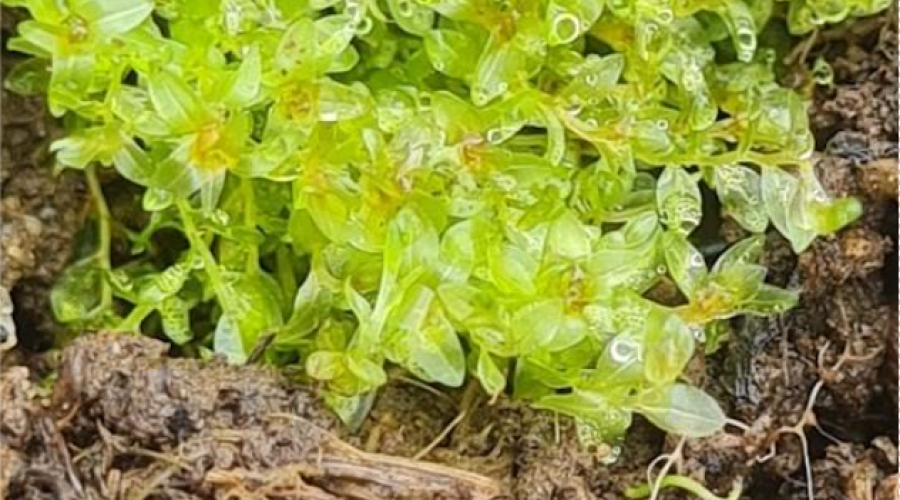
Round Leaved Bryum (Bryum cyclophyllum)

IUCN Category:
- Great Britain: Critically Endangered (indicated above)
- Europe: Least Concern
- Global: Least Concern

Genetic Health Status:
- Scottish Risk: Serious (indicated above)
- UK Risk: Serious
- Scottish Mitigation status: Partially Effective
- UK Mitigation status: Partially Effective
Background
Round Leaved Bryum is a rare moss found on the seasonally exposed mud of reservoirs and ponds. This ephemeral niche reduces competition with other plants, and this moss is a part of the mud ephemeral assemblage. It is rare throughout Europe. It has not been known to produce spores in the UK, and so its dispersal is extremely limited.
There is some morphological evidence that this species should belong in Ptychostomum, but UKSI currently retains it within the Bryum genus.
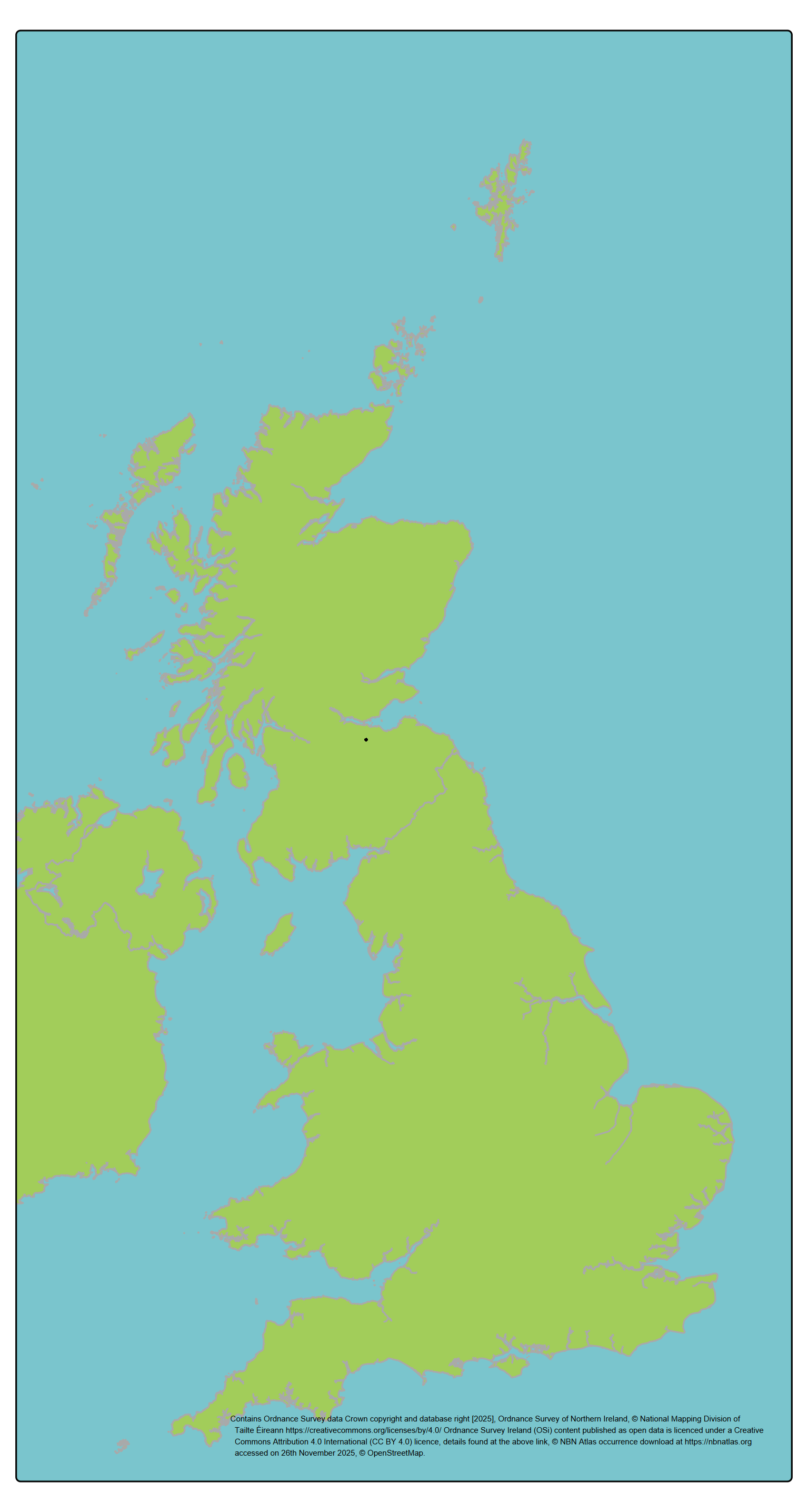
View a larger version of the distribution map for the Round Leaved Bryum.
Current Threats
Threats include eutrophication and stabilisation of water levels, often for recreational purposes (Callaghan, 2023).
Contribution of Scottish/UK population to total species diversity
There is currently only one site in UK where this moss has been found within the last 40 years – Balerno reservoir near Edinburgh. No studies investigated the genetic structure of this single population, but it seems likely to be comprised of asexually reproducing clones. A genetic sample of the Balerno population was taken for the Darwin Tree of Life project. It is still possible there are undiscovered populations of this moss in the wild, or that it may reappear at old sites if the ephemeral mud conditions become suitable again.
Genetic risks
Diversity loss: population declines
Threats are thought to be loss of populations due to eutrophication, both historical and present (Holyoak, 2014), and stabilisation of water levels, either naturally or for human use (Callaghan, 2023). With low dispersal ability and apparently a very small population size, recolonisation potential after loss is likely to be extremely low.
Global Biodiversity Framework Indicators
Population definitions:
Singular extant native site, with two translocations using material from that site.
Ne500: The proportion of populations that have an effective population size of more than 500.
- Proportion of populations with Ne > 500 in Scotland = 0/1
- Proportion of populations with Ne > 500 in UK = 0/1
PM: Proportion of populations that existed in 2000 that still exist in 2025.
- Proportion of populations maintained in Scotland = 1/1
- Proportion of populations maintained in UK = 1/1
Diversity loss: functional variation
Functional variation
There is no known functional variation within Scotland or the UK. This may make it more vulnerable to climate change and being outcompeted by other bryophytes.
Divergent lineages
There is likely to be very little functional diversity in this species.
Hybridisation/Introgression
No evidence of risk of hybridisation/introgression and considered unlikely given lack of sexual reproduction in UK.
Low turnover - constraints on adaptive opportunities
Lack of sexual reproduction.
Cumulative Risk Summary
Overall Genetic Health Status
Scotland
- Risk: Serious
- Mitigation: Serious
Great Britain/UK
- Risk: Partially Effective
- Mitigation: Partially Effective
Overall Genetic Health status explanation
The overall low levels of genetic diversity in the species may constrain evolutionary potential, but there is no explicit evidence of genetic problems for the species to-date. Further translocations may secure this species from extirpation from UK.
In situ genetic threat level
In situ genetic threat level
- In situ Risk for Scotland: High
- In situ Risk for UK: High
Only one recorded population in UK.
Confidence in in situ threat level
- Confidence score for Scotland: Medium
- Confidence score for UK: Medium
Assessment based on lack of sexual reproduction recorded in Great Britain, but lacking in definitive genetic information or full population studies.
Ex situ representation
This species has been successfully bulked up in the Royal Botanic Garden Edinburgh living collections. The population comes from 13 clusters of stems collected from the wild (Balerno Reservoir).
Current conservation actions
In 2025, individuals from the Balerno population were translocated into two reservoirs near Stirling, and while it is currently unclear whether these translocations will successfully establish, they are both from the Balerno lineage. Its current site is also a SSSI for its protection.
| Ex situ | Translocation | Habitat management | Legal protection of habitat or species | Regulation of exploitation | Control of INNS/pests/pathogens |
|---|---|---|---|---|---|
| X | X | X | X | - | - |
Population assessment/monitoring
Population
Demographic
N pops assessed/monitored in Scotland = 1/1
N pops assessed/monitored in UK = 1/1
Genetic
N pops assessed/monitored in Scotland = NA
N pops assessed/monitored in UK = NA
References
Callaghan, D (2023) A new IUCN Red List of the bryophytes of Britain
2023, Journal of Bryology, 44:4, 271-389, DOI: 10.1080/03736687.2023.2185393
Holyoak, D.T. (2014) ‘Bryum cyclophyllum’ in. Blockeel, T.L., Bosanquet, S.D.S., Hill M.O., and Preston, C.D. Atlas of British and Irish Bryophytes Volume 2 Newbury, Berkshire : Pisces Publications on behalf of the British Bryological Society, 2014
Assessor: Kat O’Brien
Reviewer: Rebecca Yahr