Facility for Investment Ready Nature in Scotland (FIRNS) - Case Studies
Read highlights of the work FIRNS has funded to date, written by projects.
Case Study - Deciding Matters
Community Inclusion Standard (CIS)
Funded partners: Deciding Matters, Fife Coast and Countryside Trust, Kana, Scottish Land Commission, Soil Association Certification, Realise Earth, University of Strathclyde.
Signatories to MOU: CreditNature, Foundation Scotland, Future Forest Company Ltd, Green Finance Institute (GFI), Highlands Rewilding, IUCN Programme’s UK Peatland Code, Nattergal, Soil Association Charity, SRUC, Trees for Life, Wilder Carbon Standard for Nature & Climate, Woodland Carbon Code and the UK Carbon Code of Conduct.
Project Goal: Develop CIS "plug-in certification" standard for community engagement and inclusion in UK nature credit schemes, aligned with the upcoming BSI Flex 705 standard.
Key Activities: Creation of a Best Practice Guide, collaboration with the British Standards Institute (BSI), engagement with seven place-based projects across Scotland and England, and development of a training program on community benefits.
Project Outputs:
- A “plug-in certification” standard and Best Practice Guide are ready to be published under a Creative Commons license on 30th April 2025.
- Providing 2 tiers of compliance, basic and enhanced. • Basic tier ensures compliance to BSI Flex 705 Community Engagement & Inclusion.
- Enhanced tier linked to delivering measurable Community Benefits.
- Development of a "kitemark badge" for projects complying with broader NFCA standards of transparency and alignment with four investment pillars.
- Digitisation of certification documents on Kana Hub.
Challenges: Interfacing with the evolving BSI Nature Investment Standards framework, balancing Scottish Government policy with creating a practical certification product, and securing parallel revisions to the standards within major nature credit schemes within the tight project timescales.
Business Case: Further research with buyers and asset managers confirmed the need for the certification to be integrated into existing nature credit schemes. Thereby not creating unfavourable cost impacts on projects. The business case for deciding to undertake an enhanced level of certification would be undertaken at project level. Case studies, including Nattergals Bootby Wildlands (ARUP purchase of credits certified by Wilder Carbon) demonstrate viable project designs that can deliver community benefits.
Outcomes: The project achieved a number of notable impacts on the UK Natural Capital Market Infrastructure, including:
- Immediate Adoption of “plug-in” within the Saltmarsh Code.
- Adoption of “plug-in” within Peatland Code entered into their formal roadmap.
- Board approval within Woodland Carbon Code to enter a review of the opportunity to incorporate the “plug-in” over 2025/26
- Participating projects have realised notable success on their investment readiness journeys, including Tayvallich Estate (Highlands Rewilding), Boothby Wildlands (Nattergal), Dreel Burn Partnership (Fife Coast & Countryside Trust) and Dundreggan (Trees for Life) and Ardtornish (Ardtornish Estate)
Case Study - Dumfries and Galloway
Solway Coast and Marine Project
High Level Project Summary
- Governance:
This project is led by Dumfries and Galloway Council working with a range of delivery partners – Solway Firth Partnership, Galloway and Southern Ayrshire Biosphere, Southern Uplands Partnership, RSPB, Galloway Fisheries Trust, Crichton Carbon Centre and Dumfries and Galloway Woodland.
- Who are your potential sellers?
Farmers, landowners + crown estate Scotland potentially community groups
- Who are your potential buyers?
Individuals, corporate organisations, or institutional investors, particularly in the marine industries i.e renewable sectors, coastal & marine developers, compensatory habitats. With regard to our community benefit enterprises these could be local people and international supporters (diaspora) local companies with connections to communities. Also potential infrastructure companies and utilities where climate change is likely to effect coastal infrastructure
- What habitats/ecosystems are you working with:
This project focuses on marine natural capital; particularly saltmarsh and native oyster habitats. Saltmarsh non-managed realignment saltmarsh expansion to inform the development of the Saltmarsh Code in Scotland. The project is also exploring opportunities with biodiversity.
- Where:
The Solway Firth is the third largest estuary in the UK. It is divided between the ‘inner firth’ characterised by intertidal mudflats, sandbank and saltmarsh and the ‘outer firth’ with relatively shallow waters.
Project Overview:
- Short summary of your project.
Our ambition is to see the Solway Firth as a thriving, healthy, sustainable, ecosystem where healthy nature capital provides ecosystem services that support sustainable communities, builds the Wellbeing Economy, contributes to Community Wealth Building and the Transition to Net Zero. We want to see our coastal communities have positive engagement with the marine and coastal environment, feel empowered to take action for its continued health and sustainability, and benefiting from these healthy assets.
The Solway Coast and Marine Project (SCAMP) is an ambitious seascape scale project that aims to restore important coastal, intertidal, and subtidal habitats along the Dumfries and Galloway Coastline, and the Scottish Solway including Loch Ryan.
To achieve this ambition, the project will require a mixture of public, private and third sector investment. Achieving important biodiversity gains, climate mitigations and adaptation is at the heart of the project but it is expected that coastal communities build on this through multiple associated benefits including employment, education, recreational and wellbeing benefits.
The project will also improve coastal community resilience from the effects of climate change. It is predicted by SEPA that the median sea level rise will be 0.8m, (this is backed up by the IPCC reports that the likely sea level rise is between 0.61 and 1.1 m) by 2100, along with increased storminess, increased sea temperature and acidity. The dire nature of these high confidence predictions makes it urgent that we find solutions now.
In its current iteration, the project will progress three strands of work towards a wider ambition to restore and expand key coastal and marine habitats within the northern Solway Firth. The work will support the ongoing development of the £20m+ Solway Coast and Marine Project (SCAMP) which will be delivered in conjunction with and for the benefit of the local communities, while addressing the climate and nature crisis.
The three strands are: developing a business model for two demonstration projects for non-managed-realignment saltmarsh expansion to inform Saltmarsh Code development; exploring governance and financing options for a community stake in expansion of the Loch Ryan native oyster fishery; and working with three hub communities on co-designing the wider SCAMP project to incorporate their priorities and benefit ambitions.
- What was the funding used for: your key activities and deliverables
- The creation of one full-time job.
- An outline business plan for the expansion of the native oyster fishery in Loch Ryan.
- Collaboration with The Crown Estate to understand the issues and requirements around seabed habitat restoration.
- An exploration of potential private sector investor partnerships.
- Work with UK Centre for Ecology & Hydrology (UKCEH) to understand how the emerging UK Saltmarsh Code may be applied to Dumfries and Galloway.
- A Saltmarsh Code workshop, with landowners and others, to raise awareness of the Code and develop a pipeline of interested landowners.
- Engagement with seven coastal communities to explore how they can benefit from coastal and marine natural capital improvements,
- Looking Ahead – We want to take at least one saltmarsh site through to implementation and ongoing monitoring so we can feed in data to the Saltmarsh code developers. We can also use this site to demonstrate both practical and financial models and show how they work in reality.
With our community partners we want to work up and implement at least three or four connected enterprise ideas to reality, exploring different financing options and building capacity within the local community.
How does the project link to the FIRNS outcomes
- Support the restoration of nature and growth of natural capital backed by robust science-based methodologies
The project will contribute to the development of a large-scale habitat restoration project in the Solway which will include long-term research and monitoring and which aims to bring innovation to restoration techniques.
Saltmarsh and native oyster habitats provide good natural capital opportunities in fish/shellfish habitats, carbon sequestration, climate change adaptation (coastal flooding), water quality and saltmarsh biodiversity.
- Enable or generate revenue and /or cost savings from ecosystem services in order to attract and repay private sector investment
Coastal/marine environments lag behind terrestrial in terms of natural capital markets. The project will help to address this by developing a business model (and project pipeline) for non-MR saltmarsh expansion linked to outcome payments (beyond carbon) from corporate investors. The work will include ecosystem revenue modelling and buyer engagement
- Explore and demonstrate engagement with community interests in project design, and activities, supporting a just transition
The project has engaged communities in the design, governance and benefits from the wider SCAMP project throughout, with an overarching aim of reconnecting communities with their natural environment to foster stewardship. This includes deep engagement with three key communities including Stranraer.
- Develop effective mechanisms to share benefits with communities, supporting a just transition
Community engagement in the project focuses on co-designing the ambitions and mechanisms for delivering community benefit (in a range of forms) in the wider SCAMP project. While this work ranges more widely than the specific elements in the FIRNS project, there is value in testing what can be delivered through a well-resourced strategic approach and sharing the learning.
Key project challenges
- Time has been a challenge both in terms of delivering the FIRNS outputs and also in realising that a functioning market and an investable project are still some way off.
- We struggled to get landowners interested in saltmarsh restoration for a number of reasons, but largely to do with uncertainty around the future of the agricultural subsidy system in Scotland.
- Land on dairy farms (a big part of D&G’s agricultural system) is very productive and therefore expensive to take out of production and has a high value.
- Size of projects and being able to get access to large corporates, do we need more aggregating mechanisms?
- Capacity with our over stretch community organisations is an issue but also an opportunity as development of viable enterprises can help sustain community groups going forward.
- Both communities and businesses are wary of borrowing against uncertain outcomes which mean investment opportunities are limited to those willing to take greater risks, but in general other forms of community fund raising and grants are more attractive.
Key project successes
- Our community engagement has been particularly successful with people showing huge enthusiasm for the wider project and wanting to get involved.
- We have made important connections with the developers of the Saltmarsh Code and have confidence that future iterations of the code will address the situation in our area.
- Community & business buy in to community enterprise opportunities is strong and impatient to get moving.
- We have a very committed dairy farmer working with us to try to find a realistic financial model that can work for the farm and that has a chance of being financed.
- We feel we are helping to raise the profile of the marine and coastal environments and habitat restoration both locally and nationally.
Learning
- The range of habitats covered by codes is still small and non existent in the marine environment, potential buys still want verified outcomes.
- The coast and marine environment tends to be well down the list when new verification systems are considered, this is disappointing
- Scale is important and often individual sites are relatively small, agregation is going to be important.
- When considering community benefits consider other options beyond cash benefits.
- The capacity of community groups is sometimes limited to take advantage of opportunities.
Contact information/finding out more
- Karen Morley, SCAMP Programme manager, Dumfries and Galloway Council, [email protected], Home - Solway Coast and Marine Project (SCAMP)
Case Study - Project L-AND
High Level Project Summary
- Governance:
Project L-AND is a partnership between nature recovery consultants Ecosulis and the Pentland Land Managers Association (PLMA), a group of farmers and land managers who have come together to collaborate on improving the environment and biodiversity in the Pentlands.
- Who are your potential sellers?
Farmers and land managers in the Pentland Hills
- Who are your potential buyers?
Local businesses looking for local carbon off-set projects and/or institutional investors
- What habitats/ecosystems are you working with:
Peatland restoration, riparian woodland, biodiversity enhancement through wetland restoration, conservation grazing, hedges, scrub.
- Where:
Pentland Hills, southwest of Edinburgh
Project Overview:
Farmland equates to 74% of Scotland’s total land so it is imperative that farmland is managed in a way that is sustainable and good for nature whilst producing quality food for the nation. Nature requires large, diverse connected habitats to thrive and survive but the average farm in Scotland is only 112 hectares. To create the scale needed to create a real impact for nature, farmers and land managers need to work together for a coordinated approach.
Project L-and is piloting a farmer led, collaborative approach to nature enhancement and restoration. It has been initiated and is driven by a cluster of farmers and land managers in the Pentland Hills. Our vision is to create an inspiring, nature restoration and nature positive land management plan for the Pentland Hills where rural businesses, communities and the environment prosper sustainably. This will be funded by offering high integrity nature restoration investment opportunities to companies based in the City of Edinburgh and nearby, which are looking to fund local projects.
This multi benefit project will generate nature regulating services including carbon sequestration whilst offering social, educational, health and wellbeing benefits to visitors and the local community.
What was the funding used for: your key activities and deliverables
- Created a Nature Enhancement Plan with 99 potential projects over 1200 hectares including riparian woodlands, peatland restoration, wetland restoration, conservation grazing, hedges, scrub.
- Developed fully costed pilot projects for participating farms.
- Undertook a stakeholder mapping to identify key targets buyers and generated investment leads.
- Conducted a survey and focus groups to gather park user’s opinions and understanding of land use within the park, with over 400 responses received.
- Developed a monitoring framework plan for gathering baseline data for a nature restoration project.
- Created a brand identity, L-and, for the project.
- A Social Enterprise has been incorporated and a Theory of Change developed for this organisation.
- An MOU has been developed between Project L-and and participating farms.
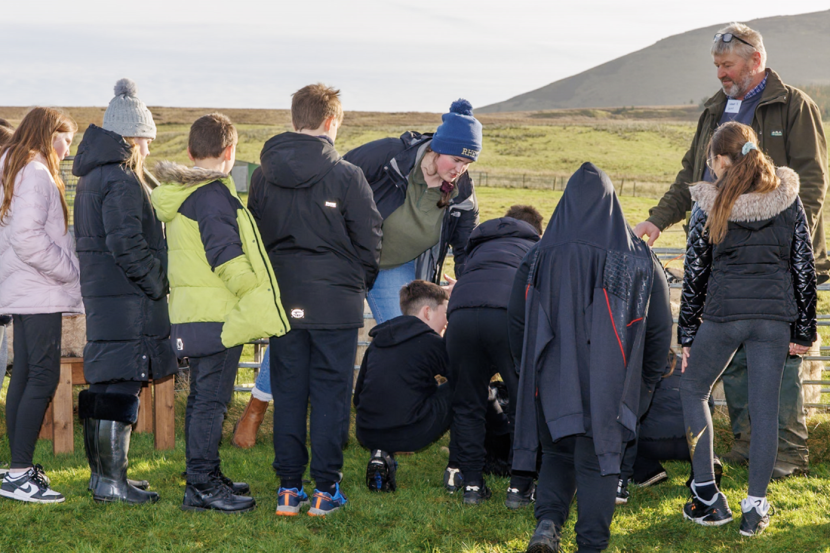
- We have developed and tested ideas for community engagement through nature education and interpretation including, Education Days for schools, Bioblitzes, nature illustrations, website and nature story blogs.
What are the next steps
- Agree a deal structure with a potential private investor.
- Complete the validation process.
- Start the grant application process.
- Explore potential funding opportunities for wetland restoration, hedges, and conservation grazing through the emerging Ecosystem Restoration Code.
How does the project link to the FIRNS outcomes:
Support the restoration of nature and growth of natural capital backed by robust science-based methodologies
Created a landscape scale nature restoration plan to deliver for nature across a farm cluster.
Modelled revenue-generation opportunities through current government approved codes.
Enable or generate revenue and /or cost savings from ecosystem services in order to attract and repay private sector investment
The potential for revenue generation from this project has been calculated using existing carbon codes: the Woodland and Peatland Codes. Around 565 hectares has been modelled through PC and WCC. Much of the remaining would require new codes to model potential income generation through nature or biodiversity credits.
Explore and demonstrate engagement with community interests in project design, and activities, supporting a just transition
The project has launched several community engagement initiatives including the creation of a new website, a digital survey of park user’s wants and needs, in-person workshops, learning events. Continued engagement with land managers and park users is a priority as the project continues to develop.
Develop effective mechanisms to share benefits with communities, supporting a just transition
- Project L-and Community Enterprise commits to working with, rather than displacing, farmers to ensure long term stewardship, and create new income streams to secure rural jobs and maintain rural communities.
- We have developed and tested ideas for a Nature Education programme with local schools.
- Have also tested the potential to raise funding for path repairs and maintenance into to improve public access.
Key project successes and challenges:
Successes:
- Farm clusters models work!
This project has proven that the cluster model can aggregate small opportunities to create scale for nature and buyers. If this model was expanded nationwide there is huge potential to help tackle the climate and biodiversity. We have developed pilot projects for riparian and woodland pockets projects across four farms in the cluster which amounts to 112 hectares of woodland. Whilst relatively small projects individually, the total area of woodland in these pilot projects is around the size of the average farm in Scotland. This evidences that the cluster model can aggregate small opportunities to create scale for nature and buyers. It also shows that nature restoration projects can sit alongside farming and forestry activities for a fully integrated land use and it need not displace these other activities. - Strong engagement with farmers and land managers in the Pentland Hills
Engagement with the project has been excellent and cluster members continue to be excited and engaged about the next phase of the project Farmers in the cluster have devoted well over 300 hours of time pro-bono through discussions on projects, models etc to test the feasibility of projects on the ground.
Challenges:
- Market Supply
Challenges which stall land managers committing to nature restoration projects are the complex and relatively nascent marketplace. Nature restoration projects require substituting this known income for new income streams based on nascent, future markets. These returns are not guaranteed. There is considerable financial risk at stake if these future markets do not materialise and the land use change is permanent. Farmers and land managers are generally keen to avoid forward selling due to concerns around contractual risk if projects do not deliver as expected.
- Market Mechanisms
The lack of approved codes, particularly regarding biodiversity has been significantly challenging for the project for other interventions such as hedges, wetlands, scrub and conservation grazing as it is impossible to estimate potential returns for land managers and outputs for buyers.
- Market Demand
In the current political and economic climate many organisations are pulling back from their commitments to Environmental and Social Governance (ESG). Securing private finance for nature restoration in these conditions is hard.
Learning:
- Cluster considerations
Decision making at farm level is complex. Many farms are managed by partnerships across two of more family generations and multiple decision makers. Scaling this up over multiple farms and habitats leads to a complex project with multiple stakeholders. Unanimous and synchronous agreement will be hard to achieve. We are seeking to fund a pilot, proof of concept, project, to which new projects can be added over time.
- Wider benefits from working with local businesses
Many other organisations we spoke to offered non-financial support, often in the form of staff time. Rabbie’s Tours generously offered free transport for four schools in West Lothian for our pilot Education Day at Cairns as part of their environmental and social governance framework. Corporate away days could offer nature restoration experiences to staff and potentially could help to cover some overhead costs. - A Living Lab for Local Researchers
Connection to University of Edinburgh engages local students with a local nature restoration project. This will support further innovation and research at the University, with the data and methodologies developed during the project being used in bioacoustics, artificial intelligence and other data for sustainability applications. The partnership leveraged in kind funding and will significantly enhance our monitoring and verification plan.
Contact information/finding out more:
Please contact [email protected] for more information and visit our website.
Case Study - Scottish Forestry
Buyer-seller contracts for carbon and other nature markets
High Level Project Summary
- Governance:
Scottish Forestry on behalf of the Woodland Carbon Code (WCC) and Peatland Code (PC) Secretariats. In partnership with the legal firms Brodies LLP, Turcan Connell and Gillespie MacAndrew
- Who are your potential sellers?
Projects accessing the Woodland Carbon Code and the Peatland Code.
- Who are your potential buyers?
Buyers looking to acquire Pending Issuance Units and Woodland/Peatland Carbon Units.
- What habitats/ecosystems are you working with:
Primarily woodland and peatland but will be applicable to other nature markets as they emerge.
Project Overview:
- Short summary of your project.
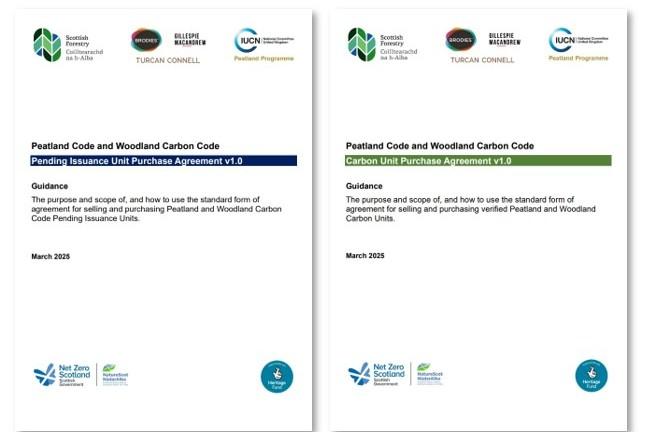
This project will develop a publicly available, simple Buyer-Seller contract(s) for Pending Issuance Units and Woodland/Peatland Carbon Units, empowering smaller-scale and community participants in carbon markets and enabling the market to scale. The focus will be on the Woodland and Peatland Carbon Codes but will be applicable to other nature markets as they emerge. Use of a standard contract will bring greater integrity to codes/standards and confidence in their use. The contract will consider different landownerships, stacking and bundling and community benefit sharing.
The project aims to support smaller-scale and community participants in carbon markets. It also hopes to support the market by:
- Making the process of contracting easier
- Reducing transaction costs
- Increasing the integrity of codes/standards and confidence in their use
We hope a standard contract will help landowners, tenants, community groups and buyers to participate in nature markets with greater confidence.
What was the funding used for: your key activities and deliverables
- Reviewing the contacts currently used in the woodland and peatland carbon market.
- Drafting a new template buyer-seller contract(s) for use in carbon markets
- Engage communities of interest to agree ad approach and to review draft standard contract and guidance.
- Creating guidance for buyers and sellers on using the template contracts.
- Publication and promotion of template documents and guidance.
What are the next steps:
Making the agreements and guidance available:
The agreements and guidance are available from both the Woodland Carbon Code and Peatland Code websites. Whilst remaining publicly available, parties requesting the documents are asked to provide some limited information prior to downloading the documents to enable the team to monitor and understand their use.
- Upkeep of the contract and guidance:
Scottish Forestry and IUCN UK will maintain the agreements for five years following completion, to reflect legal or market changes. This maintenance will focus on making any changes to ensure the templates remain functional should any changes in the requirements under the Codes be made.
As updated versions are provided, these will be made available via the websites and publicised through newsletters. Those that have previously downloaded the documents will be notified via email that a new version is available and that this should now be used for new projects.
How does the project link to the FIRNS outcomes:
- Support the restoration of nature and growth of natural capital backed by robust science-based methodologies
The WCC and PC provide the robust science-based methodologies that support the voluntary carbon market for woodland creation and peatland restoration. The standard contract will remove a barrier to participation, add credibility to projects delivered through the codes, and allow scaling up of nature restoration.
- Enable or generate revenue and /or cost savings from ecosystem services in order to attract and repay private sector investment
The project itself will not generate revenue or attract investment, but the standardised contract will significantly reduce the overhead costs of participating in carbon markets, leading to greater investment in nature-based projects and carbon revenue.
- Explore and demonstrate engagement with community interests in project design, and activities, supporting a just transition
A wide and relevant range of community interests have been engaged in the development of the contract and guidance such as landowners and tenants of varying types, project developers, carbon buyers, legal teams and community interests. The project aims to especially benefit smaller and community-based projects, therefore broadening participation and supporting a just transition.
- Develop effective mechanisms to share benefits with communities, supporting a just transition
The contract terms will include best practice in community benefit sharing that is being developed such as the work by the Scottish Land Commission and the Nature Finance Certification Alliance.
Key project challenges
- Tell us about the main challenges you’ve experienced as part of the project.
The challenges encountered in this project broadly fall into either: those encountered in drafting the agreements or those encountered in engaging stakeholders and the market.
Challenges in drafting the agreements:
- Market nascency and lack of tested precedent: a key challenge has been that this is a market which is still young and whilst there are some broadly common practices or approaches emerging these are not yet be widespread and are yet to be tested in the event of a project experiencing difficulties or failing. It is hoped that development and publication of open templates, with approaches to change, risk and liability, may support ongoing discussions across the sector and progression towards appropriate understanding and transparency and perhaps a consistency of approach.
- Representing all parties and no specific party: That the proejct is led by the Scottish Forestry and IUCN UK, neither of whom will be direct party or a signatory to the agreement, allied to the circumstance that the proejct team is collectively representing all parties to the contract, and also no one party in particular, presented frequent challenges in drafting with much of the working time spent in discussion moving points back and forth.
- Providing optionality whilst ensuring ease of use versus ease of use: Managing the level of complexity in the agreements has been an ongoing consideration for the team. In particular, how to strike the balance between making the agreements easy to use and making the agreements too easy to use. Anyone entering into agreements to sell or purchase PIUs or PCU/WCUs at an early stage in a project’s life is entering an agreement with a long duration with enduring obligations. We do not intend that the agreements are used without legal and commercial advice.
- Applying the agreements to other nature markets: The project had a broader aim to apply wherever possible to other nature markets. Many of these other nature markets are in early and differing stages of development across the UK and the design of the credit or commodity, may or may not share key structural features of the Peatland and Woodland Carbon Codes. Our focus on providing comprehensible and functional agreements, has meant that these are largely particular to the Peatland and Woodland Carbon Codes. It is hoped, however, that many of the approaches and principles including payment structures, and assigning risk and liability between seller and buyer, may be applicable to other nature markets.
- Providing for bundling and stacking: There are a number of other natural capital services being conceived and developed, many of which may be able to be realised through woodland creation or peatland restoration projects. At this time, as they develop, their relationship with a Peatland Code or Woodland Carbon Code project, is not fully understood, whether in respect of tests for legal and financial additionality or the interrelationship or interdependency of each unit in the event of project change or failure. We have taken a limited approach at this time, to reserve the rights for a Seller to develop and retain the rights to any new credits provided that the development of these has no negative effect on the project.
Challenges in engaging stakeholders and the market:
- Engaging the unengaged: Our first stage of market engagement in the project was intentionally focused on engaging those representative bodies who could bring knowledge and experiences from a wide range of members, individual organisations and companies, alongside those who were identified as having experience of either actively engaging, or seeking to engage, in delivering projects or selling/buying carbon units. The limitations of this approach were understood, as it is difficult to engage those not currently engaged in the Woodland or Peatland Carbon markets in detailed discussions. Not least those for whom there are many current areas of uncertainty or change i.e. agricultural landowners. This is not unexpected in consultation generally but also in a market that is relatively young.
Our second stage of engagement reached a wider audience with new parties requesting to see the drafts however the response, whilst detailed and positive, was limited. Again, this was not unexpected, given that the use of the agreements is not mandated, and legal agreements are a highly specialised issue requiring specific expertise. The responses focussed around a relatively smaller number of respondents with direct experience or expertise.
- Engaging buyers particularly: If sellers represent a wide and potentially disparate group of projects and landowners, then potential buyers of units as either end users, traders, retail aggregators, are an even more disparate and diverse group. Buyers, as end users particularly are reasonably any commercial business trading in the UK that wishes to consider offsetting its unavoidable UK emissions and are represented by a myriad of organisations. The disparate nature of buyers and also the level of awareness and understanding of offsetting and of the voluntary carbon market has hampered this engagement but this experience does not seem to be unique with one of the key challenges for many projects being identifying and engaging a buyer.
Key project successes
- Tell us about the main successes you’ve experienced as part of the project.
The success of the project, at its simplest, has the development of the template agreements. Throughout the project has been generally well received with good levels of interest throughout. The response to the published template agreements has been positive with most respondents being supportive of the optionality of the agreements i.e. that sufficient options were provided and that these were reasonable. A number of detailed comments were received by email and were particularly supportive of the templates in their comprehensiveness and robustness.
In undertaking the project there were a number of additional benefits, that arose from either the engagement and the preparation of the agreements or from actions able to be undertaken by members of the project team in seeking to clarify matters under the Codes. These included:
- Reviewing existing guidance: It was an express aim of our first stage of market engagement in the project, that the team would seek to identify aspects of the current guidance for the Peatland Code and Woodland Carbon Code that could usefully be clarified or where further guidance could be provided. A number of areas were identified, particularly relating to understanding what happens in the event of losses of sequestered carbon or reversal of peatland restoration measures or in failures in performance of a project.
- Reviewing the framework for assurance of permanence beyond the agreements: Through the project, a better understanding in the specific context of woodland and peatland projects of how the permanence of the land use change required under the Codes is assured. This project has enabled initial work to be taken forward for the Woodland Carbon Code to:
- review and improve integration of the Woodland Carbon Code with the process for reviewing felling licence applications
- review the assurance and monitoring service provided by the National Forest Inventory to help identify deliberate or unplanned land use change
Works on these areas will continue in 2025.
- Reviewing technical barriers to crofting and common grazing: Through the engagement, a number of barriers were identified within the requirements of the Codes that inhibit projects coming forward on land under tenanted crofting or common grazing in Scotland. The project has afforded the expertise and capacity to work and engage with partners and stakeholders throughout 2024 to seek to overcome or remove these barriers. A report has now been made to the Woodland Carbon Code Executive Board making detailed and specific recommendations to amendments to the requirements for validation which will be taken forward in the Code in 2025.
Contact information/finding out more
- Where can people find out more about your project? Who, if anyone can they get in touch with if you are happy to share that?
The template agreements and accompanying guidance can be requested and downloaded from: Template agreements for buying and selling units.
If you’ve any questions on this project, please contact: [email protected]
Case Study - Soil Association
Improved governance mechanisms for whole farm and farm cluster natural capital project implementation
Project background and summary
Nature markets for natural capital projects in Scotland remain at an early stage of development, where the costs and complexity to deliver validated projects act as a significant barrier. This is especially true where land is owned or managed by farmers (on small and medium size farms), communities and civil society organisations. This is principally due to the small-scale of individual projects and the low capacity of individual land managers to navigate the requirements of multiple projects accessing different schemes or Codes, all with different application and governance processes. The delivery of natural capital projects in combination with – rather than at the expense of – food production presents a further barrier.
This FIRNS project has explored opportunities for addressing these barriers using whole farm planning and aggregation as key mechanisms to address scale and to pool capacity, as well as to consider natural capital opportunities alongside food production. The project follows a short 6-month FIRNS Round 1 development project (October 2023 to March 2024), where the issues were explored via mostly desk-based work. The project has been delivered by Soil Association (applicant and lead partner), Woodland Trust, Finance Earth and Soil Association Certification. Representatives from Scottish Forestry and IUCN UK Peatland programme have provided advisory support on behalf of the Woodland Carbon Code and Peatland Code. Given that the latest economic report on Scottish agriculture, recorded that 91% of landholdings (accounting for 23% of the agricultural area) are less than 200 hectares (ha) in size, this project has relevance to many potential stakeholders.
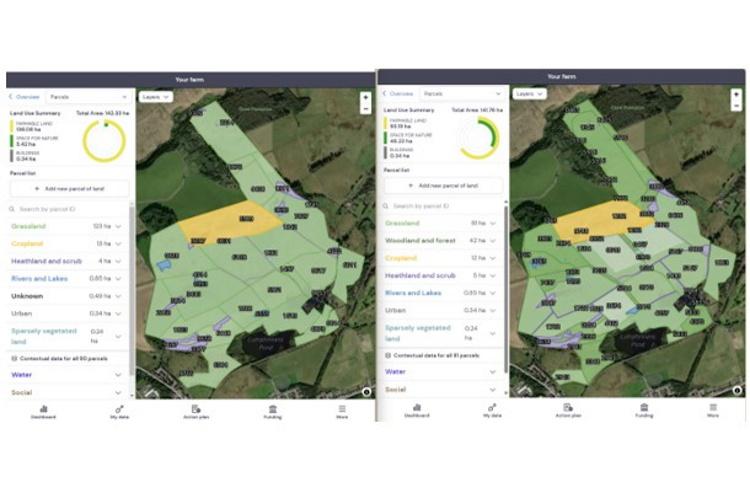
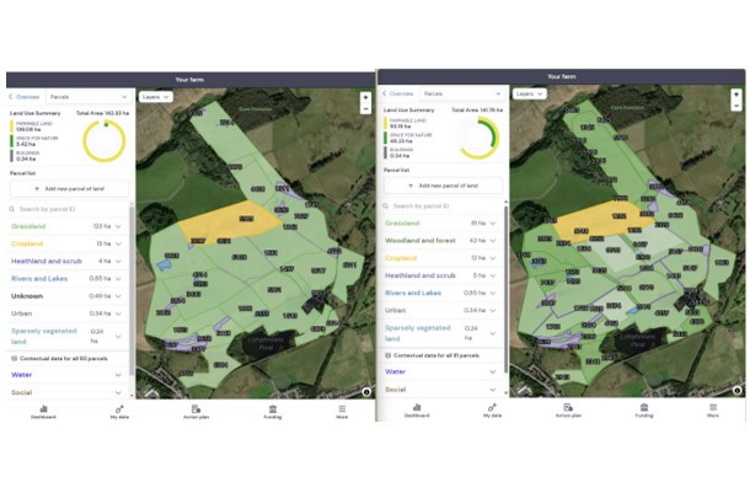
See a larger version of this map.
Project Overview
Although other relevant initiatives that have sought to address the challenges of delivering natural capital projects through collaborative working at a catchment and landscape scale, this project was focused around two key opportunities for addressing (small) scale and (low) capacity:
- Whole farm natural capital project development, validation and financial aggregation, to scale up at a farm level
- Aggregation of individual farms into groups, clusters or networks, to support natural capital project development and implementation
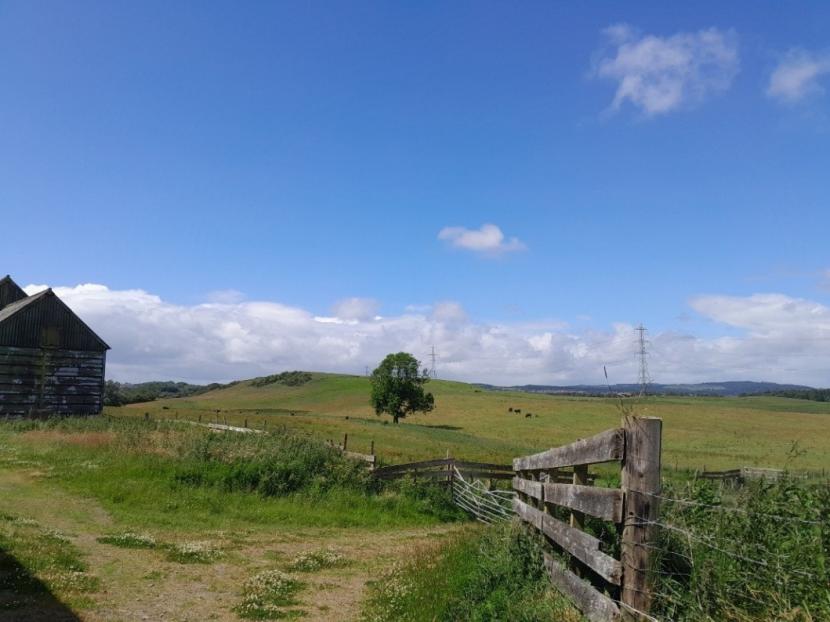
To support the whole farm opportunity, we have worked ‘on the ground’ with five core farms and farmers across Scotland, as well as developing a separate croft case study. In addition, we have engaged with other farmers, crofters and their representatives in the selection process for the core farms, and through a survey, interviews and group discussions, to explore mainly tree-based natural capital opportunities at a farm level as a single ‘project’. We adopted a whole farm planning approach considering a range of metrics within the Soil Association Exchange platform, although the specific project development focused on the carbon opportunity within farm woodlands, hedgerows, agroforestry and to some extent through peatland restoration. However, the whole farm approach is applicable to other natural capital opportunities such as biodiversity and water management, as markets develop. The natural capital projects developed for the core farms provided the evidence base to consider project development benefits, as well as aggregated validation and verification opportunities and the financial implications of this approach to whole farm aggregation.
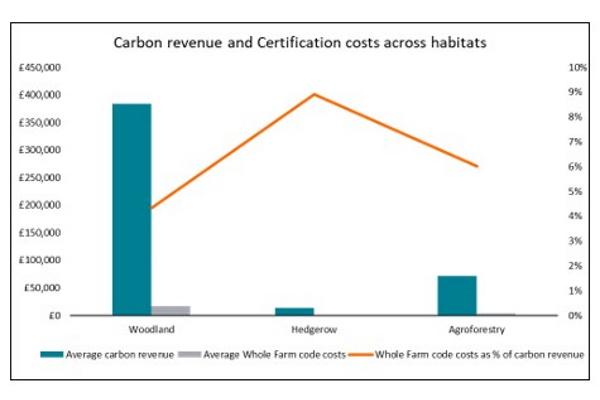
To explore the second opportunity for aggregating individual farms and their natural capital projects, we have used the aggregated data from the whole farm natural capital projects developed for the five core farms to establish a hypothetical group. We then assessed the validation & verification opportunities at a group level, as well as considering any financial implications. This analytical work has been supported by assessing different natural capital group ‘service models’, and the different governance options for managing an aggregated group mechanism. We used a general survey to get a wide range of inputs, supported by in-depth discussions on barriers and opportunities with a range of natural capital actors.
The key outputs from the project can be summarised as:
- Detailed project development and whole farm analysis for five core farms totalling almost 155 hectares (net) of potential new natural capital
- Detailed financial analysis for three core whole farm projects and the five farms as a group
- Natural capital project development on crofts – a case study
- Site-level validation and analysis for three core farms and development of a combined validation framework for whole farm projects
- Detailed engagement and option development for whole farm natural capital project delivery mechanisms
Conclusions and next steps
The analysis demonstrates that collectively these aggregation opportunities do offer financial benefits at both the whole farm and farm grouping level. The project has developed a prototype for a combined validation framework and the natural capital projects on most of the core farms are likely to be implemented. There is also strong evidence presented that grouping mechanisms can help to address the capacity issues facing farmers and other small landowners in accessing nature markets and that Scotland is in a strong position to capitalise on its existing local delivery partnerships (various existing forums, groups, clusters and networks) to help scale up local delivery of natural capital projects.
However, the aggregation measures explored and developed in this project will not be sufficient to scale delivery of natural capital projects from Scotland’s farmed landscapes. There are more systemic issues currently facing the development of nature markets that will need to be addressed alongside aggregation, most notably demand side measures, to increase the level of market activity to drive up investment (and carbon prices), and to make aggregated projects more financially viable. Alongside these demand side measures are requirements for Code and scheme development, to enable combined validation of different habitat types and monetisation of other ecosystem services beyond carbon.
Our project recommendations are therefore a mix of more systemic requirements, synthesising the conclusions and options, which are necessary prerequisites to support the more marginal benefits that can be achieved from various aggregation measures.
Demand side development
- Scottish Government to work with UK Government and other devolved administrations to establish a clearer compliance framework to generate greater demand for nature projects that deliver multiple natural capital and community benefits, within value chains. Voluntary action alone will continue to be insufficient to drive nature markets and, given the inherent high transactional costs, only a compliance framework will support sufficient value from smaller scale projects in combination with farming.
Continued support for existing whole farm approaches
- Scottish Government to use the current Whole Farm Plan requirements to further incentivize whole farm approaches, for example by linking capital grant support through NatureScot’s Natural Capital Tool for natural capital projects to Whole Farm Plans.
- Support initiatives that facilitate the combination of different habitat and ecosystem service uplifts via a single Code to facilitate a whole farm approach, with the necessary endorsement from BSI. E.g. Wilder Carbon, UK Carbon Code of Conduct, etc.
Supply side development
- Support the Scottish Agricultural Organisation Society (SAOS) to update the business case and delivery model for the Scottish Farm Carbon cooperative concept – based on a mutual model for pooling and attracting investment for natural capital values.
- Scottish Forestry on behalf of the WCC Executive to communicate and promote the current eligibility within the Code for many agroforestry systems.
- Scottish Forestry on behalf of the WCC Executive to further refine small project requirements within the Code based on a small and low intensity project framework.
- Scottish Forestry on behalf of the WCC Executive to consider satisfying IVCM requirements for scheme implementation at programme level rather than project level – to help reduce friction for project sign off for smaller, lower risk projects.
Stronger support for Scotland’s local delivery infrastructure
- Scottish Government to nurture the existing local delivery partnerships in Scotland, e.g. through long-term funding and facilitation, and explore innovative devolved delivery models based on public payment guarantees in return for leveraged private
How does the project link to the FIRNS outcomes:
- Support the restoration of nature and growth of natural capital backed by robust science-based methodologies
This project’s purpose was to influence the governance of current schemes, codes and methodologies with the intention of greater take up and delivery by farmers. The environmental, social and economic benefit of the natural capital projects will be governed by the requirements of specific schemes and codes.
- Enable or generate revenue and /or cost savings from ecosystem services in order to attract and repay private sector investment
The aggregation of various activities on the same farm and the grouping of farms by existing delivery mechanisms could lead to a larger number of natural capital projects, thereby increasing the scale of overall investment achieved, and helping projects reach the minimum scale required from private investors.
A whole-farm aggregation approach could be financially more attractive for private sector investors looking for impactful and cost-effective projects and help reduce market friction (e.g. by minimising transaction costs).
- Explore and demonstrate engagement with community interests in project design, and activities, supporting a just transition
A core project concept was that an aggregated approach will support small-scale project developers (farmers, communities, civil society land managers) to unlock economic and social benefits from nature and natural capital projects. Therefore, farmers and rural communities of Scotland would directly benefit from increased participation in nature investment markets.
- Develop effective mechanisms to share benefits with communities, supporting a just transition
The testing and collaboration with the Best Practice Guide: Community Inclusion for Community Benefit to ensure this development is accessible and functional for farming communities, will underpin benefit sharing for communities as part of a just transition.
Key project challenges
The most significant challenge was the project timeline and the project funding governance requirements. In addition, there were several specific challenges in delivering the project:
- Core farm scoping had begun in April 2024 but the conversations required with individual farmers on the long list of candidate farms, meant the 5th core farm was not concluded until early July. This was later than envisaged in the project plan.
- Initially we set out to include a core farm with a potential peatland project. We were not able to identify a farm within the timeline, so we had to change approach and simulate the aggregation opportunity for the peatland and woodland codes via analysis of a separate 3rd party project. This difficulty helped to inform our conclusion that there is no strong business case for aggregating peatland and woodland projects on small and medium size farms due to the lack of demand
- The work on the 5 core farms was a full simulation of the project development process required with the established carbon codes. In normal circumstances this project development is iterative between the project developer, landowner and validation & verification body and can take many months. The fast tracking put a lot of pressure on the teams generating the data and meant that other partners had to concentrate their input into a shorter timeline. Although a challenge, this supported some of the conclusions regarding the efficiency of the project development process
- There was some evidence of farmer fatigue, with projects like ours and others, consistently approaching the same willing landowners to investigate new ideas or concepts.
Wider project benefits
The work of the project was wide ranging and involved many inputs and discussions from a range of stakeholders. This led to some wider insights listed below:
- Despite the evidence of fatigue from some farmers in being involved in exploratory projects, the project team was impressed with the general curiosity and interest in nature markets and the opportunities from farmers and their representatives
- The use of the Soil Association Exchange platform to help implement a whole farm approach had wider positive impacts with the farming community, stakeholders and NatureScot
- Soil Association Scotland has built some new partnerships both through the work with the core farmers and the nature market pioneer community in Scotland
- The project deliverables did not include the delivery of any new natural capital projects. However, the 150ha+ of new projects developed for the 5 core farms have a good chance of implementation in future years, due to the interest generated with the farmers involved.
Contact information/finding out more:
Soil Association Scotland has developed new webpages focused on natural capital opportunities for farmers and a public version of the full FIRNS report and other outputs can be accessed via these pages: