SAC Expert panel members provide expert advice on scientific matters, review reports and other papers, and contribute to reviews.
Scientific Advisory Committee Expert Panel Terms of Reference.
Dr Ioanna Akoumianaki

Dr Ioanna Akoumianaki is a policy and impact specialist at the James Hutton Institute, with an interdisciplinary background spanning biology, oceanography and sustainable catchment management. She brings over 20 years of research experience, beginning at the Hellenic Centre for Marine Research where she studied factors affecting marine biodiversity and carbon cycling across benthic habitats—from salt marshes and hydrothermal vents to transitional and deep-sea ecosystems. In parallel, she completed her PhD, which focused on benthic community structure in response to marine and catchment-based activities in transitional waters. This work marked the start of her lasting interest in land-sea interlinkages and governance arrangements that enable crossing knowledge boundaries for innovation and sustainability.
Ioanna now serves as a knowledge boundary spanner for SEFARI Gateway and the UK Land Use for Net Zero, Nature and People (LUNZ) Hub. She leads evidence synthesis work that directly supports policy and practice, and knowledge co-construction—bringing together researchers' understanding with the lived experience of local communities and practitioners to address pressing environmental challenges.
Committed to holistic approaches, Ioanna champions source-to-sea conservation and resource management, and Nature-Based Solutions that bridge landscapes and seascapes. Her work supports joined-up action on climate and biodiversity—creating impact where it matters most, for both nature and communities.
Professor Rob Briers
Rob Briers is Professor of Ecology and Biodiversity in the School of Applied Sciences and Centre for Conservation & Restoration Science, Edinburgh Napier University. His research focuses on how and why biodiversity and environments vary across space, from local to global scales, working mainly in aquatic ecosystems. Rob has a strong applied focus to his research and has current research interests in urban pond biodiversity and conservation, blue carbon in both tropical and temperate ecosystems and impacts of anthropogenic noise in aquatic ecosystems.
Professor Rob Marrs
Rob is the Emeritus Bulley Professor of Applied Plant Biology at the University of Liverpool. His broad research interests are restoring and conserving plant communities, with most work done in the British uplands. Much of his research has involved the use of manipulative management treatments in long-term experiments.
Current research involves experiments on bracken recovery after long-term control treatment and the long-term effects of the removal of sheep grazing in a range of upland plant communities.
Rob has long-running collaborations with the UK Centre for Ecology & Hydrology, the James Hutton Institute (where he holds an Honorary Fellowship) as well as the Environmental Change Network and the Ecological Continuity Trust. He is Vice-Chairman and Trustee of the Field Studies Council.
Professor Jason Matthiopoulos

Jason works on spatial ecology and population dynamics. He develops novel mathematical theory and statistical methods for the analysis of data-limited crises, addressing time-limited questions: From mangrove conservation in UNESCO’s world-heritage Sundarbans, agroforestry management in Africa, marine and terrestrial endangered wildlife in Scotland, all the way to COVID, CDV, Malaria and Rabies epidemiology worldwide.
He has taught advanced statistics and modelling to ecologists since 1998 and has published two popular textbooks on quantitative ecology. He is Head of Ecology and Environmental Change at the University of Glasgow, and co-leads two large doctoral programmes in Quantitative Ecology, and Ecological Economics.
Dr Laszlo Nagy
Laszlo is a Lecturer at the University of Campinas, Brazil. Prior to this, he was Science Coordinator of the Large-scale Atmosphere-Biosphere Programme in Amazonia, and held various positions in the British Isles and Europe, while pursuing a career as an independent researcher in Scotland over 20 years.
Currently, Laszlo leads a long-term social-ecological research (LTSER) programme in the south-east Brazilian mountains (Serra da Mantiqueira Range), with components ranging from climate change, nitrogen deposition, land use, biogeochemistry and ecology of terrestrial and freshwater ecosystems, to stakeholder involvement in conservation and environmental education. His books include Alpine Biodiversity in Europe (2003) and The Biology of Alpine Habitats (2009).
He is a member of the Scientific Steering Committee of the Global Mountain Biodiversity Assessment and Editor-in-Chief of Plant Ecology & Diversity.
Dr Roy Neilson
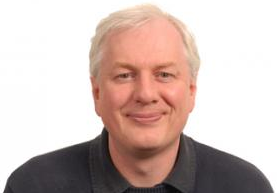
Roy Neilson is a soil ecologist at the James Hutton Institute where he leads the Plant-Soil Interactions Research Group. Roy has a long-standing interest in the impact of land use change, management practices and environmental drivers on soil function and biodiversity to support resilient production ecosystems.
Roy is a strong advocate of strengthening the evidence base to support informed decision-making, practice, and adoption of land management practices to maintain and protect soil function and its biodiversity, and this includes the development of indicators to monitor change.
In addition to Scottish systems, Roy has worked in agricultural, forest and natural systems in Europe, Asia, Africa, and the Americas.
Dr Jen Smart
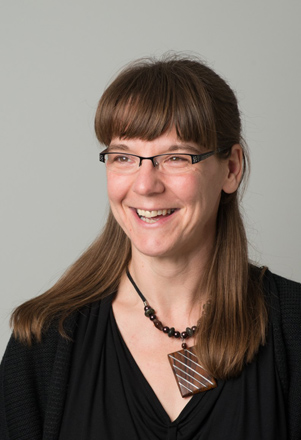
Jen works at the RSPB Centre for Conservation Science where she is Head of Conservation Science for Scotland & Northern Ireland, providing strategic leadership and support to a team of 15-20 scientists.
She has 26 years’ experience in conservation. Having gained a PhD at the University of East Anglia in 2006 on sea-level rise mitigation strategies for breeding redshanks she moved to the RSPB where she has 15 years’ post-doctoral experience in avian population ecology and applied conservation science. Her research has focused on testing solutions to conservation problems especially around breeding waders declines, agri-environment schemes and predation, though she has expertise in a range of species, habitat and conservation issues. She is passionate about science communication because of its importance for ensuring that science influences policy and practice. She has published over 40 scientific papers and reports. She hold an Honorary Lectureship at the University of East Anglia, and is Chair of the International Wader Study Group.
Dr Stuart Smith

Stuart is the Herbivore Impact Ecologist in Ecologist Sciences, at The James Hutton Institute, Scotland. He is a plant-soil with a wide range of global and local expertise, covering research areas of plant-soil carbon cycling, plant-herbivore interactions, prescribed burning and wildfire ecology, reforestation and peatland restoration from a revegetation perspective. Much of his research has involved working with stakeholders, farmers and land managers. He has undertaken research in a wide range of ecosystems, covering temperate and upland grasslands, oceanic and tropical peatlands and tropical savannahs.
Currently, Stuart is the lead investigator in a research partnership between Ripa Gar Foundation and the James Hutton Institute. A core part of his role is an estate ecologist in Glen Lochay, Stirlingshire. Though this role he has forged relationships with local and regional stakeholders. Stuart is also a scientific advisor on the Cairngorms Upland Advisory Group (CUAG). He contributes to the Scottish Governments Strategic Research Programme and he is involved in several projects addressing key nationally relevant environmental research questions. Stuart has experience of undertaking contracted research projects for NatureScot, most recently evaluating and revising Herbivore Impact Assessments for open hill rangelands.
Professor Graham Stone
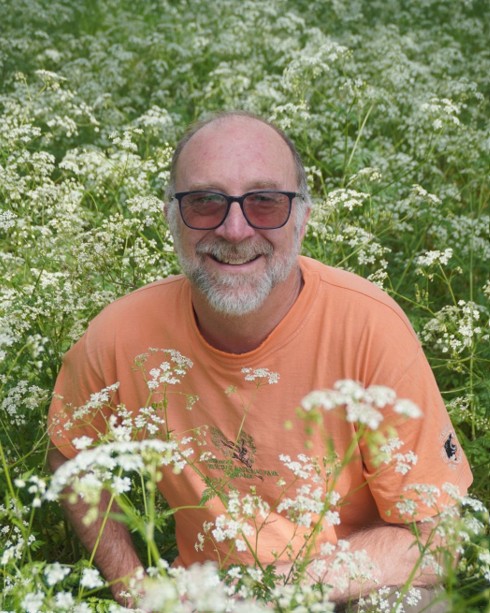
Graham Stone is Professor of Ecology at the University of Edinburgh. His research uses a combination of genetic and ecological approaches to understand the structure and evolution of biological communities. He works primarily on relationships between plants and pollinators, and between trees, insect herbivores and their natural enemies.
He uses genetic data to reconstruct the routes of biological invasions, and studies the impacts of invading species on native animal and plant communities. He uses information on biological traits and evolutionary relationships between species to predict ‘who will eat who’, and to explore the potential food web consequences of biological invasions or release of biological control agents. His team uses DNA barcoding to separate and identify insect species for which no taxonomy exists.
Graham has a long interest in wild flower meadows and the behaviour and physiology of bees. For the last 10 years, he has worked with the City of Edinburgh Council to develop native wild flower meadows that improve urban green spaces for people and wildlife.
Dr Penelope Whitehorn
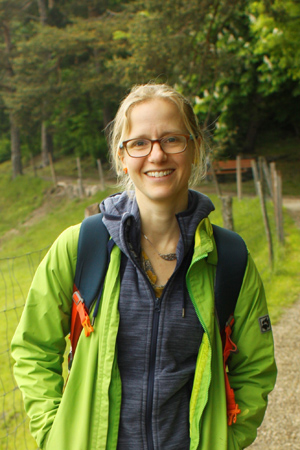
Penelope works for Highlands Rewilding Ltd. as Co-Chief Scientist, co-ordinating biodiversity monitoring and research across their rewilding sites. Penelope has over 20 years’ experience in conservation and research ecology. She completed her BSc in Zoology in 2003 (University of Edinburgh) and her MSc in Wildlife Biology and Conservation in 2005 (Napier University). She then worked for a number of conservation organisations in the UK, Eastern Africa and the US before completing a PhD at the University of Stirling, assessing the impacts of habitat fragmentation, inbreeding and parasites on bumblebees. She has since had 11 years of post-doctoral experience, including as an Alexander von Humboldt Research Fellow in Germany, researching the effects of climate and land use change on bumblebees and other pollinators. She has also worked as a contributing author on the IPBES regional assessment report on biodiversity and ecosystem services for Europe and Central Asia, and led a research study on ‘Mainstreaming Biodiversity’, involving a global review of 144 National Biodiversity Strategies and Action Plans.
Last updated: