Nature Networks: Meet the People Connecting Communities and Habitats Across Scotland
A city park can look ordinary until you realise it's part of a much bigger plan. From Leith Links in Edinburgh, we explore how a citywide Nature Network is being built to tackle biodiversity loss, prepare for climate change, and make neighbourhoods healthier and more beautiful.
Fiona Leith chats to Alexandra Hoadley, Ecologist and Greenspace Development Officer at the City of Edinburgh Council, who explains how mapping and local knowledge has become an action plan of 200-plus projects — including how planters and small habitat patches can matter as much as big parks. Her favourite example: the northern brown argus butterfly and the rock-rose plant acting as stepping stones between key sites.
Then we travel to North Ayrshire, where Biodiversity Officer Neal Lochrie gives a candid look at delivery challenges — public confusion, limited community capacity, and the need to link global climate stories to local species and places. We dig into funding, partnerships, and how shared tools like the NatureScot Nature Networks toolbox help councils move from mapping to action.
If you care about wildlife corridors, wildflower meadows, and greener streets, this one's for you. Subscribe, share with someone who loves their local park, and leave a review with one small action you're willing to try this month.
Information
Transcript
Fiona: 00:05
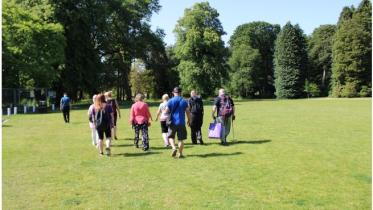
Hello and welcome to the Make Space for Nature podcast from Nature Scot. I'm Fiona Leith and I'm spending this afternoon on Leith Links in Scotland's capital because Edinburgh is the first city in Scotland to have developed a citywide nature network. The vision here is for landscape-scale urban nature restoration that everyone in the city can understand and contribute to, and one that benefits people, nature and climate change adaptation. This area of Leith was chosen as the pilot for Edinburgh's nature network because it has the highest population in the city, alongside the highest need for the benefits that nature provides. So there was an opportunity to make a big difference here. Today I'm meeting Alexandra Hoadley, Ecologist and Greenspace Development Officer for the City of Edinburgh Council, Parks and Greenspace. And I'm starting by asking Alexandra about the vista of trees, flowers, recreation, and daily life that is going on around us.
Hi Alexandra and welcome to the podcast. Thanks for joining us today. It's great to be walking around one of Edinburgh's best-known public green spaces with you on this spring afternoon and seeing the hive of local life passing through it with these kids at the school grounds, walkers, cyclists, and of course the local wildlife. We've spotted a ladybird and a bee on the ground already. Can you tell me a bit, Alexandra, about what your job is here and how you got into a career working for nature?
Alexandra: 01:42
Of course. So thanks very much for having me on the podcast. I am an ecologist and a green space development officer within parks at the City of Edinburgh Council. So my role really is to lead on the Edinburgh Nature Network. So the delivery of actions with the community and with partners across the city to monitor how those projects are doing, undertake surveys, and to essentially work with everyone in the city to try and make it as green and good for nature as it can be. I got into nature and actually working in the space when I was in my teenage years. So I actually wasn't very well as a teenager. I had Lyme disease and chronic fatigue quite badly. And nature was actually the one space I felt like I could be in, and it really became a haven for me. So when I got better, I was just very determined to work in that space. And I was able to now thankfully work in the beautiful area of Fife and now work in Edinburgh as well. So it's been a it's been a journey, but I feel very lucky to be working in it.
Fiona: 02:36
Oh, that's wonderful to hear to hear that's come good for you in terms of the connection to nature. Um now the concept, as you say, nature networks might be familiar to you, um, but it'll be a relatively new idea to our listeners here on the podcast.
Fiona: 02:50
I like a description that I've read of them as nature-rich areas across Scotland, they're important for biodiversity and people, and they're connected through a series of corridors and stepping stones of wildlife-friendly habitats. And they're in all landscapes, of course. They're in towns, villages, rural areas, mountains, lochs, coasts. But can you explain to us what the city of Edinburgh Nature Network looks like?
Alexandra: 03:16
Of course, and kind of as you said, nature networks are going to look so different across Scotland from our islands to our rural areas to our cities. So delivering our nature network in Edinburgh, first of all, what we needed to do was figure out where we needed to put these actions. So thanks to Future Parks Accelerator Project, we were able to work with Scottish Wildlife Trust, the University of Edinburgh, and actually do some really robust mapping. So look at the ecosystem services in the city, so the way nature provides for us, like the quality of air and other aspects such as that. Also map habitats and then bring together all the experts, partners, residents in the city, and say where do we need to put these actions? So now we've actually got an action map of 200 or over actions that would deliver a nature network in the city. Now, as you've already alluded to, it looks quite different in a city to other areas. It's very fragmented, even just standing here at Leith Links, we can see private buildings, school grounds, houses. It's going to be very different than it would be in a rural area. So it's very much about partnership working and working with different people to create those stepping stones. And one really nice example of that is actually the way we're looking at the northern brown argus butterfly.
Alexandra: 04:20
So this is a butterfly that is found at the moment at Arthur's Seat and Hollyrood Park. But at the moment it can't stretch to other good habitats, such as at Calton Hill. Its food plant is the rock -rose and it can only fly a couple of hundred metres at a time. So we're working with partners and volunteer groups to plant these in planters to stretch those stepping stones and hopefully mean it reaches some new habitat soon as well. So that's one visual way of thinking through how can we help butterflies and other nature move where it may be a bit fragmented in the city.
Fiona: 04:54
That's a lovely illustration of how these work in real life for species. And were there other partner agencies, organisations involved in making that happen, helping that happen?
Alexandra: 05:05
Yes, so one key partner was actually the Ranger team at Historic Environment Scotland, who are based at Arthur's Seat. So they've actually been growing the rock -rose that they originally found at Arthur's Seat. So that's what they've been donating to all the partners, organisations that are involved. So it's actually really special as well because the rock -rose has come from Arthur's Seat, and that's what's being planted as the stepping stones.
Fiona: 05:24
So we know that nature is in crisis in Scotland and that people really care about that and they do want to help. We also know that helping nature's recovery can help communities, such as this one in Leith, with the aforementioned benefits of nature that you you you've spoken of, flood mitigation, pollinators, and their general public health and well-being. Talk us through how this local community in Leith plays such a crucial part in the success of this nature network and the benefits it will bring for them.
Alexandra: 05:54
Of course, because it's very important, um, as we were discussing, that as we improve these spaces for nature, that we're improving them with people too. And these are very much public spaces, these are community loved and owned spaces as well. So we really want to look at how we do that with them. And one example of that was again thinking about how to make stepping stones, but also better community places. So we had six small parks in Leith that could do with a bit of love for both people and for nature. It was a lot of just cut grass and not much interest. So what we did was we redesigned them, did a lot of workshops with the community to say how what how can we make these better for you. We also looked with colleagues at flood mitigation. We also looked at artwork, we looked at essentially what could we do, how could we improve these spaces. And now three of those are in delivery. And that's been really exciting because what we've been able to do is put in some new paths, put in some new planters, get we've got a mural going in with a youth group, so really adding colour. But we've also been working with the Royal Caledonian Horticultural Society, um, or the Cali is their short, their short, their short, catchy name. And they have a horticultural officer who's now running regular gardening sessions across our three parks of Dalmeny, Mill Lane, and North Junction Street in Leith. And it's been fantastic. She's setting up tool libraries for each park, working with libraries and other partners. So essentially, anyone can say, I want to go garden here. This is my space, and they can at the moment just turn up and meet new people and get involved in their spaces as well. But also looking at how we can leave the end of the project with them having the tools and anything they would need to just keep joining up their spaces as they'd like to.
Fiona: 07:27
That's great. That that sort of collaborative collaboration and integration. That sounds really exciting. And am I right that the community are actually the people you would say have really directly shaped and driven this project from from the outset?
Alexandra: 07:42
A hundred percent. Because when we were looking at okay, we could add things for nature in these spaces, it's also really important we understand how people use them, how people love them, and what people would like to see. Because this is where, as you say, people walk their dogs, take their children. We were even speaking to someone who got married in one of these parks in COVID. You know what I mean? These are community spaces, so I think it's very important to take everything that they feel on board and go, okay, we could we could do with some paths, we could make it more accessible, we want that colour and we want that interest. We've now got meadows going in. People can get involved in scything with the conservation volunteers who work with us in these spaces too. So there's so many different ways people have got involved, but it's their ideas that have shaped what we did and the way that we took it forward, and also then planted it all with us as well, because it's it's their project as well.
Fiona: 08:26
It's really inspiring, really inspiring. Um, and there are so many exciting, you know, elements to the activity taking place across this. What could we, what could people around Edinburgh expect to see happening in the future in these city spaces, and and how would they get involved if they weren't already?
Alexandra: 08:44
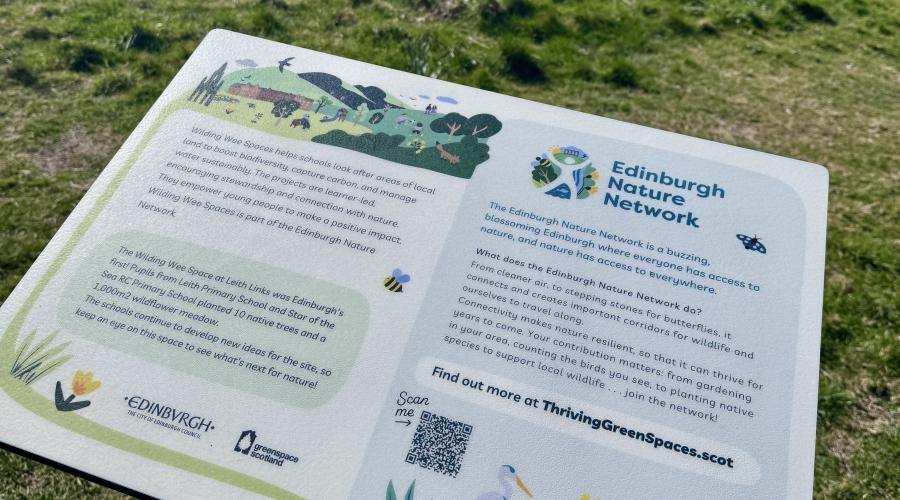
Definitely. So one of the things that we're actually standing on today is um the first Wild Wee Space in Edinburgh. So this is a program that's being run with outdoor learning colleagues and schools, looking at how the aim is for each school to have an area of public land where pupils can come up with some ideas and be the ones to put them in as well. So they put in a fabulous meadow and trees here. We were looking at a dead hedge earlier where all the ladybirds were coming out. So hopefully we're gonna start seeing even more of these wee spaces coming up across Edinburgh, and we're also starting to put in more signs as well so people know what's happening in the city. And again, anything that people are doing themselves is contributing to the nature network if it's planting a window box or anything in their local spaces, and we've also got signs for them too, if they're interested. So let us know because we want everyone to say the nature network is something we all do together, and so that's very important as well. And another thing that we've seen here is the wildflower meadow. So obviously at the moment we're in April, it's looking uh, it's not quite at its full colourful glory, but having that slightly longer grass has enabled us to have those homes for the ladybirds we saw coming out, and so it's all about also having those maybe slightly wilder spaces, but still very, very cared for, not neglected, and there's still very love for nature and for people as well.
Fiona: 09:57
There's some great signage we were looking at earlier with QR codes, and it was instantly understandable and accessible to anyone passing by. It's great. So, Alexandra, you're you're clearly um kept very busy with this job, um, and and you've a lot of experience in working for nature. But how do you have a sort of personal approach to making space for nature in your own life? And could you share that with us? And if there's just one thing that you'd encourage our listeners to do to help nature, what might it be?
Alexandra: 10:27
One very simple thing is just making sure I still find the time to go out and about and appreciate the nature we've got on our doorstep in Edinburgh. It can be very easy to think we need to get away to somewhere out of a city to think about nature. And as we were talking about with our in the heart of our signage is an illustration of an otter. We have amazing otters going through the water of Leith, a beautiful blue corridor in our city. We get dippers, we get herons, we get kingfishers. So for me, trying to even just find time to really walk along them and appreciate them, sit in our parks is something that I hope everyone's able to do and just realise what we've got here. And there are so many ways you can get involved if you want to meet other local people and come volunteer. If you love taking that space for yourself, there's always like monitoring or surveying, taking part in things like Big Garden Bird Watch or whatever it might be, or just taking the time to enjoy it and be in it yourself as well. I think we're we're very lucky to have so much on our doorstep here in Edinburgh.
Fiona: 11:20
That's great. Thanks for sharing that and for sharing this lovely space and everything that it's up to with us. And we really appreciate your time.
Alexandra: 11:26
Thank you so much for having me and for bringing the sunshine.
Fiona: 11:32
With so much activity taking place in Scotland to create nature networks, we've traversed the country for our next chat to catch up with Neal Lochrie, Biodiversity Officer for North Ayrshire Council. North Ayrshire Nature Network will be a chain of habitats all over that area, from wildflower meadows to woodlands, to tackle the decline in biodiversity at a local level. It is a balancing act of available resources and passion for change. It's familiar across Scotland as we look to halt biodiversity loss by 2030 and to have restored and regenerated nature by 2045. Hi Neil and welcome to the podcast. It's great to meet you today to talk more about nature networks. Can you tell us a bit about your job and how it relates to nature networks?
Neal: 12:28
So I am the biodiversity officer for North Ayrshire Council. So background, I work within the energy and sustainability team, which some of biodiversity officers work right in different councils in different departments. There's no fixed setup. So in my department, many work in planning, but I work across the whole lot. So I advise and support other officers to deliver for biodiversity because biodiversity officers aren't like physically out there doing it, other council officers are. So I support them. I also report on the biodiversity duty, but I also take policy and turn that into actions. So this is for how I am the lead on the nature networks for uh North Ayrshire. So we have the North Ayrshire Nature Network NAN, we call it for short. We have a NAN strategy where I've taken uh the the re the national policy and then I've turned that into uh a strategy document which our uh elected members voted on, so we have a set action plan in that that I deliver, and then I don't I'm essentially hit for that and held to account for what's happening in that. So that is my role in nature networks.
Fiona: 13:36
That's great. So you're you're the NAN man, would that be fair enough to say?
Neal: 13:41
I'm the NAN man, yes. I'm the NAN man. Sometimes I'm the tree man, sometimes I'm the bird man. It depends on the badger man, it depends on uh what's been what's been happening and who's speaking to me. Either the the tree man is what the the whenever the the council officers at reception calls me. But you know, I'll answer to anything as long as they're speaking to me. That's fine.
Fiona: 14:03
Brilliant. You you're the man. Um so Neil, you're you're you're in well you're in Kilmarnock this this morning, but how how would you describe more generally the connection in North Ayrshire that that people have with nature?
Fiona: 14:18
And and how do you think that the nature network plan that you're you're talking about today for the area might help their understanding of the nature crisis and climate change?
Neal: 14:29
I'm across the border in East Ayrshire today, but in North Ayrshire as a whole. People don't if you use the word nature network to people, because we've started this consultation, started speaking to people about it. Nobody would know what a nature network is. We're really good at talking in a closed environment about these things, but we're not so good at talking about them to the public. So we've just done a consult started the consultation in the Irvine locality. So uh North Ayrshire has six localities, and we've split the nature network into the six localities so we can do the engagement work across the six of them. And we spoke to 254 people, and not not a single person within that could tell you what a nature network was. So, first of all, there's this issue with people not knowing what a nature network is, what it does, how it will help them in terms of connecting with nature, but also you've got this wider disconnection with nature. I went out with uh we have uh primary school climate champions, and I went out and uh the the workers were working for the said oh the kids know loads about climate change, they really know a lot about climate change, and they were going through all these activities, and I was there and I was just asking them casual questions. And those kids didn't know anything about climate change, not in the way that we would want them to understand that they could tell me about polar bears, they could tell me about penguins, but they couldn't tell me about the nature and climate crisis in their own area, what was happening to species in their own area. So we've got this kind of massive disconnection between them, and if we want the nature network to be used by the schools, then we're gonna have to sort of start from a very low point in that process to you know bring people on board.
Fiona: 16:14
That's a really interesting observation, and and I wonder how sort of widespread that that that sort of distinction of of knowledge and understanding is across Scotland. So you're you're talking about schools and young people there. There are lots of different groups and organisations working with yourself and the council in this mission to protect nature through the creation of a nature network. Can you tell us a bit more about some of those groups and how they've been involved with you?
Neal: 16:42
So we in North Ayrshire, we have a biodiversity partnership. So I have part of my role, I also facilitate that partnership. So it has four quarter quarterly meetings. When I started in 2022, there were eight people on that partnership and four of them are from the council. We have 64 members now who attend these quarterly meetings, one in-person meeting, and they are the sort of uh they are the oversight of the of the nature network, they are who I take the nature network actions to and I report to them and I let them know what's happening. One of the issues that our sort of communities have and all our groups have is the lack of capacity. So if you imagine some of these towns, we were doing climate action towns with the Scottish Government, and uh we were Stevenson was one of the towns that was you know part of that. I was going along to those sessions and it was identified. There's probably six people who are doing everything. So they are doing the nature stuff, they're doing climate, they're doing everything, everything that comes as an engagement, and that's the same in all these communities. And it was one of the weaknesses in our previous uh biodiversity action plan on LBAT, was it to assign lots of actions and nobody did them because nobody has that kind of capacity. So the one of the challenges for the nature network is how we build that capacity within these and support these communities and all these other groups to be delivering. So the first we've started with there is that we've uh the council gets or as all councils get nature restoration fund money as part of the Edinburgh process. So we get a strand of that in with our block funding and we've made an element of that uh available to community groups and members of the public so they can do their own nature projects. So we we ran that there. We gave out about £130,000 and we did about 24, 25 projects, all delivering for nature.
Fiona: 18:37
Okay, so really looking for for for different scales of organisations to be supported and and and understand the work but be able to to undertake their own activity. I can hear that. And just to go back a step to that focus on education and the importance of it, what would you say about that?
Fiona: 18:56
What why is education around nature uh the protection and restoration of nature? Why do you think that is so important today? I think that we we are as conservationists uh used to talking to each other, we have a level of perception of a level of knowledge that people have. And I worked for a I worked as a ranger for ten years before I was a biodiversity officer. And people have a very a very low understanding. You know, I worked with a group of uh STEM students who were getting back into education, they were of all ages, they were all getting back to do it because they wanted to be teachers and all getting back in. And we were tree planting, and I brought them a bag of whips to plant, and he said, Where are the trees? I said, The trees are in this bag, and they said, The trees are big, these can't be trees. You know, because people are used to seeing trees as big things and don't realise something as simple that as a seed a tree starts as a seed, grows into a sapling, and then over a hundred years becomes a full-size tree. So if you imagine that's the level of understanding you have, if you want buy-in from everyone, and it's not just buy-in from the public, because a local authority is a broad church as well. We spoke earlier about the the people who are delivering these climate uh sessions to children, their understanding is they have not got the support to deliver that either because they are not experts either. So you're talking about education, it's not just education for the children, it's not education for primary school, secondary school, it's also education for the teachers who have to go in there and deliver that. So we are looking now to if we're doing our own education around that using units that we are devising, we are saying we're telling what our message is, and that message is that this climate of biodiversity measure is real, this crisis is real, it's going to affect you in your local area. This is how it'll affect you in your local area, and here is the agency that you can have, yeah. And that is the message, and that message has been lost up to now when we're talking about penguins and polar bears.
Fiona: 21:04
Yeah it has, it has, and and and that's wonderful to hear. And and I guess it's it takes us on to sort of this other supports that are around for for creating that that sort of wider message and wider mission and and and enabling that that that agency for for people.
Fiona: 21:21
So Nature Scot's created a nature networks toolbox. And could you tell us a little bit about how that's been useful for you in the sort of design and creation of this plan?
Neal: 21:33
We don't really know. I say we don't I was gonna say we don't really know what we're doing, but essentially no one knows what they're doing because no one's no local authority has created a nature network. We we just feel that you will go out there and create a nature network. And everybody has everybody's lacking the skills to do that in certain and in different areas. So having that sort of support you can buy to. And we've been taking part in the nature networks pilot that the Green Action Trust have been delivering as well, so that we are delivering stuff that's going into that toolkit. So it's important to have that sort of uh I suppose that sort of touchdown because you know not every not every council has a biodiversity officer. Some councils it's sustainability officers that are delivering nature networks, some it's uh it's the planners that are delivering it, some are it's just falling into some random officers uh in tray because they have no one else and they've suddenly realised our local development plan won't go through if we don't have this. So we're looking at, you know, nobody has a set thing of skills, and unless you have some kind of core area where everyone can get back. And it's not just looking at that toolbox in terms of just clicking on the link and going in there, because yeah, it's not much use if you're just clicking on the link and going in. You still need to engage with you know the Nature Scot officers who are operating it, with the Green Action Trust, with all with each other through, because we we're all lots of us are members of the um biodiversity officers, uh well the local biodiversity plan uh group of officers across Scotland. So we have an active forum where we're engaging with each other as well and we're asking each other the questions. So it's we all need to support each other, so at least the toolbox is there that we can then start that process and some we can get somewhere towards it. It's we're gonna need more support because this runs to 2045, and we're gonna have to get into we're gonna go now from a mapping exercise into an actual delivery exercise, and that is gonna be even more testing. It's yet to be seen if everyone will do that jump, because we said at the beginning this must not be a mapping exercise, and then we've got embroiled in a massive mapping exercise. So it's then how do you get from that mapping exercise into delivering action? And that's when we were talking about education, we're talking about communities, we're talking about getting other groups involved, because the council is can only do so much because we've been asked to be a conservation organisation, but we don't really have those skills, so it's important that we have these extra the toolbox, extra partners, extra education, extra all these extra things available to us. So we end up because at the end of the day, if we don't halt biodiversity loss with this with the nature network, what is the point? Because we've had an LBAP for about 20 odd years and we've had year on year biodiversity loss. So something's not working there.
Fiona: 24:25
Yeah, sounds like the council is really lucky to have you, Neal, and and and people like you elsewhere, and it's good to hear that that at least there's that sort of collaborative peer peer support around around you and your fellow professionals. So you've been a ranger, you're you're in your current role, you've obviously worked for nature and in nature for some time Neal.
Fiona: 24:46
Do you have a a personal way of making space for nature in your own life that you you could share with us today? And if there is just one thing you would encourage everyone listening to do to help nature, what what would it be?
Neal: 25:02
I suppose it's to do the easy things, do the things that I used to teach uh traditional rural skills as well. So in my this an ex-council house that I stay in, so I don't have a huge garden, but I've got a decent sized bit of grass out the back. So I have got established a wildflower area. Currently it's full of bulbs that are coming up in it. Yeah. It's full of yellow rattle, which is germinated this year, which has been very easy. So that area is very important. So we have within that small area a wildflower meadow with bulbs, with some small fruiting trees, with a with a short-laid hazel hedge, with a native hedge round the outside, with a wee with a wee tiny pond, all in that one area. And I'll be I go out every autumn and I get my scythe out and I cut it with my scythe, because it's the only practice I get with my scythe anymore, because I didn't do the groups because I've got a very. I don't get that kind of hands-on experience very often anymore. So that's the sort of and it's and I it's it's it it's it only takes that amount of cutting the grass once a year and I cut a wee path with the mower up to my bench, and that's my uh and it it works great, but it's been really good, it's been really good over the last period of time. So I would I would recommend that. I'd also recommend getting a scythe if you can, but it's always a you know a bonus. But yeah, I you can cut it with your mower, you don't have to be out there with the scythe. There are other ways of cutting the grass.
Fiona: 26:23
People have taken to scissors these obsessions with micro gardens.
Neal: 26:29
I watched them I watched the guy, I watched the guys when I was on holiday in the Western Isles and it was up at one of the standing stones, and the guys from Historic Scotland were out cutting the grass with scissors round about because they were filming a documentary. So the guys have been sent out with scissors to cut the grass round about the standing stones, so it can be done.
Fiona: 26:47
Yeah, that's attention to detail. We like that. Neil, thanks for sharing that and thanks for sharing all your expertise and insight into nature networks and how they're sort of shaping up in your area and maybe across Scotland at the moment. It's it's been really interesting. Thanks for joining us.
Neal: 27:04
No, no problem. It was a pleasure to chat to you.
Fiona: 27:08
Thanks for listening. For more ways to connect with and help protect Scotland's natural world, go to nature.scot.
Last updated: